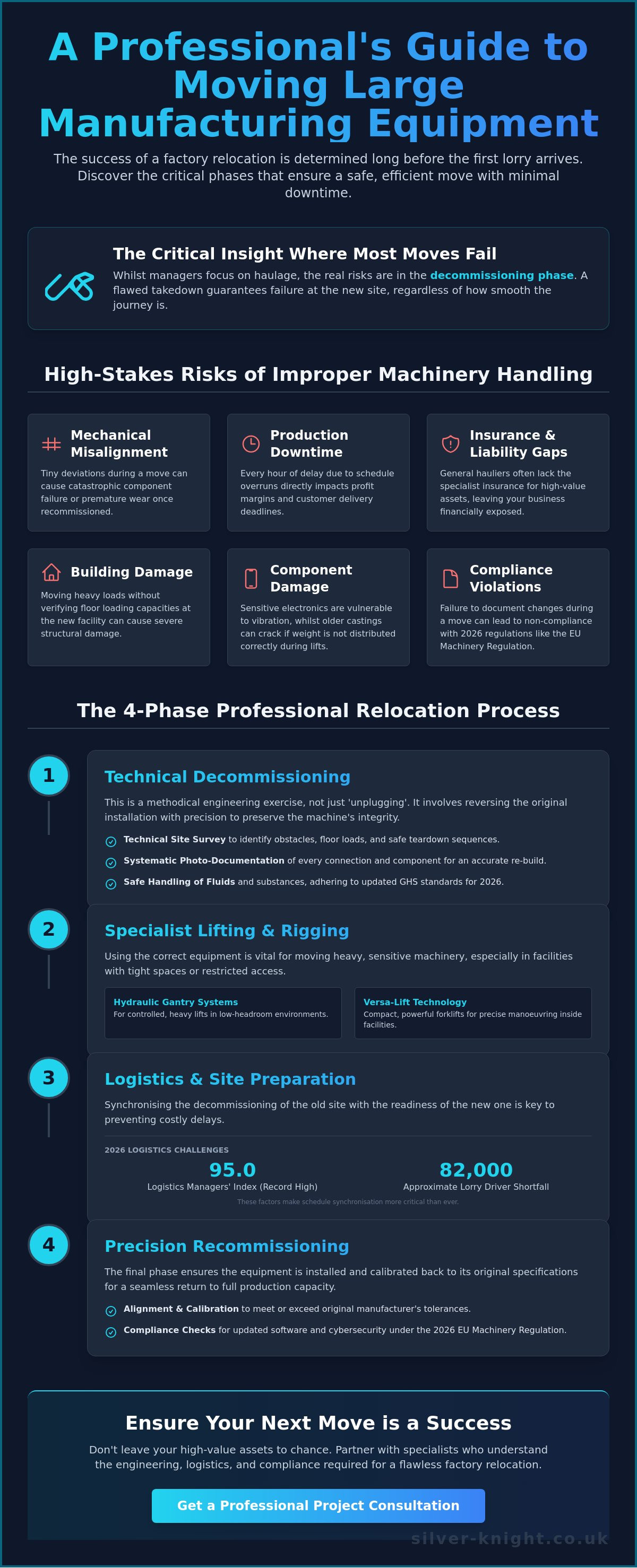
Could the fate of your entire production line be decided before a single bolt is turned? Whilst most managers focus on the lorry journey, the real success of moving large manufacturing equipment is actually determined during the decommissioning phase. If you get the initial strip-down wrong, even the smoothest haulage won't prevent a disaster at the new facility.
We understand the stress of managing industrial relocations. You likely fear extended periods of production downtime or the catastrophic damage that can occur to bespoke machinery when handled poorly. It's a complex task to coordinate multiple contractors whilst trying to stay compliant with 2026 safety standards, such as the updated EU Machinery Regulation preparations. This guide provides a comprehensive roadmap for managing your move safely whilst minimising downtime. You'll learn how to protect high-value assets and ensure your equipment is recommissioned to its original specifications with minimal fuss.
Key Takeaways
- Learn why the decommissioning phase is the most critical stage for preventing future mechanical failure and production delays.
- Identify the specific benefits of using hydraulic gantry systems and Versa Lift technology when moving large manufacturing equipment in tight spaces.
- Understand how to conduct a site access survey to check floor loading capacities and prevent building damage at your new facility.
- Discover the precision required for recommissioning machinery to its original specifications to ensure a seamless transition to full production.
- Find out how to stay compliant with 2026 safety regulations whilst coordinating multiple contractors for a complex factory relocation.
If you are planning a complex industrial relocation, you can find professional support for your project through the Silver Knight team.
Risks of Moving Large Manufacturing Equipment
Relocating heavy machinery is a high stakes operation where small errors lead to massive financial losses. One major danger is mechanical misalignment. Even a tiny deviation during the move can cause premature wear or total failure once the machine is powered back up at the new site. To mitigate these risks, clear communication between rigging teams is essential; you can discover Ears PLC for professional two-way radio hire that ensures everyone is coordinated. General hauliers often lack the comprehensive insurance needed for these high value assets. This leaves your business exposed if a catastrophic failure occurs during transit or lifting.
To see the precision required when handling heavy machinery, watch this video of a massive drilling machine being unloaded.
Protecting Your High Value Industrial Assets
Before moving large manufacturing equipment, you must evaluate the structural integrity of older machinery. Castings can become brittle over time. Internal stresses might cause cracks during lifting if the weight isn't distributed correctly. Sensitive electronic components are also at risk from vibration during transit. Using Specialist Lifting and Rigging Equipment helps mitigate these forces. For those moving equipment across borders, bespoke export packing is essential to prevent corrosion or physical shifts. You must also consider the 2026 EU Machinery Regulation requirements. These demand clear responsibilities for software updates and cybersecurity when equipment is recommissioned. Failing to document these changes during a move can lead to legal non compliance.
Managing Production Downtime and Schedule Overruns
Success depends on a realistic timeline. If the floor loading capacity at the new facility hasn't been verified, your equipment could cause structural damage upon arrival. A professional factory relocation service synchronises the decommissioning of your old site with the readiness of the new one. This project management approach ensures that adjacent production lines continue to run smoothly whilst the heavy lifting happens. It's the only way to avoid the chaos of multiple contractors clashing on site. Coordination is vital to prevent schedule overruns that could lead to missed delivery deadlines for your own customers.
If you require expert assistance with your industrial move, the specialists at Silver Knight can manage every technical detail.
Technical Decommissioning and Dismantling Procedures
Moving large manufacturing equipment is an intricate engineering exercise that begins long before the first lorry arrives. Many businesses treat this as simple logistics, but it's actually a technical reversal of the original installation. A technical site survey is non negotiable. This survey identifies structural obstacles, floor load limits, and the exact sequence required for a safe teardown. Without this data, you risk damaging the machine's frame or compromising the safety of the rigging team. Adhering to the high standards set by the Specialized Carriers & Rigging Association (SC&RA) ensures that every lift and disconnection follows global best practices.
The decommissioning process must be methodical. You can't just unplug cables and hope for the best. By January 19, 2026, manufacturers must have re-classified pure substances to align with GHS Revision 7. This impacts how you handle and document the removal of hazardous fluids or coolants during the dismantling phase. Each step of the teardown should be recorded with high resolution photography. This provides an indisputable record of the machine's condition and configuration before it's moved.
Marking and Documentation for Accurate Reassembly
Successful reinstallation depends on the quality of your data. Modern teams utilise digital tagging and CAD layouts to map the original configuration of the machinery. Every cable, pipe, and bracket needs a unique identifier that corresponds to a master assembly drawing. You should ensure that all pipes are capped to prevent contamination and all cables are labelled at both ends. Detailed match marking is the foundation of a fast recommissioning process because it eliminates guesswork during the final build. This level of detail prevents the common "leftover parts" scenario that plagues amateur relocations.
Safe Disconnection of Utilities and Services
Safety is the primary concern when isolating energy sources. You must coordinate closely with plant engineers to ensure all electrical, pneumatic, and hydraulic systems are properly locked out. This isn't just about turning a switch; it involves purging lines and verifying zero energy states. Removing lubricants and industrial fluids must be done in compliance with environmental regulations to avoid heavy fines. If your project involves complex systems, utilising a professional machinery dismantle service is the safest way to ensure compliance. To ensure your project stays on track and meets all safety requirements, you may wish to speak with a project manager today regarding your specific needs.
If you need to hire specialist machinery for your next relocation, you can view the full range at Silver Knight.
Specialist Lifting and Rigging Equipment Options
Moving large manufacturing equipment requires a departure from standard haulage methods. Whilst a mobile crane is excellent for outdoor yard work, it often lacks the precision or clearance needed for indoor factory environments. Instead, specialists turn to hydraulic gantry systems. These systems provide a stable, vertical lift within a compact footprint, making them the preferred choice for installing heavy presses or CNC machines where overhead space is restricted. By 2026, the industry has seen a shift towards synthetic lifting slings over traditional chain or wire rope, as they offer better load protection for high value finished surfaces.
Compliance is essential for any lifting operation. In the UK, all equipment must adhere to the Lifting Operations and Lifting Equipment Regulations (LOLER). This ensures that every piece of kit, from the smallest shackle to the largest gantry, is fit for purpose and has a valid certificate of thorough examination. It's also helpful to reference the OSHA material handling equipment standards for broader safety contexts regarding industrial trucks. These global standards provide a benchmark for maintaining a safe centre of gravity during complex manoeuvres.
Hydraulic Gantries and Jack and Slide Systems
Hydraulic gantry systems are the workhorses of the indoor relocation world. They allow for heavy lifting in areas where a crane boom simply cannot reach. If overhead clearance is completely non existent, a jack and slide system becomes the only viable option. This involves lifting the machine slightly with hydraulic jacks and then sliding it along a low profile track. This method is particularly useful for moving heavy transformers or turbines into tight substations. You can find detailed technical specifications for these systems on the our equipment page.
Versa Lift and Specialist Forklift Hire
Standard forklifts often struggle with the weight distribution of bespoke industrial machinery. This is where specialist forklift hire, specifically the Versa Lift, proves its worth. The Versa Lift features an extendable counterweight, allowing it to lift massive loads whilst maintaining a small enough profile to navigate narrow factory aisles. Managing the centre of gravity is vital to prevent tip overs or floor damage. For more insights on how these advanced machines can simplify your project, read our guide on Specialised Lifting. Using the right capacity ensures that your high value assets are handled with the necessary level of control and safety.
Planning the logistical path is just as critical as the lift itself, and you can find expert guidance for your journey at Silver Knight.
Logistics and Site Access for Heavy Loads
Phased moves often require temporary storage solutions to keep the project on track. If your new facility isn't ready to receive every machine at once, machinery storage provides a secure buffer. This prevents equipment from cluttering the old site during a factory clearance or sitting on expensive trailers while waiting for floor preparation to finish.
Site Surveys and Floor Loading Calculations
While the focus is often on the internal floor capacity, the external perimeter must also be ready to handle the increased traffic and provide security for your assets. To ensure your new site is properly enclosed, check out Romford Fencing Ltd for advice on selecting secure fencing panels for industrial environments.
Heavy Haulage and International Logistics
Selecting the correct trailer is vital for a safe journey. Options range from standard low loaders to complex multi axle modular trailers designed for oversized loads. For those involved in an international factory relocation, the complexity increases significantly. You must manage customs documentation and ensure compliance with the 2026 EU Deforestation Regulation (EUDR) if your equipment packaging involves regulated materials. A professional factory relocation service handles these administrative burdens, allowing your team to focus on production. If you are planning a move across borders, it is wise to enquire about international transport permits well in advance to avoid border delays.
Ensuring your machinery is back in production quickly requires expert oversight, which you can find through the Silver Knight specialist team.
Professional Machinery Installation and Recommissioning
Before the first power up, you must perform a series of rigorous safety checks. This includes verifying that all electrical, pneumatic, and hydraulic connections are secure and leak free. You should also ensure that any software updates required by the 2026 EU Machinery Regulation are correctly applied, especially regarding remote access and cybersecurity. A methodical approach at this stage prevents the "infant mortality" of components that often occurs after a poorly managed relocation. It's about ensuring the machine is not just present, but fully operational and safe for your staff to use.
Precision Levelling and Alignment Standards
Modern industrial equipment requires more than a simple spirit level. Specialists now use advanced laser alignment tools to ensure the machine is perfectly positioned on its new foundation. This level of accuracy is essential for preventing premature wear on bearings, motors, and drive shafts. If a machine isn't level, internal stresses can warp the frame over time, leading to costly repairs and unexpected downtime. You can learn more about these engineering requirements in our guide to Industrial Machinery Installation. Using the correct shimming and anchoring techniques ensures the machine remains stable under full production loads.
Final Handover and Operational Readiness
A move isn't complete until the equipment has passed its initial test runs and meets your original production standards. The final handover should be a formal process where all health and safety documentation is updated for the new location. This includes ensuring your records are ready for the January 2026 OSHA Injury Tracking Application (ITA) submissions if you operate in relevant jurisdictions. For a deeper look at how to manage this transition, consult our Machinery Movers UK guide. This documentation provides a vital paper trail for insurance and compliance purposes, proving that the machinery was recommissioned by competent professionals to the highest possible standards.
If you are ready to plan your next industrial move, you can explore our full range of services on the Silver Knight home page.
Master Your Next Industrial Relocation
Frequently Asked Questions
How long does it typically take to move large manufacturing equipment?
The timeline for moving large manufacturing equipment varies significantly based on the complexity of the machinery and the distance of the relocation. A single machine relocation might be completed within one or two days, whilst a full factory relocation involving multiple production lines can take several weeks. Factors such as the need for technical decommissioning and precision recommissioning will also influence the overall schedule.
What is the difference between a general haulier and a specialist machinery mover?
A general haulier primarily focuses on the transport of goods from one point to another, whereas a specialist machinery mover provides an end to end engineering service. This includes decommissioning, contract lifting, and precise machinery installation. Specialists use advanced equipment like hydraulic gantry systems and Versa Lifts to handle high value assets that a standard haulage firm isn't equipped to manage safely.
Do I need to provide my own insurance for the machinery move?
You should always review your existing business insurance policies before starting a move to ensure your assets are covered during transit. Whilst professional movers typically carry specialist insurance for goods in transit and public liability, the level of cover can vary. It's best practice to check the specific limits of a mover's policy to ensure they match the replacement value of your bespoke equipment.
What information do I need to provide for an accurate machinery moving quote?
To receive an accurate quote, you must provide the exact dimensions and weight of each piece of equipment. Detailed information regarding site access at both the origin and destination is also vital, including door widths and ceiling heights. You should also mention if the project requires specialist services like decommissioning, factory clearance, or international machinery transport to ensure all logistical costs are included. For general commercial relocation queries, you can visit BF Happy Movers to explore their professional approach to quoting.
Can you move heavy machinery into a basement or upper floor?
What is decommissioning and why is it necessary for my machinery?
Decommissioning is the technical process of safely isolating a machine from its power sources and dismantling it for transport. It's necessary because it protects sensitive electronic and mechanical components from damage during the move. Proper decommissioning, including match marking and documentation, ensures that the machine can be recommissioned to its original specifications at the new facility without long production delays.
How do you protect the factory floor from damage during a heavy move?
Floor protection is achieved by using load spreading plates and heavy duty mats to distribute the weight of the machinery. Professional movers calculate the point loads of equipment like forklifts and hydraulic gantries to ensure they don't exceed the floor's capacity. This prevents structural cracks or surface damage to factory floors, especially when moving large manufacturing equipment through narrow gangways.
Can you manage international machinery transport including customs clearance?
Specialist movers can manage the entire international machinery transport process, including the complex requirements of customs clearance. This involves coordinating heavy haulage to the port, securing the load for sea freight, and managing the documentation for the destination country. In 2026, this also includes ensuring compliance with new regulations like the EU Deforestation Regulation for any timber packaging used during the move.

Article by
David Ashby
I'm the Managing Director of Silver Knight Haulage & Machinery Ltd. Silver Knight Ltd is a family-run firm established in the West Midlands in 2005, with the aim of providing a cost-effective, yet professional, service to businesses for the removal, transportation, and installation of machinery, plant, and equipment here in the UK and worldwide. Between us, the Silver Knight workforce has over 50 years of experience with machinery and its operation.
Disclaimer
This article is intended for informational purposes only. Please ensure you seek expert advice or carry out your own research to confirm the information is suitable for your specific needs.