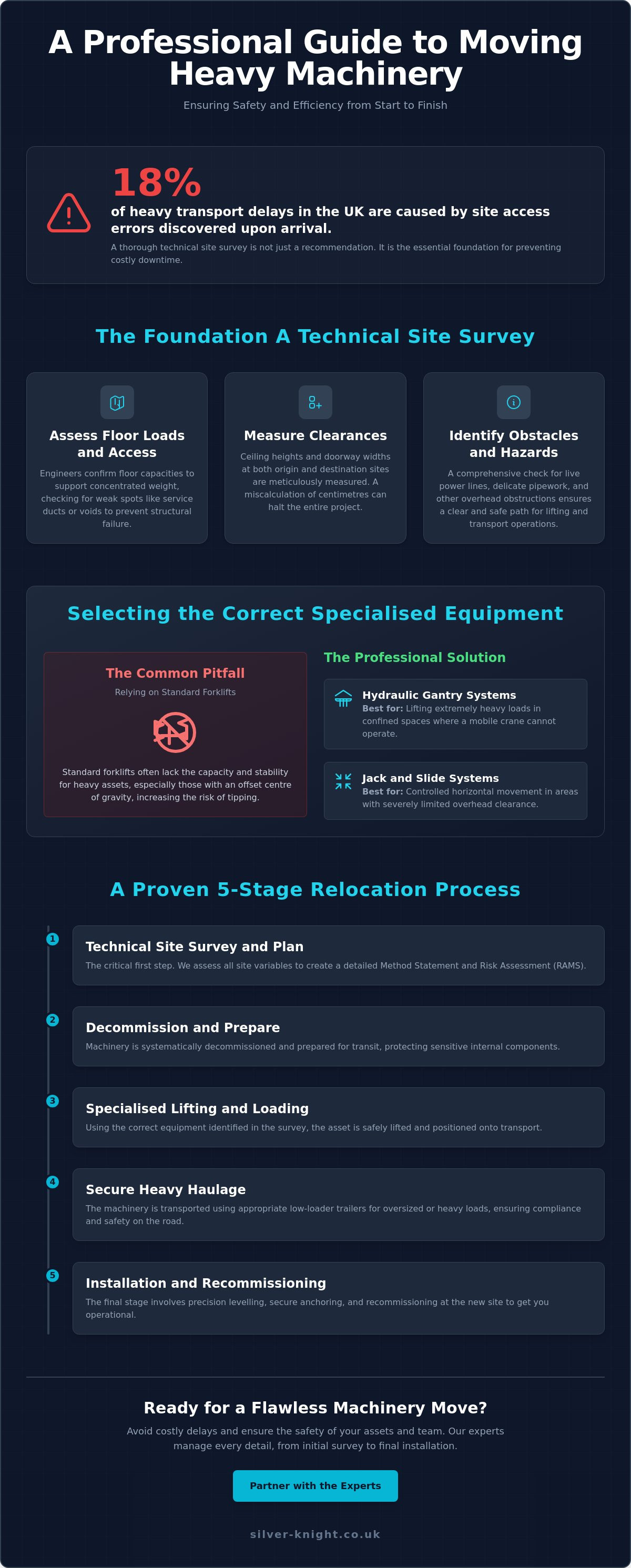
18% of heavy transport delays in the UK are caused by site access errors that are only identified after the vehicle has arrived, according to data from Silver Knight. This oversight can lead to costly downtime and unnecessary stress for your team.
If you are currently researching how to move heavy machinery safely, you probably share the common concerns regarding equipment damage and workplace safety.
Understanding the legal landscape of UK lifting regulations, including the latest updates to LOLER and PUWER, can feel overwhelming while you're trying to manage a busy facility.
We understand that protecting your investment and your people is your top priority. In this guide, you will learn the essential steps and safety protocols for moving industrial machinery without risking your staff or equipment.
We provide a clear safety checklist and an overview of the necessary tools, such as hydraulic gantry systems and Versa-Lifts. By the end, you'll have the confidence to choose a professional relocation partner who understands the intricacies of heavy haulage and plant relocation.
Key Takeaways
- Identify why a technical site survey is the essential foundation for preventing delays and ensuring a smooth industrial relocation project.
- Learn how to select the correct specialised equipment, such as hydraulic gantry systems, when standard forklifts are insufficient for the task.
- Discover the best practices for how to move heavy machinery safely by following a systematic decommissioning process to protect sensitive internal parts.
- Understand the logistics of the transport phase, including how to choose the right low-loader trailers for oversized or heavy loads.
- Gain confidence in the final installation stages by learning the requirements for precision levelling and secure anchoring at the new site.
Table of Contents
For expert assistance with your industrial relocation, it is essential to work with professional machinery moving experts who understand the technical requirements of the job.
Conducting a technical site survey for machinery moves
A detailed site survey is the foundation of every safe industrial relocation project. Without one, you risk facing the 18% of heavy transport delays in the UK that stem from site access errors discovered too late. This initial assessment allows engineers to identify every physical constraint and logistical hurdle before a single piece of equipment is lifted. It ensures that the project complies with the Health and Safety at Work Act 1974 and provides the technical data needed to determine how to move heavy machinery safely without damaging the building or the asset itself.
To better understand this concept, watch this helpful video:
Engineers must measure floor load capacities to confirm the ground can support the concentrated weight of heavy industrial assets. This involves checking structural drawings or consulting with building managers to avoid catastrophic floor failure. Similarly, checking ceiling heights and doorway widths at both the origin and destination is vital. Even a few centimetres of miscalculation can halt a project. All these findings feed into the Method Statement and Risk Assessment (RAMS), which is a legal requirement under the Management of Health and Safety at Work Regulations 1999. This document outlines the exact steps for how to move heavy machinery safely whilst adhering to LOLER and PUWER standards.
Assessing floor loading and access points
During the survey, specialists identify potential weak spots in the factory floor such as service ducts, drainage pits, or hollow voids that might collapse under pressure. They also evaluate the gradient of ramps and the turning circles required for specialised lifting equipment to ensure smooth transit. Identifying these variables early prevents the need for emergency steel plating or last-minute route changes. Experienced machinery movers UK use these surveys to prevent structural damage and ensure the safety of everyone on site.
Identifying obstacles and overhead hazards
The survey must also look upwards. Engineers check for live power lines, overhead cranes, or delicate pipework that could obstruct a lift or transport path. If obstacles are found, the plan might require the temporary removal of fixtures or the installation of floor protection to distribute weight. Every observation is documented in a formal pre-move report. This transparency ensures the entire team knows exactly what to expect on the day of the move, reducing the risk of workplace accidents and equipment damage.
For complex projects requiring high-capacity transport, it's best to consult with specialised machinery haulage services to ensure every detail is managed correctly.
Selecting the right specialised lifting equipment
Standard forklifts often lack the stability and weight capacity required for heavy industrial assets. Whilst they are excellent for moving pallets, they can become unstable when lifting machines with offset centres of gravity. Understanding how to move heavy machinery safely involves matching the tool to the technical challenge. For instance, hydraulic gantry systems offer a superior solution for lifting extremely heavy loads in confined factory spaces where a mobile crane cannot reach. These systems provide a stable, four-point lift that minimises the risk of the load swinging or tipping during the process.
When overhead clearance is severely limited, Jack and Slide systems are the preferred choice. These allow for controlled horizontal movement by lifting the machine slightly and sliding it along a dedicated track. This method is far safer than attempting to move a machine through a low opening with inadequate clearance. All lifting operations must also utilise certified tackle, including slings, shackles, and spreader beams. Using equipment that adheres to UK machinery safety regulations ensures that every component is rated for the specific weight of the load, reducing the chance of mechanical failure.
Versa-Lift and heavy duty forklifts
The Versa-Lift is a specialised machine designed for moving assets that are too heavy for standard trucks but too small to justify a full gantry setup. These machines feature extendable counterweights, allowing them to manage varied load centres without increasing the vehicle's overall footprint. This flexibility is vital when navigating narrow factory aisles or tight corners. You can view our range of specialised lifting equipment to see how these high-capacity machines handle diverse industrial loads with precision.
Hydraulic gantries and crane systems
A four-point hydraulic gantry system provides significantly more stability than a single-point mobile crane lift. Because the weight is distributed across four legs, there is much less chance of structural failure or load shifting during the lift. These systems also offer incredible precision via hydraulic controls, which is essential for the final positioning of a machine. Regular inspections under LOLER regulations are mandatory to ensure this equipment remains safe for use. If you have questions about which lifting method suits your facility, you can speak with a technical advisor for guidance.
Finding reliable industrial plant relocation specialists is the first step towards a successful move.
Preparing and decommissioning industrial plant
A systematic decommissioning process is vital to protect the sensitive internal components of your equipment. When considering how to move heavy machinery safely, you must look beyond the physical lift and focus on the technical preparation phase. Every electrical wire, hydraulic hose, and pneumatic pipe must be clearly marked and documented before any disconnection occurs. Engineers often use high-resolution photographs and detailed diagrams to map out the connections. This level of detail ensures that the reassembly process is efficient and reduces the risk of incorrect wiring that could lead to expensive equipment failure later on.
Professional dismantling plays a significant role in ensuring your assets can be recommissioned quickly in their new home. By carefully taking a machine apart rather than forcing components, you preserve the integrity of the threads, seals, and connections. This meticulous approach prevents the loss of calibration and keeps the machine in peak condition throughout the relocation project. It's not just about getting the machine out of the door; it's about making sure it works perfectly when it arrives. Skipping these steps often leads to prolonged downtime that far outweighs the time saved during the initial move.
Mechanical and electrical disconnection
Safe isolation of all power, compressed air, and water supplies is the priority. You must ensure that all energy sources are locked out and tagged out to prevent accidental activation. Preparation is everything. Involving a qualified engineer during a machinery dismantle service is essential for handling complex control systems and high-voltage connections. Additionally, all fluids such as coolants or lubricants should be thoroughly drained and the tanks cleaned. This step prevents environmental contamination and hazardous leaks during the haulage phase, which could otherwise lead to fines or damaged cargo. Don't take shortcuts.
Securing sensitive components
To ensure your equipment arrives on schedule and without incident, it is vital to partner with expert heavy haulage providers who have experience with oversized industrial loads.
Managing the heavy haulage and transport phase
Selecting the correct vehicle is the first step in the transport process. For oversized equipment, low-loaders or semi-low loaders are typically used to keep the overall height of the load as low as possible. This is not just a matter of convenience; it is a critical safety measure to ensure the vehicle can pass under bridges and overhead cables. When planning how to move heavy machinery safely, haulage experts must conduct a thorough route assessment. They identify weight-restricted roads and narrow lanes that could trap a large vehicle. This level of planning prevents the site access errors that cause 18% of heavy transport delays in the UK.
Securing the asset to the trailer requires heavy-duty chains and load tensioners. Unlike standard cargo, industrial machines often have uneven weight distributions, requiring a bespoke lashing plan. As of January 1, 2026, the Road Haulage Association (RHA) Conditions of Carriage limit standard liability to £1,300 per tonne. Because many machines exceed this value, specialist machinery moving insurance is a necessity. Moving wide or heavy loads also involves legal obligations, such as obtaining movement permits and arranging for escort vehicles. These measures protect the equipment and other road users whilst ensuring compliance with UK transport laws.
Securing the load for transit
Calculating the correct number of lashing points is a technical task based on the total weight and dimensions of the machine. Engineers use anti-slip matting to increase the friction between the machine and the trailer bed, which prevents shifting during transit. This is a standard part of professional factory relocation services to ensure the asset remains stationary even during sudden braking. Comprehensive goods in transit insurance should always be verified before the journey begins to cover the full replacement value of the machinery.
Logistics and permit coordination
Moving an abnormal load requires notifying the police and local authorities well in advance. This process ensures that the chosen route is clear of temporary roadworks or events that could block the path. A pilot car often leads the way to warn oncoming traffic and assist the driver with tight manoeuvres. Timing is also a key factor. Most large moves are scheduled for off-peak hours to avoid heavy traffic and minimise disruption to the local community. For a detailed quote on your transport needs, you can request a haulage assessment today.
When you reach the new site, working with machinery installation and moving specialists ensures that your equipment is set up for long term success.
Ensuring safety during installation and recommissioning
The final stage of any move is just as critical as the first lift. Once the asset is in position, the focus shifts to precision. Precision levelling is not just about balance; it is about performance. You must use laser levels and precision shims to ensure the machine is perfectly balanced on its new foundation. If a machine is even slightly out of alignment, it can lead to premature wear on bearings and mechanical parts. Understanding how to move heavy machinery safely requires a complete end to end perspective that includes this final commissioning phase, as an unstable machine is a hazard to everyone in the facility.
Anchoring is equally important for long term safety. Depending on the weight and vibration levels of the equipment, you might use mechanical expansion bolts or chemical anchors. These keep the machine stationary during high speed operations. Once the machine is physically secured, a thorough safety inspection is mandatory before any power supplies are reconnected. This involves checking that all marking and documentation from the decommissioning phase is followed exactly. Recommissioning is the final functional test where the machine is brought back to life under controlled conditions to verify that it meets its original operational specifications.
Precision positioning and anchoring
Correct installation prevents premature wear on mechanical parts by ensuring that all internal forces are distributed as the manufacturer intended. Engineers use laser levels to achieve tolerances that are impossible to see with the naked eye. Shims are then placed strategically under the machine's feet to compensate for any slight irregularities in the factory floor. This level of care ensures that the machine operates at peak efficiency from the moment it is switched on. A secure machine is a safe machine, especially when dealing with high speed rotating parts or heavy presses.
Final safety checks and testing
The final sign off must include a post move PUWER assessment to confirm the machine is safe for use. The Provision and Use of Work Equipment Regulations 1998 require that equipment is suitable for its purpose and maintained in a safe condition. You must verify that all emergency stop circuits, safety guards, and interlocking systems are fully functional after the move. Once these checks are complete, a formal handover takes place. All safety documentation and test certificates are provided to the client, ensuring total transparency and compliance with UK safety laws. This formal process gives you the confidence that your production line is ready to resume safely.
Before you begin your project, you can consult with professional heavy machine movers to ensure every safety protocol is met from the very start.
Plan your next industrial relocation with confidence
Successfully relocating industrial plant requires more than just heavy lifting. It demands meticulous site surveys to prevent delays and the use of specialised equipment like hydraulic gantries or jack and slide systems. By following a structured decommissioning and installation process, you protect your investment and maintain workplace safety. This guide has outlined the essential steps for how to move heavy machinery safely whilst meeting all UK legal requirements under LOLER and PUWER.
Silver Knight brings over 180 years of collective industry experience to every project. We are specialists in hydraulic gantry and jack and slide systems, offering a nationwide service across the United Kingdom. Whether you're moving a single machine or an entire factory, our team provides the technical expertise needed for a seamless transition. Contact Silver Knight Haulage for a professional machinery moving quote and ensure your equipment is in safe hands. We look forward to helping you achieve a successful and stress-free relocation.
Frequently Asked Questions
Do I need special insurance when moving heavy machinery?
Standard haulage insurance rarely covers the full value of industrial assets. As of January 2026, standard RHA liability is limited to £1,300 per tonne, which is often far below the replacement cost of high tech equipment. You should check that your provider has specialist machinery moving insurance. This ensures your investment is protected against damage during the lift, transit, and installation phases of the project.
What is the difference between a risk assessment and a method statement?
How long does a typical factory machinery move take to complete?
The duration depends entirely on the complexity of the equipment and the distance of the haulage. A single machine move might be completed within a day, including decommissioning and positioning. Larger factory relocations involving multiple production lines can take several weeks to coordinate. Factors such as site access, the need for road permits, and the precision required for recommissioning will all influence the final timeline of your project.
Can I use a standard forklift to move a five tonne machine?
What are the LOLER regulations and do they apply to my move?
The Lifting Operations and Lifting Equipment Regulations 1998 (LOLER) apply to all lifting equipment and operations in the UK. This includes any cranes, slings, or jacks used during your machinery move. LOLER requires that all equipment is fit for purpose, marked with its safe working load, and subject to regular thorough examinations by a competent person. Compliance is essential for ensuring the safety of your staff and your assets.
How do I know if my factory floor can support a new heavy machine?
You should consult the original structural drawings of the building or hire a structural engineer to perform a floor loading assessment. A technical site survey is the best way to identify hidden hazards like service ducts or voids that could collapse under a heavy load. Understanding the floor's point loading capacity is a vital step in discovering how to move heavy machinery safely without causing structural damage to your facility.
Is it possible to move machinery whilst the rest of the factory is still operating?
What should I do if my machine is too wide for the factory doors?
If a machine is too large for existing access points, you have several options. You can choose a machinery dismantle service to break the asset down into smaller, manageable sections. Alternatively, temporary structural changes might be required, such as removing door frames or creating a temporary opening in a wall. These challenges are usually identified during the initial technical survey, allowing for a solution to be planned well in advance.

Article by
David Ashby
I'm the Managing Director of Silver Knight Haulage & Machinery Ltd. Silver Knight Ltd is a family-run firm established in the West Midlands in 2005, with the aim of providing a cost-effective, yet professional, service to businesses for the removal, transportation, and installation of machinery, plant, and equipment here in the UK and worldwide. Between us, the Silver Knight workforce has over 50 years of experience with machinery and its operation.
Disclaimer
This article is intended for informational purposes only. Please ensure you seek expert advice or carry out your own research to confirm the information is suitable for your specific needs.