The lorry may be the simplest part of woodworking machinery transport. A valuable saw, planer or CNC machine can be at risk if its weight, dimensions, lifting points and route aren’t considered before the move. A sound plan starts with the machinery and both sites, not just the vehicle.
Concerns about damage, access or lost workshop time are well founded. Moving machinery involves more than getting it from A to B. The equipment, lifting method, site conditions and timing all need to be considered together to reduce handling risks and avoidable disruption.
This guide explains the stages of a planned move, what to gather before requesting a transport assessment, and what to look for when choosing a specialist. It also covers how to prepare your workshop and machinery, so you can discuss the job clearly and make practical arrangements before moving day.
Key Takeaways
- Plan woodworking machinery transport around the machine’s condition, dimensions, weight and access at both sites.
- Check for exposed components, moving parts, floor conditions and space constraints that could affect handling.
- Compare transport options by considering the load, site access, lifting needs and whether the job includes final positioning.
- Gather machine details and photographs of the equipment, accessories, condition and access routes before requesting an assessment.
- Ask a specialist to clarify site checks, lifting capability and who is responsible for each stage, from preparation through delivery.
Planning a complex machinery move? Speak with Silver Knight about machinery moving and the information needed to assess the job.
What woodworking machinery transport involves and why planning matters
Woodworking machinery transport is the planned handling and movement of workshop equipment between locations, based on the needs of each machine and the access at both sites. It is more than booking a vehicle. The machine’s condition, dimensions, weight and configuration help determine how it can be prepared, lifted, loaded and delivered.
Moving one machine may need a different plan from relocating several assets or a whole workshop. Even a single item needs suitable handling and access arrangements. With multiple machines, the sequence of moves, coordination between equipment and requirements at the destination can add complexity. For wider moves, machinery haulage and relocation may form part of a broader project.
Which woodworking machines may need specialist transport
Saws, planers, CNC routers and extraction equipment are all examples of machinery that may need moving. Their dimensions, weight and construction vary, so don’t assume one handling method will suit every machine. Before requesting an assessment, gather the manufacturer and model details, note the current configuration, and flag fragile or exposed components. If you’re unsure how a component should be handled, ask the specialist to confirm the requirements for that machine.
Why a transport plan begins with the machine and both sites
The collection and delivery locations both matter. Doorways, turning space, floor conditions and the working area can affect how equipment is accessed, lifted and positioned. A machine that can be removed from one workshop without difficulty may face different constraints at its destination.
Provide the best available dimensions and weight, along with clear information about the route into and through each site. These details help a specialist make an informed initial assessment, although the handling method and equipment should be confirmed for the move itself. Photographs of the machine and access points can help explain conditions that are difficult to describe.
Preparation and safe handling should also be considered in the context of workplace equipment responsibilities. The Provision and Use of Work Equipment Regulations 1998 provides background on the UK framework. Check the requirements relevant to your circumstances and confirm machine-specific handling arrangements with a suitable specialist.
For a complex move, contact Silver Knight about machinery moving to discuss the machine and site information needed for an assessment.
What makes woodworking machinery difficult to move safely
A machine’s size is only part of the picture. Its configuration, exposed components and moving parts can all affect how it should be prepared and handled. A control panel, guard or loose accessory may need separate consideration. Changes made to a machine over time can also mean its current setup differs from the manufacturer’s original configuration.
Unknown machine details can limit transport planning because a specialist may not be able to assess handling needs accurately without reliable information about the equipment. If you don’t have a manual or full specification, share what you do know and flag any uncertainties rather than guessing.
Machine details that can change the handling plan
Start by recording approximate dimensions and weight, using manufacturer information or other reliable records where available. Note the machine’s configuration and identify loose accessories, guarding, controls and components that may need separate protection. Photographs can show the machine’s current condition and highlight details that aren’t clear from written notes.
Don’t disconnect, dismantle or secure parts based on general advice alone. The right preparation depends on the particular machine, so confirm any required steps with someone competent to advise on that equipment. The Health and Safety Executive’s Approved Code of Practice for woodworking machinery provides guidance on workplace safety for this type of equipment, including guarding and maintenance.
Collection and delivery access questions to resolve
Site constraints are separate from machine-related risks, but can be just as important. Check both locations and note any details that could affect access, handling or positioning:
- Entrance widths, headroom and the route from the entrance to the machine
- Loading areas, obstacles, changes in level and floor conditions
- Available working space around the equipment and any restrictions on lifting equipment access
Look at the full route, not just the doorway. A tight turn, uneven floor or restricted working area may change what can be done safely. Share photographs and measurements with the specialist, and arrange a technical site survey if important details can’t be confirmed remotely. The specialist should assess the actual machine and sites before confirming the handling approach.
For a move that needs specialist assessment, explore machinery haulage and relocation as part of the planning process.
If your move may need specialist lifting, talk to Silver Knight about the equipment and site details needed to assess the job.
How specialist transport options compare for woodworking machinery
Some moves can be planned around haulage, whilst others need lifting or positioning as well. The right approach depends on the machine, the route out of the building, access at the destination and the work included in the project. A site assessment helps establish whether standard haulage is suitable or whether additional lifting equipment should be considered. No single method is right for every move.
| Planning factor | Haulage focused move | Move with specialist lifting |
|---|---|---|
| Access | Loading access is suitable for the planned collection and delivery. | Restricted entrances, internal routes or working space may need further assessment. |
| Load characteristics | The machine can be prepared and moved using the agreed loading plan. | Weight, shape or configuration may affect how it can be lifted or positioned. |
| Lifting needs | Additional lifting may not be required, subject to assessment. | A crane, hydraulic gantry or jack and slide system may be considered. |
| Project scope | Focuses on moving the machine between locations. | May include specialist lifting or positioning as part of a wider move. |
When machinery haulage may need specialist lifting
Limited access or a complex loading arrangement can make a standard loading plan unsuitable. A site assessment allows the moving specialist to consider the machine, available space and work required before confirming an approach. Silver Knight uses hydraulic gantries, cranes and jack and slide systems. These are options to assess, not recommendations for every job. You can review its specialist lifting equipment for more information.
Share access details and machine information early. For safe preparation and operation, consult the HSE’s guidance on woodworking machinery and confirm any machine-specific requirements with a suitable specialist.
When a move may include dismantling or wider relocation
Some machines may need preparation or dismantling before they can be moved, but the steps depend on the specific equipment. Confirm who is responsible for this work and how it fits with collection and delivery. Transport is not the same as a full factory relocation or clearance project. If several machines or wider workshop operations are involved, clarify whether the job needs a broader relocation plan rather than treating it as a single machine move.
To discuss the information needed to assess a move, contact Silver Knight about machinery moving.
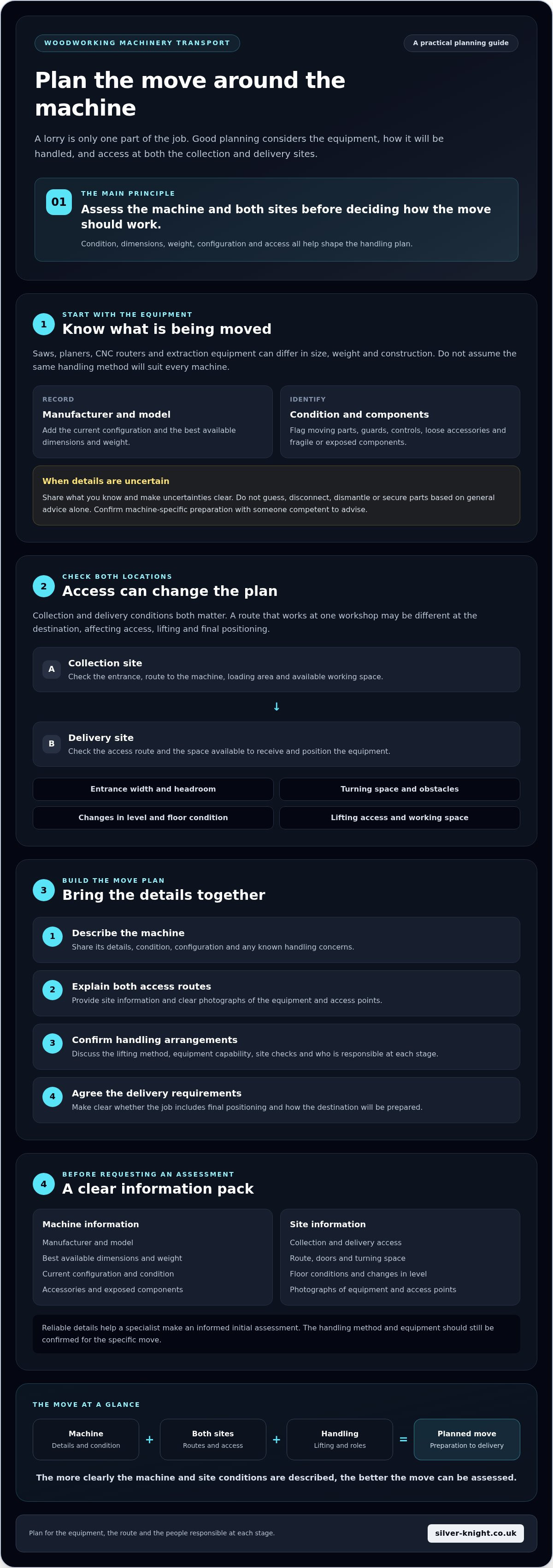
How to prepare woodworking machinery for collection and delivery
A clear preparation plan helps the owner and moving specialist agree what is known, what still needs checking and who is responsible for each task. For woodworking machinery transport, don’t assume general advice applies to every machine. Confirm preparation instructions with the machine owner, manufacturer or moving specialist before making changes to the equipment.
Information to gather before requesting a transport assessment
Collect the details you have, even if some are estimates. Flag anything that needs confirming rather than filling gaps with a guess. Photographs can show the machine’s condition and explain access constraints that are hard to describe.
- Record the machine’s make, model, approximate dimensions and weight, using reliable records where available. Note its current condition and configuration.
- Describe collection and delivery access, including entrances, internal routes, loading areas and any known restrictions. Share photographs of both routes.
- List accessories and separate components, such as guards, controls or attachments. Photograph these alongside the machine and note anything that may need separate handling or protection.
- Explain any timing constraints and where the machine is intended to sit at delivery. This helps clarify the planned scope and the access needed at the destination.
Owner-provided information includes machine records, condition notes, photographs, accessories and site details. The specialist should confirm the handling method and any work needed to prepare the machine. This distinction helps avoid carrying out disconnection, dismantling or securing work without machine-specific instructions.
Collection day and delivery handover checks
Before collection, confirm the agreed access arrangements, site contacts and scope of the move with the responsible project contact. Make sure everyone involved knows which machine and accessories are included. If the plan or site conditions have changed, raise this before work proceeds so the arrangements can be reviewed.
At handover, check the machine and accessories against the agreed inventory. Note existing condition concerns and make sure they’re recorded with the relevant contact. At delivery, check the items received and record the machine’s condition, raising any concerns promptly with the person responsible for the project.
If dismantling is being considered, agree who will carry it out and what instructions apply before the move. Silver Knight lists machinery dismantling among its services. Confirm whether it is relevant to your equipment and the planned scope.
For a planned machinery move, speak with Silver Knight about its machinery moving services.
Choosing a woodworking machinery transport specialist
Choose a provider who will assess the machine and both sites before agreeing how the move will work. A suitable plan should make clear what the provider will handle, what you need to prepare and whether delivery includes positioning or installation. This helps you compare proposals by their scope, not just by the vehicle or journey.
Questions to ask before agreeing a machinery move
Ask how the provider will assess the machine’s details and access at collection and delivery. If a site survey may be needed, clarify what it will cover and what information you should supply beforehand. You can also ask:
- Which lifting, haulage and handling tasks are included in the proposed scope?
- Will the move include delivery only, or final positioning and machinery installation too?
- What must the machine owner prepare, and which steps need confirmation from the manufacturer or a specialist?
- How will changes to the machine details, access or project scope be discussed?
Clear responsibilities matter. Agree who is handling machine preparation, any dismantling, collection, transport, delivery and final positioning. If these tasks involve different people, confirm how they’ll coordinate and who your main project contact will be. Don’t assume installation or dismantling is included unless it’s set out in the agreed scope.
What to share when contacting Silver Knight
Silver Knight provides machinery moving, heavy haulage and machinery installation, alongside factory and plant relocation. It works across the UK, but its specific experience with your type of woodworking machinery should be discussed rather than assumed. To help the team understand your requirements, share:
- The machine’s make, model, dimensions, weight and condition, where known
- Photographs of the machine, accessories and collection and delivery access
- Collection and delivery details, any access constraints and your desired timing
- Whether the job involves one machine or a wider workshop or factory relocation
- Whether dismantling, installation or storage may be relevant
Be open about details you haven’t confirmed. This gives the specialist a chance to identify what needs checking before the handling plan is agreed. If you want to review the scope of its machinery haulage and transport service, use the service information as a starting point, then discuss the specific machine, sites and tasks involved.
Explore Silver Knight’s machinery moving services to learn more about planning your move.
Plan your next machinery move with confidence
Successful woodworking machinery transport starts with a plan that fits both the equipment and the sites. Machine details, access, lifting needs and the agreed scope all help shape a move that protects valuable machinery and supports a smoother handover.
Before requesting an assessment, gather what you know about the machine, photograph its condition and accessories, and share access details for collection and delivery. Ask the specialist to confirm any machine-specific preparation and clarify who is responsible for each stage, from preparation through to final positioning.
Silver Knight is a family-run machinery-moving specialist with over 180 years of collective industry experience. Its UK-wide services include machinery moving, heavy haulage and machinery installation, supported by specialist lifting equipment such as hydraulic gantries, cranes and jack and slide systems. Discuss your particular machine and requirements with the team rather than assuming a handling method before the move has been assessed.
With clear information and responsibilities agreed in advance, you can take practical steps towards a well-organised move and get your workshop ready for what comes next. Contact Silver Knight to discuss your machinery transport requirements.
Frequently Asked Questions
What does woodworking machinery transport involve?
Woodworking machinery transport involves planning, handling and moving workshop equipment from one location to another. The plan should account for the machine’s dimensions, weight, condition and configuration, along with access at collection and delivery. It may cover haulage alone or include specialist lifting, dismantling or installation, depending on the job. Agree the scope and responsibilities with the moving specialist before making arrangements.
Can woodworking machinery be moved without dismantling it?
Some machines may be moved without dismantling, but this depends on the equipment and the access available at both sites. A narrow entrance or restricted working space may affect the approach. Don’t remove guards, controls or other components without suitable instructions. Ask the machine owner or manufacturer about preparation, then have the moving specialist assess the machine and confirm whether dismantling is needed.
How do I prepare woodworking machinery for transport?
Start by gathering reliable machine details and photographing its condition, accessories and the routes into and through both sites. List any loose components and note details that are uncertain. Confirm preparation instructions with the machine owner, manufacturer or moving specialist before disconnecting or dismantling anything. Agree who is responsible for each task, then check the machine and accessories against the agreed inventory at collection and delivery.
What information should I provide for a machinery transport assessment?
Provide the machine’s make, model, approximate dimensions and weight, plus its current condition and configuration where known. Include photographs of the machine, accessories, collection and delivery access, and any obstacles or changes in level. Explain the intended final position, desired timing and whether the job involves one machine or a wider relocation. Mark estimates and unknown details clearly so the specialist can identify what needs checking.
What happens if access is restricted at the collection or delivery site?
Tell the moving specialist about restrictions at both sites as early as possible. Share measurements and photographs of entrances, internal routes, loading areas and working space, and mention obstacles or changes in level. If access details can’t be confirmed remotely, ask whether a technical site survey is needed. The specialist can then assess the machine and site conditions before confirming suitable lifting and handling arrangements.
Can a machinery transport company help with lifting and installation?
Some machinery moving specialists also provide lifting and installation, but confirm these tasks are included in the agreed scope. Silver Knight offers machinery moving, heavy haulage, contract lifting and machinery installation. Its specialist equipment includes hydraulic gantries, cranes and jack and slide systems. Which equipment or services are suitable depends on the machine, site access and project requirements, so discuss the details before agreeing a plan.
How do I choose a specialist for woodworking machinery transport?
Choose a provider who assesses the machine and both sites, explains the proposed handling approach and clearly sets out what is included. Ask who is responsible for preparation, lifting, haulage and final positioning, and which details still need confirmation. Silver Knight is a family-run machinery-moving specialist with over 180 years of collective industry experience and UK-wide coverage. Discuss your specific requirements rather than assuming experience with a particular machine type.

Article by
David Ashby
I'm the Managing Director of Silver Knight Haulage & Machinery Ltd. Silver Knight Ltd is a family-run firm established in the West Midlands in 2005, with the aim of providing a cost-effective, yet professional, service to businesses for the removal, transportation, and installation of machinery, plant, and equipment here in the UK and worldwide. Between us, the Silver Knight workforce has over 50 years of experience with machinery and its operation.
Disclaimer
This article is intended for informational purposes only. Please ensure you seek expert advice or carry out your own research to confirm the information is suitable for your specific needs.