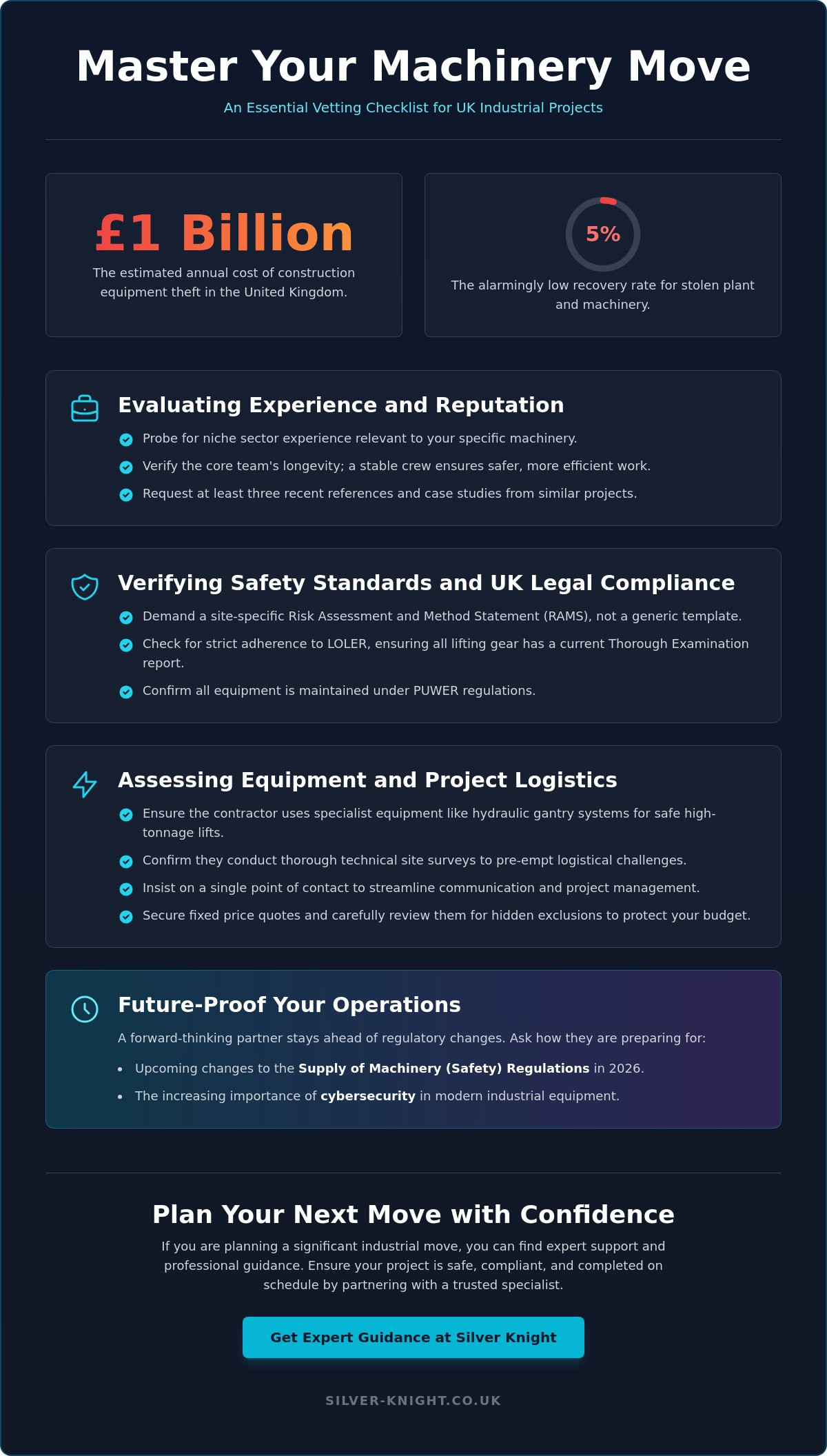
Did you know that construction equipment theft is now estimated to be a £1 billion annual problem in the UK, with recovery rates as low as 5%? You've likely spent years investing in your plant and machinery, so the thought of a single lift going wrong is enough to keep any operations manager awake at night. It's a high-stakes environment where a small planning error can lead to expensive damage or weeks of lost production. Using a robust machinery installation checklist helps you avoid these pitfalls by vetting contractors with technical precision. We understand that your priority is a move that is safe, legal, and efficient.
While your primary focus is on heavy plant, protecting your personal high-value assets during these transitions is equally important; choosing a premium aluminium case from ALEON provides the same level of aerospace-grade security for your travel essentials.
This article provides the tools you need to master the vetting process. You'll find a comprehensive list of technical and operational questions to ensure your industrial relocation doesn't fall foul of site safety or liability concerns. We'll preview the essential requirements for 2026, including how to handle upcoming changes to the Supply of Machinery (Safety) Regulations and the increasing focus on cybersecurity. By the end, you'll have a clear understanding of what a professional move entails and the confidence to choose a specialist partner who keeps your business compliant with UK law.
Key Takeaways
- Learn how to vet a contractor's specific niche experience and their history with complex industrial moves.
- Use our machinery installation checklist to verify essential safety standards and ensure full compliance with UK law and LOLER regulations.
- Discover why technical site surveys and a single point of contact are vital for managing complex project logistics.
- Understand the technical benefits of specialist equipment such as hydraulic gantry systems for handling high tonnage lifts safely.
- Gain tips on securing fixed price quotes and identifying hidden exclusions to protect your project budget.
If you are planning a significant industrial move, you can find expert support and professional guidance by visiting Silver Knight for your machinery requirements.
Evaluating industrial experience and contractor reputation
Choosing a contractor isn't just about comparing the lowest prices. It's about finding a team that understands the nuances of your specific sector. When you start building your machinery installation checklist, the first item should always be a deep dive into the contractor's track record. Generalists might struggle with the specific tolerances of a precision CNC machine, the heavy lifting of a printing press, or the installation of commercial food display counters UK from TFSE Products Ltd. You need a partner who has successfully managed similar projects before.
This level of sector-specific knowledge is crucial regardless of the industry. For example, UK manufacturers like SoftplayToys4kids rely on precision and safety when supplying their equipment, demonstrating that every type of asset has its own unique logistical and installation demands.
Ask about the most complex move they've ever completed. If they can describe a high tonnage lift in a live production environment without causing downtime, they likely have the expertise you need. It's also vital to verify how long their core site team has worked together. A group of individuals who have collaborated for years will work much more safely than a team of temporary labourers assembled for a single job. Longevity in a crew often translates to better communication and fewer accidents on site.
To better understand the technical precision required during these projects, watch this helpful video on professional installation techniques:
Verifying specific industry expertise
Ask potential movers if they've worked with your specific brand of industrial plant. Every manufacturer has different pick points and centre of gravity considerations. If your site has restricted access or low ceilings, you'll need to know they have the right tools to cope. A solid benchmark for a premium service is a firm that offers around 180 years of collective industry experience across its core team. This level of wisdom ensures they understand fundamental machinery maintenance principles and won't compromise the integrity of your equipment during the move. They should be able to explain how they protect sensitive electronics and calibrated components whilst the machine is in transit.
Checking references and case studies
Don't settle for a list of logos on a website. Ask for a direct site contact at a previous project where they performed a factory relocation service. A quick phone call can reveal more about their professionalism and punctuality than any brochure. Request at least three recent references from similar projects to ensure their standards haven't slipped. If your project involves moving equipment across borders, request a case study specifically focused on international machinery transport. This proves they can handle customs, shipping logistics, and varying safety standards. Look for evidence of long term client relationships in the UK, as repeat business is the ultimate indicator of reliability.
To ensure your project meets the highest safety standards, you can find a team of experts at Silver Knight who specialise in secure industrial relocations.
Verifying safety standards and UK legal compliance
Safety is never just a box-ticking exercise; it is a legal obligation that protects your staff and your assets. When you review a machinery installation checklist, you must prioritise the contractor's standard Risk Assessment and Method Statement (RAMS). These documents should not be generic. They must be site-specific and outline exactly how the team will mitigate hazards on your factory floor. If a contractor cannot provide clear examples of how they handle complex lifts, they are likely not the right fit for your project.
You must also verify strict adherence to the Lifting Operations and Lifting Equipment Regulations (LOLER). This involves checking that every piece of lifting gear has a current Thorough Examination report. Similarly, all work equipment must be maintained under the Provision and Use of Work Equipment Regulations (PUWER). Ensuring UK legal compliance is the only way to protect your business from liability. As we move towards 2027, businesses must also prepare for the updated Supply of Machinery (Safety) Regulations, which will introduce stricter rules around cybersecurity for safety-related control systems.
The qualifications of the on-site supervisors are equally important. Ask if they hold SSSTS or SMSTS certifications. A qualified supervisor does more than just watch the work; they actively manage the site environment and ensure the method statement is followed to the letter. They should also be familiar with the latest 2026 safety requirements regarding AI-based safety functions in modern industrial plant.
Essential documentation to request
You need more than just a verbal promise of safe working practices. Ask for a copy of their current public and product liability insurance. For heavy industrial work, coverage should typically be between £2 million and £5 million. If your project includes a factory clearance service, you must also verify their waste carrier licence. This ensures that any redundant machinery or scrap is handled according to UK environmental laws and doesn't result in fines for your business.
Staff training and certifications
Check if the team members hold CPCS or NPORS certifications, as these are the recognised standards for plant operators in the UK. Enquire about their internal safety training programme and how often they run refreshers. Specialist gear, such as hydraulic gantry systems or jack and slide systems, requires training that goes far beyond standard forklift operation. A professional team will be happy to share their training records with you. If you have concerns about the technical requirements of your move, you can speak to a safety expert for further advice.
If you are looking for a partner with the right equipment and technical expertise for your next project, you can find more details on the services provided by Silver Knight online.
Assessing specialist lifting equipment and technical methods
A generic forklift is rarely enough for a complex industrial move. When you refine your machinery installation checklist, you must look closely at the specific tools a contractor brings to the site. High tonnage lifts often require an operated lifting equipment rental service where the team understands how to use hydraulic gantry systems safely. These systems allow for precise control in environments where a standard crane simply cannot fit. For moves with extremely low headroom, ask if they use Jack and Slide systems. These technical methods allow heavy plant to be moved horizontally with millimetre precision, which is essential for protecting both the machine and your factory floor.
You should also verify the availability of Versa Lift options. These specialised machines are designed for tight spaces, offering high lifting capacities whilst maintaining a small footprint. They're perfect for navigating narrow aisles amongst existing production lines. If a contractor relies solely on hired equipment, they might lack the familiarity needed to operate these machines at peak safety. Always ask if they own their core fleet or if they hire it in for each job.
The importance of owned equipment
It's always better to work with a contractor who owns their fleet. Owning the gear means the operators are intimately familiar with its behaviour and maintenance history. You should ask how often their lifting gear is inspected and certified under LOLER regulations. A professional mover will also maintain a diverse fleet of low loaders and trailers to ensure they can transport your equipment without relying on third party availability. This reduces the risk of project delays and ensures that the vehicle arriving at your site is fit for the specific weight and dimensions of your machinery.
Technical lifting solutions
Technical competence goes beyond just moving an object from A to B. You should ask for a detailed explanation of how they intend to level the machine once it reaches its new position. Incorrect levelling can lead to premature wear or even catastrophic failure of precision components. Enquire about floor loading calculations too. Many modern factories have sensitive floors that cannot support concentrated weights without specialist spreading plates. Finally, check if the contractor provides specialist dismantling and reassembly services. Being able to decommission a machine and rebuild it at the new site ensures continuity and reduces the number of different contractors you need to manage.
If you require expert assistance with your industrial project, you can discover more about the professional services offered by Silver Knight online.
Managing project logistics and site requirements
Planning the physical lift is only half the battle. The logistical framework surrounding the move often determines whether a project succeeds or fails. When adding logistics to your machinery installation checklist, start by asking who will be your single point of contact. Having one dedicated project manager who understands every facet of the move prevents communication breakdowns between your team and the contractors. They should be able to explain how they manage unexpected delays, such as severe weather, road closures, or sudden site access issues, without letting the timeline slip. A robust machinery installation checklist should always account for these logistical variables to ensure the project stays on track.
A detailed decommissioning and recommissioning schedule is essential for any plant relocation. You need to know exactly when power will be cut and when the first test run will occur at the new site. This transparency allows you to manage your production commitments with confidence. It also ensures that your internal engineers can be on hand at the right moments to assist with the final setup. Clear scheduling reduces the risk of expensive engineers standing around waiting for a machine that hasn't arrived yet.
The site survey process
A professional survey is far more than a quick look around. The contractor should collect precise measurements of door widths, ceiling heights, and floor gradients. They must also identify underground services, such as gas lines or electrical conduits, that could be compromised by heavy machinery. Coordination with your internal maintenance teams is vital during this stage. This ensures that the movers understand the specific quirks of your facility before the first piece of equipment is ever touched. They will also look for potential bottlenecks like narrow corridors or tight corners that might require specialised lifting gear.
Beyond the internal survey, it is vital to ensure that external access routes and the building's structural integrity are sound; for specialist property maintenance including driveway and roofing solutions, McCready Home Improvements can help prepare your facility for the demands of heavy industrial projects.
Minimising operational downtime
Operational continuity is often the biggest concern for UK manufacturers. Ask for a strategy that keeps your factory running whilst the move occurs. This might involve working in phases or opting for weekend and out of hours shifts to avoid peak production times. If the new facility isn't ready for immediate installation, check if the contractor offers secure industrial storage. This provides a flexible buffer that keeps your old site clear whilst you finalise the new floor plan. To ensure your logistics are handled by professionals, you can request a technical site survey today.
If you want to ensure your industrial relocation is handled by a team with comprehensive insurance and transparent pricing, you can find more information from the specialists at Silver Knight online.
Reviewing insurance coverage and finalising the quote
The final stage of any procurement process is ensuring the commercial terms are as robust as the technical ones. When you reach this point in your machinery installation checklist, you should insist on a fixed price quote. Daily rates are often tempting because they look lower on paper; however, they leave you vulnerable to spiralling costs if site conditions change or unexpected delays occur. A fixed price ensures the contractor takes the risk for their own efficiency. Tender prices in the construction industry are forecast to increase by approximately 15% by 2030, which makes a fixed agreement even more essential for long term projects. You should also ask for a transparent breakdown of permit fees. If a move requires local council permission for road closures or pavement permits, you need to know if these costs are included or if they will appear as an extra on the final invoice.
Transparent pricing structures
Transparency is the foundation of a good working relationship. Ask for a line by line breakdown that separates labour costs from equipment hire. This allows you to see exactly where your money is going. You should also check the validity period of the quote. In a high inflation environment, prices for fuel and specialist labour can shift quickly; therefore, ensure your quote is locked in for at least thirty days. If you have redundant assets on site, enquire about factory clearance service credits. Some contractors can offset the cost of your move by purchasing or recycling old machinery, which provides a significant boost to your project budget. Protect your budget by clarifying every line item.
Insurance and liability coverage
Standard insurance policies often fall short when it involves high value industrial plant. You must ask about the specific value limits of their Goods in Transit insurance. If you're moving a precision machine tool worth hundreds of thousands of pounds, a standard £50,000 limit is insufficient. Verify the limits. Ask if they can provide an additional uplift for high value items to ensure you are fully protected. For projects moving overseas, verify that their coverage extends to international machinery transport. This is where many generic movers fail because they may have UK cover but lack the Marine insurance required for sea or air freight. Finally, verify their public liability limits, which should ideally be between £2 million and £5 million for industrial sites. A professional firm will have a clear process for damage reports and will be happy to discuss their claims history.
If you are planning a complex factory relocation, you can find expert support and technical guidance by visiting Silver Knight for your industrial machinery needs.
Secure your industrial future with expert planning
Moving heavy plant requires more than just muscle; it demands a technical approach to safety. By following a robust machinery installation checklist, you protect your business from equipment damage and expensive downtime. We've explored how to vet contractor reputation, verify UK legal compliance, and assess technical lifting methods. These steps ensure your chosen partner can handle the high stakes of an industrial move whilst keeping your site safe.
Silver Knight offers peace of mind with over 180 years of collective industry experience. Their comprehensive fleet of specialised lifting equipment, including Versa Lifts and hydraulic gantry systems, allows them to tackle restricted spaces with ease. Whether you need nationwide support or international machinery relocation expertise, their team delivers a seamless transition. Request a professional site survey and quote from Silver Knight to begin your safe and efficient relocation. Your industrial assets are in safe hands.
Frequently Asked Questions
What insurance should a machinery mover have in the UK?
A reputable mover should have Public Liability and Employer’s Liability as standard. Crucially, they must also have Goods in Transit insurance that specifically covers the full replacement value of your machinery during lifting and transport. Always ask for a copy of their insurance schedule to verify the indemnity limits and ensure they are adequate for your high value assets. Including this step in your machinery installation checklist protects your business from liability.
Do I need a site survey before hiring a mover?
Yes, a professional site survey is essential for any complex move. It allows the mover to assess access points and floor loading capacities before the project begins. Without a survey, you risk unexpected delays or safety incidents that cause operational downtime. A detailed survey ensures that the right equipment, such as a Versa Lift or gantry, is specified for the job from the outset.
How long does a typical factory relocation take?
The timeline varies significantly based on the number of machines and the distance of the move. A single machine might be moved within a day, whereas a full factory relocation can take weeks of planning and execution. Ask your mover for a detailed project plan that includes decommissioning and transport phases. This transparency helps you manage your production schedule and minimise the impact on your customers.
What is the difference between a general haulier and a machinery mover?
General hauliers typically only provide transport from one point to another. Machinery movers are specialists who handle the technical lifting and positioning of equipment. They use specialised gear, like jack and slide systems, and have the expertise to manage delicate industrial assets. General haulage companies are often not equipped to handle the complexities of decommissioning or precise internal positioning.
What documentation should I receive after the move?
Following a successful move, you should receive a completed project report. This often includes signed off installation documents and any relevant LOLER inspection certificates for the lifting gear used on your site. It's vital for your own health and safety records and insurance compliance. This documentation acts as proof that your machinery installation checklist was followed to the highest professional standards.
Can machinery movers handle international relocations?
Yes, many specialised movers offer global services. When you interview potential partners, ensure they have experience with export packing and customs documentation. Moving machinery to the US or Asia requires specific knowledge of international transport standards and protective crating. This expertise is necessary to prevent damage during sea or air freight and to ensure your equipment arrives in perfect condition; for projects reaching the United States, local specialists like Clear Lake Movers, Inc. can provide the commercial relocation support needed for the final stage of the move.

Article by
David Ashby
I'm the Managing Director of Silver Knight Haulage & Machinery Ltd. Silver Knight Ltd is a family-run firm established in the West Midlands in 2005, with the aim of providing a cost-effective, yet professional, service to businesses for the removal, transportation, and installation of machinery, plant, and equipment here in the UK and worldwide. Between us, the Silver Knight workforce has over 50 years of experience with machinery and its operation.
Disclaimer
This article is intended for informational purposes only. Please ensure you seek expert advice or carry out your own research to confirm the information is suitable for your specific needs.