What if the most dangerous moment for your industrial site isn't the transport of your heavy equipment, but the very first time you press the start button after a move? It's a common fear for plant managers across the UK, as even a minor misalignment or a missed safety sensor can lead to thousands of pounds in damage. Using a structured machinery recommissioning checklist is the only way to ensure that your return to production is both safe and efficient.
You likely feel the pressure to get your lines running quickly to avoid mounting downtime costs, whilst also worrying about staying on the right side of HSE inspectors. With the Supply of Machinery (Safety) Regulations 2008 being updated to align with new standards for AI and cybersecurity before January 2027, the stakes for compliance have never been higher. This guide will show you exactly how to master the technical steps required to restore your equipment to full capacity. We'll walk through essential safety checks, calibration requirements, and the latest regulatory changes to help you extend your machinery's lifespan and protect your workforce.
Key Takeaways
- Learn why the recommissioning process is unique and how it differs from setting up brand new assets for the first time.
- Discover how to prepare your facility with technical site surveys and floor loading checks before your equipment arrives.
- Follow a detailed machinery recommissioning checklist that covers essential mechanical integrity and electrical safety inspections for 2026.
- Master the steps for safe initial dry runs and incremental load testing to verify precision and structural stability.
- Understand when to call in professional heavy machine movers to use hydraulic gantry systems for precise final positioning.
Before you begin the technical process of restarting your production line, it is essential to partner with experts who understand the complexities of industrial equipment. You can find professional support for your next project through a specialist recommissioning service.
Understanding the Machinery Recommissioning Process
Recommissioning is the systematic process of restoring moved or stored equipment to its full operational capacity. Unlike the first time a machine is switched on at the factory, this phase focuses on verifying that the asset has survived transit or dormancy without losing its precision. Understanding the Machinery Recommissioning Process is vital for any business undergoing a factory relocation service, as it ensures all safety and performance parameters are met before production restarts. It is a transition from transport to operation that requires careful technical oversight.
To better understand how to approach this technical task, watch this helpful video:
The Difference Between Commissioning and Recommissioning
While initial commissioning deals with brand new equipment, recommissioning must account for existing wear and tear. A used machine has a history of stress and thermal cycles that affect its behaviour. Vibration during heavy haulage can loosen fasteners or shift internal components that were perfectly aligned before the move. If a machine has been in storage, seals might have dried out or lubricants could have degraded. A robust machinery recommissioning checklist addresses these hidden issues that wouldn't exist in a new factory asset, ensuring the machine performs as well as it did before it was decommissioned.
To address any underlying mechanical or fluid power issues identified during this phase, Ms. Hydraulics LLC provides expert mobile hydraulic and heavy equipment repair to ensure your assets are production-ready.
Legal and Safety Obligations for UK Manufacturers
Ensuring your facility is ready for heavy equipment requires technical expertise and careful planning. You can consult with a team of heavy machine movers to verify your site layout before the equipment arrives.
Preparing Your Facility for Successful Equipment Reinstallation
A successful restart begins long before the first lorry arrives at your site. Performing a technical site survey is a non-negotiable part of your machinery recommissioning checklist. This survey confirms that the intended location can handle the physical and operational demands of the machine. You must verify floor loading capacities for heavy industrial assets, especially if you're moving equipment into an older building where the slab thickness might vary. Overlooking this can lead to structural subsidence or cracked flooring, which is expensive to repair and can cause significant delays to your production schedule. When evaluating your facility's layout, it is also important to verify that core utilities like heating and water systems are ready for the new installation; for professional assistance with these services, visit nbsplumbingheating.co.uk.
Safe working zones are another priority. During the installation phase, you need to mark out exclusion areas to keep staff clear of moving parts and heavy lifting equipment. This isn't just about safety; it's about efficiency. When your installers have a clear, designated space to work, they can position assets faster and with greater accuracy whilst keeping the rest of the facility operational. Proper planning ensures that your utility drops are positioned correctly, preventing the need for trailing cables or hoses that create trip hazards. If you're also considering integrating more sustainable power sources into your site infrastructure, you can check out Jelvis for expert advice on renewable energy and electrical solutions.
Foundation and Floor Leveling Requirements
Uneven flooring is the enemy of high precision CNC machinery. Even a millimetre of deviation can lead to tool chatter or premature bearing wear. To prevent this, you might need to install chemical anchors or isolation pads to dampen vibration. For the best results, many sites choose professional machinery installation services to handle precision levelling. This ensures the machine sits perfectly flat, which is essential for maintaining tight tolerances during production and extending the lifespan of your mechanical components.
Utility Alignment and Connection Safety
Once the machine is positioned, utility connections become the focus. You must verify electrical phases and voltage requirements against the machine's technical manual. Incorrect wiring can burn out sensitive electronics instantly. It's also vital to inspect all pneumatic and hydraulic supply lines for leaks or perished seals. According to HSE guidance on refurbished machinery, any equipment that has been modified or moved must be thoroughly checked to ensure it still meets PUWER standards. Finally, ensure there are clear access points around the utilities. This makes future maintenance easier and keeps your site compliant with safety regulations. If you're unsure about your site's readiness, you can speak with our technical team for advice on floor preparation and utility layouts.
If you are planning a complex relocation, it's worth speaking to a specialist who provides comprehensive recommissioning services to manage the process from start to finish.
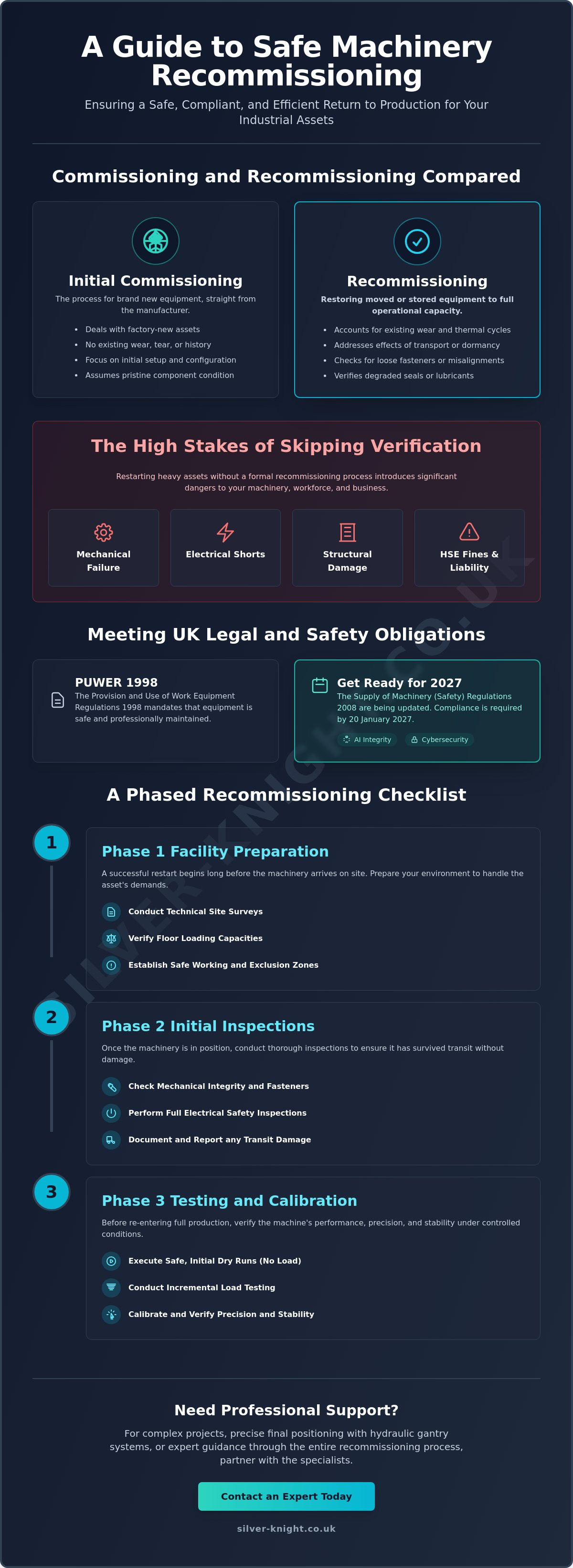
The Comprehensive Machinery Recommissioning Checklist for 2026
Mechanical and Structural Verification
Before turning any dials, you must confirm the physical integrity of the unit. Drive belts often perish during storage or lose their shape; look for fine cracks or a loss of tension that could lead to slipping under load. Bearings require special attention, as lubricant can settle or dry out over time, making re-greasing a priority before the first rotation. You should also inspect the frame for any hairline fractures in structural welds or minor damage that might have occurred during the machinery dismantle service earlier in the project. Check that all fasteners are torqued to the manufacturer's specifications, as vibration during heavy haulage can easily loosen critical bolts.
Electrical and Control System Protocols
Control systems are increasingly complex, especially with the 2026 shift towards integrated AI and cybersecurity standards. Check the batteries on your Programmable Logic Controllers (PLCs) to ensure you haven't lost your logic programmes during transit. Verify that software versions are up to date and compatible with any new site networks. Every physical emergency stop button must be tested manually to ensure it cuts power instantly. Transport vibration often knocks precision sensors out of alignment; take the time to recalibrate these before the dry run. You must also perform insulation resistance tests and verify that the earthing system is robust to prevent electrical shorts.
In addition to PLC maintenance, modern facilities often rely on high-performance workstations for system monitoring and data analysis; for those looking to upgrade their processing power with professional-grade components, greypc.net offers specialist hardware for technical setups.
Restoring high-precision equipment requires more than just mechanical skills; it needs the right lifting technology. You can hire the necessary tools for your project by choosing a specialist heavy moving equipment hire service.
Testing and Calibration for Industrial Operational Precision
Executing the dynamic phase of your machinery recommissioning checklist involves a transition from static inspections to active movement. This stage is critical because it identifies issues that only appear when the machine is under power and in motion. You should never jump straight to full production speed. Instead, follow a structured path of testing that starts with a completely empty machine and ends with a full capacity trial. This methodical approach protects your internal components from sudden stress and allows you to catch minor misalignments before they cause permanent damage.
Dry Running and Initial Movement Tests
The first movement should always be a dry run without any material or workpieces. Start by jogging the axes at a very low speed, typically around 5% or 10% of the maximum, to check for physical clearances. Listen for any unusual noise like grinding or clicking, and use a thermal camera or handheld sensor to monitor for heat spikes in motors and gearboxes. Whilst the machine is idling, verify that the cooling systems are working correctly. Check that fans are spinning in the right direction and that coolant or oil is circulating through the heat exchangers without any leaks appearing under pressure.
Precision Calibration and Load Verification
Once the machine is moving smoothly, you must focus on precision. For long-bed machinery or large-scale production lines, use laser alignment tools to ensure the frame hasn't twisted during the relocation. After the alignment is confirmed, perform a test piece run using actual material. This allows you to check for dimensional accuracy and surface finish quality against the original manufacturing tolerances. Using a structured machinery recommissioning checklist ensures that every sensor and safety gate is verified under load. Finally, document these results as part of your PSSR sign off. This paperwork is essential for your technical files and helps maintain the asset's history for future maintenance. If you need assistance with the final positioning and setup of your assets, contact our specialist team today.
For complex industrial relocations, partnering with experts ensures your equipment is handled with the highest level of care. Visit Silver Knight to learn more about our specialist services.
Professional Support for Complex Machinery Recommissioning Projects
A comprehensive machinery recommissioning checklist is a powerful tool, but its execution often requires physical capabilities that go beyond standard facility maintenance teams. Whilst smaller assets might be manageable in-house, heavy industrial equipment presents unique challenges that demand professional intervention. Deciding when to move from internal checks to professional assistance usually depends on the weight of the asset and the complexity of its alignment; for those tasks handled internally, sourcing high-quality equipment from New Local Tools ensures your team has the reliable tools needed for precise results. If a machine requires precision levelling or is being placed in a confined space, the risk of a DIY approach often outweighs the perceived cost savings.
Working with Silver Knight Haulage & Machineries Ltd provides access to technologies that make the recommissioning process significantly safer. Experienced project managers play a vital role in this transition by coordinating every phase of the move. They ensure that the transport, positioning, and final testing are perfectly synchronised. This level of oversight is essential for minimising downtime, which can otherwise cost your business thousands of pounds in lost productivity. A turnkey service means you have a single partner responsible for the asset from the moment it is decommissioned until it passes its final safety sign off.
Utilising Specialist Lifting Equipment
Final positioning is where technical expertise meets heavy-duty hardware. Versa-Lifts and jack and slide systems allow for the safe movement of massive loads within the tight confines of a modern factory floor. When vertical clearance is limited, hydraulic gantry systems offer the precision needed to lift and place equipment with millimetre accuracy. These tools are far more controlled than traditional cranes and are essential for following a machinery recommissioning checklist that requires exact alignment. You can view Silver Knight Haulage & Machineries Ltd's equipment to see the range of technical capabilities available for your next project.
The Value of Industry Experience
When projects involve heavy lifting or complex alignments, the right equipment and experience make all the difference. Our team brings over 180 years of collective industry experience and utilises specialist tools like hydraulic gantry systems and Versa-Lifts to handle your equipment with precision. We provide a nationwide service across the United Kingdom to support your facility wherever you are located. Discuss your next machinery recommissioning project with our expert team to ensure a safe and efficient return to work. Taking the time to get your restart right today will pay dividends in machinery lifespan and operational safety for years to come.
Frequently Asked Questions
How long does the machinery recommissioning process typically take
The timeframe for completing a machinery recommissioning checklist varies depending on the complexity of the asset. A single standalone unit might be operational within a few hours, whilst a fully integrated production line could take several days or even weeks. You must account for the time needed for deep cleaning, utility connection, and the essential incremental load testing phases to ensure safety.
Do I need to recalibrate my machine after every relocation
Yes, recalibration is essential after any relocation because transport vibration and changes in floor levels affect precision. Even a move across a factory floor can shift sensitive internal components or cause the frame to twist slightly. Skipping this step often leads to poor product quality or premature wear on mechanical bearings and tool heads, which shortens the machine's lifespan.
What are the most common failures during a machinery restart
Common failures include sensor misalignments, perished hydraulic seals, and the loss of PLC software logic due to depleted backup batteries. You might also encounter air pockets in lubrication lines or electrical shorts caused by loose connections. These issues are exactly what a thorough machinery recommissioning checklist is designed to catch before they cause a breakdown during the first full production run.
Is a professional site survey necessary for all types of machinery
What specific HSE regulations apply to recommissioning in the UK
The primary regulations are the Provision and Use of Work Equipment Regulations 1998, known as PUWER. You must also comply with the Supply of Machinery (Safety) Regulations 2008, which are being updated to include new requirements for AI and cybersecurity by 20 January 2027. These laws ensure that all equipment is safe for employees to operate and meets current technical standards.
Can I perform recommissioning with my own maintenance team
You can use your own maintenance team for basic checks, but complex projects often require specialist lifting equipment and technical expertise. Moving heavy assets safely requires tools like hydraulic gantries or Versa-Lifts that most internal teams don't possess. Professional support also provides an independent safety audit, which is beneficial for insurance purposes and protects the business from liability.
What documentation should I keep after the recommissioning is complete
How does transport vibration affect sensitive electronic components
Transport vibration can loosen electrical terminal screws, shift precision sensors, and even damage delicate solder joints on circuit boards. It often causes faults that don't appear until the machine reaches its full operating temperature or speed. Using air-ride suspension during haulage helps to mitigate these risks, but a full electrical and control system audit is still required during the restart.

Article by
David Ashby
I'm the Managing Director of Silver Knight Haulage & Machinery Ltd. Silver Knight Ltd is a family-run firm established in the West Midlands in 2005, with the aim of providing a cost-effective, yet professional, service to businesses for the removal, transportation, and installation of machinery, plant, and equipment here in the UK and worldwide. Between us, the Silver Knight workforce has over 50 years of experience with machinery and its operation.
Disclaimer
This article is intended for informational purposes only. Please ensure you seek expert advice or carry out your own research to confirm the information is suitable for your specific needs.