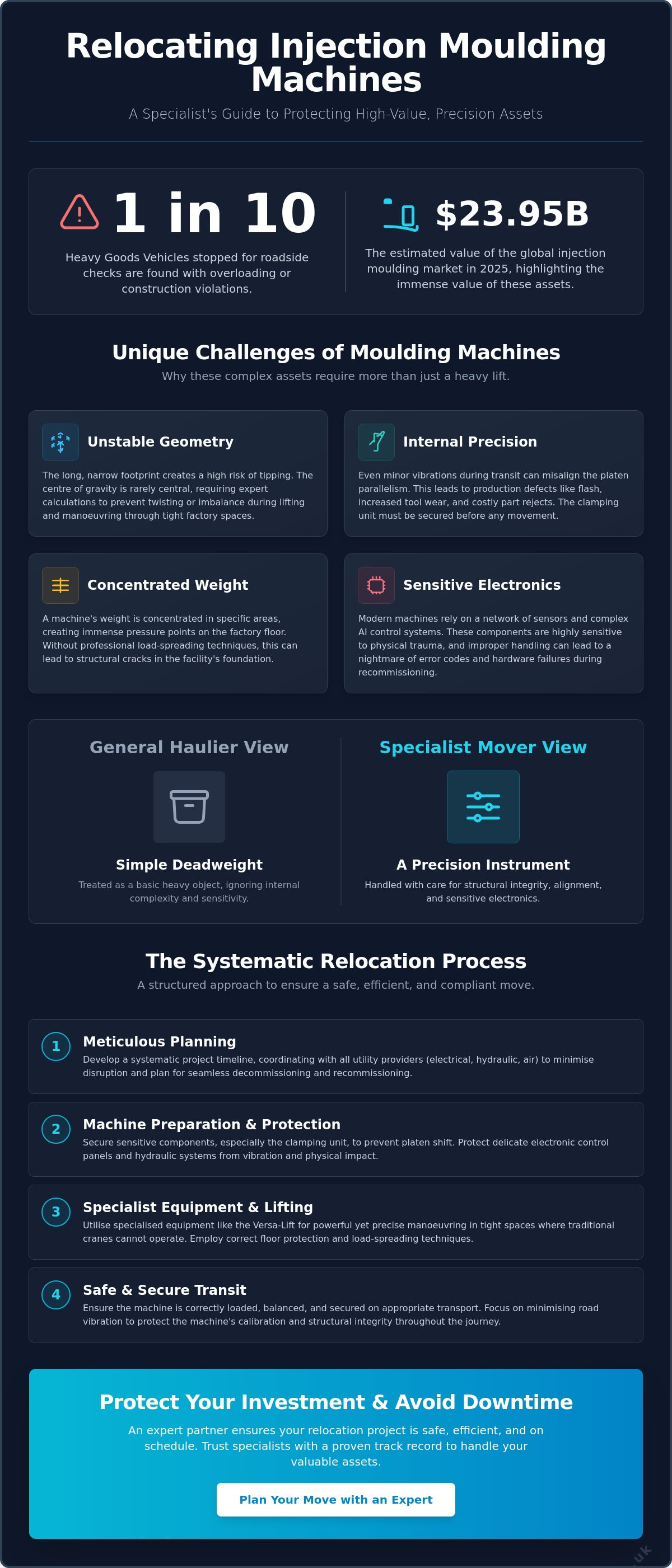
In the 2024/25 period, approximately one in ten Heavy Goods Vehicles stopped for roadside checks in the UK were found to have overloading or construction violations. This statistic is a sobering reminder for any facility manager planning to hire injection moulding machine movers. With the global injection moulding market valued at USD 23.95 billion in 2025, these assets represent a massive financial investment. You already know that these units are not just heavy; they are incredibly sensitive pieces of engineering. Even a slight misalignment during transit can lead to costly repairs and extended downtime that your business doesn't need.
You want a relocation process that protects your investment and keeps your production schedule on track. This article explains how to safely plan and execute the move of heavy machinery using specialist industrial moving techniques. We will explore the latest safety regulations, the importance of proper floor protection, and the specific equipment required to handle the precision balance of modern moulding technology. By following a structured approach, you can ensure a safe and efficient relocation whilst maintaining full compliance with health and safety standards.
Key Takeaways
- Learn why the extreme length and footprint of these machines require expert handling to protect delicate platen alignment.
- Discover the specialised kit, including the Versa Lift, that allows for precise manoeuvring in restricted production environments.
- Understand how to vet injection moulding machine movers by verifying their industry track record and insurance coverage.
- Find out how a systematic project timeline and utility coordination can help you avoid extended production downtime.
- Gain insights into how 180 years of collective experience supports safe relocations across both national and international borders.
You can find reliable support for your next project by partnering with specialist machinery movers who understand the complexities of industrial plant relocation.
Why Injection Moulding Machines Require Specialist Moving Expertise
Unlike standard CNC lathes or milling machines, injection moulding units present a unique set of engineering challenges. Most general hauliers treat heavy equipment as simple deadweight; however, experienced injection moulding machine movers recognise that these assets are precision instruments. An injection moulding machine requires a level of care that goes beyond basic lifting. If you treat a 50-tonne press like a shipping container, you risk permanent damage to the internal alignment. With the global market for these machines valued at USD 23.95 billion in 2025, the financial stakes of a botched move are incredibly high.
To better understand the scale and complexity of these operations, watch this helpful video showing a 90-tonne machine relocation:
The internal components of a moulding machine are designed for high-speed, high-pressure operation, not for the lateral forces of a bumpy road or an unbalanced lift. Specialist movers focus on minimising vibration and ensuring that the structural integrity of the machine frame remains intact throughout the journey. This level of care is vital for protecting the longevity of the asset.
The Challenges of Machine Geometry and Weight
These machines are notoriously long and narrow. This specific geometry creates a high risk of instability during a lift or whilst being manoeuvred through tight factory corridors. The centre of gravity isn't usually in the middle; it shifts significantly between the heavy clamping unit and the injection end. Experienced teams must calculate these shifts to prevent the machine from tipping or twisting. Because the weight is concentrated in specific areas, the pressure points on your factory floor can be immense. Without proper load-spreading techniques, you might end up with structural cracks in your facility's foundation or damage to the machine's levelling pads.
Protecting Internal Precision and Calibration
Precision is everything in plastic manufacturing. Even minor vibrations during transit can throw off platen parallelism. This misalignment leads to flash on parts, increased tool wear, and expensive production rejects. Before any movement begins, the clamping unit must be properly secured to prevent the platens from shifting. It's also vital to consider the sensitive electronic control panels and hydraulic systems. Modern machines often use complex, self-regulating AI systems to optimise production. These systems rely on a network of sensors that are highly sensitive to physical trauma. If a mover doesn't account for the delicate nature of these integrated electronics, the recommissioning process will become a nightmare of error codes and hardware failures.
You can ensure your project stays on schedule by choosing a partner with the right machinery moving equipment for your specific factory layout.
Essential Equipment for Moving Heavy Moulding Machinery
Relocating an injection moulding machine is a task that demands more than just raw power. It requires a strategic selection of tools designed to handle extreme weights within the tight confines of a modern production facility. Most factory floors are crowded with existing infrastructure, and ceiling heights often limit the use of traditional mobile cranes. This is where professional injection moulding machine movers prove their value. They utilise a specialised toolkit to navigate these obstacles whilst adhering to strict OSHA heavy equipment regulations to maintain a safe working environment.
Versa Lift and Forklift Solutions for Tight Spaces
Standard forklifts often lack the necessary capacity or the compact footprint required to manoeuvre between active production lines. The versa lift is the industry standard for this type of work. These machines feature an ingenious extending frame that allows the counterweight to move outwards. This increases the lifting capacity significantly without a massive increase in the vehicle's physical size. It means a mover can pick up a heavy press and still turn within a remarkably tight radius. To protect your facility, these units are typically fitted with non marking tyres. This is a vital feature for maintaining the cleanliness of medical or food grade moulding environments where floor damage or rubber scuffs are unacceptable.
Hydraulic Gantries and Jacking Systems
In scenarios where overhead clearance is extremely limited, hydraulic gantry systems offer a safer and more controlled alternative to cranes. These systems are assembled directly over the machine, providing a stable platform for vertical lifting with millimetre precision. Once the machine is clear of the floor, it can be lowered onto a jack and slide system. This method is the preferred choice for final positioning in areas where there is no room to drive a forklift. By using specialised equipment like low profile tracks and hydraulic cylinders, movers can slide a machine into its final footprint with total control. This process is essential for ensuring the machine is perfectly levelled on the factory floor before the recommissioning phase begins. If you are unsure which lifting method suits your site, you can speak with our technical team for a detailed assessment.
Finding a team that understands the specific needs of your facility is the first step toward a successful plant move. You can learn more about how we handle complex industrial projects by visiting our machinery relocation services page.
Selecting the Right Partner for Your Industrial Relocation Project
Entrusting your production line to a third party is a significant decision. The complexity of moving injection moulding machines means you need a partner who views the project through an engineering lens rather than just a logistics one. A successful move begins long before any equipment arrives on site. It starts with a comprehensive technical survey. This survey should identify potential bottlenecks, floor load limits, and the exact requirements for decommissioning. Selecting the right injection moulding machine movers ensures that every variable is accounted for, from the initial lift to the final recommissioning phase.
Evaluating Experience and Technical Competence
When searching for machinery movers UK, look for a provider with a long-standing heritage in the industrial sector. Experience counts because seasoned professionals have already encountered and solved the challenges your site might present. A reputable partner will always provide detailed Risk Assessments and Method Statements (RAMS) before starting work. These documents aren't just paperwork; they are a blueprint for safety. You should ask potential partners about their specific history with moulding equipment. Do they understand the sensitivity of the clamping units? Can they demonstrate a history of adhering to manufacturing safety best practices? If they can't provide specific examples, they may not have the expertise your project requires.
Insurance and Compliance Standards
Insurance is a non-negotiable aspect of any heavy machinery move. You must verify that your chosen injection moulding machine movers carry adequate Goods in Transit and Public Liability insurance. Standard haulage insurance often falls short of the high replacement values associated with modern moulding presses. Beyond insurance, compliance with UK safety regulations is vital. All lifting operations must adhere to LOLER (Lifting Operations and Lifting Equipment Regulations), and all machinery used must meet PUWER (Provision and Use of Work Equipment Regulations) standards. This ensures that the equipment is fit for purpose and that the operators are fully accredited. A family-run business with a long-term industry heritage often takes these responsibilities more personally, offering a level of accountability that larger corporations might lack. This dedication to safety and quality is what separates a basic transport company from a true industrial relocation expert.
You can streamline your next project by working with a team that offers a complete end-to-end machinery relocation service.
The Systematic Process of Relocating Injection Moulding Plant
A successful plant move relies on a meticulously planned programme that accounts for every minute of production downtime. You can't leave anything to chance when dealing with high-value manufacturing assets. Professional injection moulding machine movers work to a strict timeline that coordinates with your internal teams and external utility contractors. This coordination is essential for the safe disconnection of high-voltage power and industrial water cooling systems. Without a synchronised approach, you risk extending your production pause and losing vital market share whilst your machinery sits idle.
The process isn't just about haulage; it's about engineering. Every step must be documented to ensure that the machine can be rebuilt and recommissioned at the destination without technical hitches. This systematic approach reduces the risk of human error and ensures that all safety protocols are followed from the moment the power is cut to the second the first part is moulded at the new facility.
Decommissioning and Machine Dismantling
Utilising a professional machinery dismantle service is the first physical stage of the relocation. Specialist injection moulding machine movers begin by draining hydraulic fluids and cooling water to prevent spills and environmental contamination during transit. They then secure the internal moving parts. This involves locking the clamping unit and the injection carriage in place to prevent any shifts that could damage the tie bars or sensors. For international or long-distance moves, professional packing and shrink-wrapping are used to shield the equipment from the elements or corrosive sea air. Every cable, pipe, and auxiliary unit is carefully labelled and organised. This level of detail makes the reassembly phase much faster and helps avoid the confusion of misplaced components when the machine reaches its new home.
Transport and Final Installation
Once the machine is ready, it's loaded onto specialist low loaders designed for heavy haulage. The factory relocation service continues with the precise positioning of the machine at the new destination. Final installation is about more than just placing the machine on the floor. It involves millimetre-perfect levelling and alignment. If the machine isn't perfectly level, the internal stresses can cause the platens to wear unevenly, leading to part defects. Recommissioning starts once the machine is secured and levelled, followed by a series of dry cycles to verify that all electronic and hydraulic systems are functioning correctly. To get started with your move, you can request a site survey and quotation from our project team.
You can secure a reliable partner for your next industrial project by choosing expert machine movers with a proven track record.
Silver Knight Expertise in Injection Moulding Machine Relocation
Silver Knight brings a unique depth of knowledge to every project. With over 180 years of collective industry experience, our team understands that moving an injection moulding press is a precision engineering task. We combine our family-run heritage with modern lifting technology to provide a service that prioritises the safety of your assets and your staff. As specialist injection moulding machine movers, we don't just shift weight; we manage the entire technical lifecycle of the move to ensure your equipment remains in peak condition.
Our commitment to safety is demonstrated through our adherence to the latest industry standards and the use of state-of-the-art equipment like Versa-Lifts and hydraulic gantries. We recognise that the plastics industry operates on tight margins and demanding schedules. Therefore, we tailor every relocation to minimise disruption and ensure your production line is back up and running as quickly as possible. This focus on efficiency helps you avoid the hidden costs of extended downtime and technical errors during the restart phase.
A Bespoke Approach to Heavy Machinery Moving
Every facility has its own set of challenges, from narrow access points to sensitive floor surfaces that require careful load spreading. We begin every project with a thorough technical site survey to identify these variables early. Whether you need to move a single 20-tonne press or require a full factory relocation service, we apply the same level of precision and care. Our team handles the decommissioning, heavy lifting, and final positioning with a focus on maintaining the internal calibration of your machinery. This bespoke approach ensures that even the most complex industrial moves are completed without incident, protecting both the machine and the surrounding factory infrastructure.
National Service with Global Reach
Our operations aren't limited by geography. We provide a comprehensive service across the entire country, ensuring that your machinery reaches its destination safely, regardless of the distance. For businesses looking to expand or relocate abroad, our expertise as international machine movers is invaluable. We manage the complex logistics, including specialised packing and transport documentation, to ensure a smooth transition across borders whilst adhering to all international transport regulations. If you are planning a move and need a team of injection moulding machine movers that understands the specific requirements of your equipment, you can contact our project team to discuss your requirements.
You can explore our full range of industrial lifting and transport solutions by visiting the Silver Knight website.
Plan Your Next Industrial Move with Confidence
Relocating precision manufacturing equipment is a high-stakes operation that leaves no room for error. You've seen that successful moves depend on meticulous planning, from protecting delicate platen alignment to using specialised kit like the Versa Lift. By prioritising technical site surveys and coordinating with utility contractors, you can avoid the common pitfalls of production downtime and equipment damage. Choosing experienced injection moulding machine movers is the most effective way to safeguard your investment whilst ensuring full compliance with safety regulations.
Silver Knight offers a comprehensive relocation service backed by 180 years of collective industry experience. We utilise advanced hydraulic gantry systems and heavy lifting technology to manage both national and international projects with ease. Our team is ready to provide the engineering expertise required for a seamless transition to your new facility. Contact Silver Knight for a professional machinery moving quote and take the first step towards a successful relocation today. We look forward to supporting your business growth with our specialist moving solutions.
Frequently Asked Questions
How much does it cost to move an injection moulding machine
The total cost of a move depends on the machine's dimensions, the distance of the journey, and the specific site access requirements. Every relocation is different, so most injection moulding machine movers will offer a bespoke quote after reviewing your project details. It's advisable to check with your chosen provider to see if they require a physical site visit or a technical survey before providing a final figure.
Can a standard forklift lift a 20 tonne moulding machine
A standard warehouse forklift cannot safely lift a 20-tonne machine as they typically have much lower lifting capacities. You would instead require a heavy-duty forklift or a specialised Versa-Lift. These machines are designed with extending counterweights to handle high-capacity industrial loads whilst maintaining a compact footprint. This allows for better manoeuvrability and safety in crowded factory environments where space is limited and floor protection is a priority.
Do I need to drain the hydraulic oil before moving the machine
Draining the hydraulic oil is usually a requirement for safety and environmental protection during a relocation. It reduces the overall weight of the machine and eliminates the risk of leaks or spills during transport. Your relocation team will typically handle this as part of the decommissioning process. This ensures the machine is ready for safe haulage and prevents any contamination of the factory floor or the transport vehicle during the journey.
How long does a typical factory relocation take to complete
The time required for a relocation depends on the scale of the project and the distance between sites. A single machine move can often be finished in a day, whereas a full plant relocation might require weeks of planning and execution. Professionals will work with you to create a structured programme that coordinates every stage of the process to ensure that your production lines are back in operation as quickly as possible.
What is the difference between a general haulier and a machinery mover
A general haulier is primarily responsible for the road transport of items, whereas a machinery mover handles the technical engineering aspects of the lift. Specialist injection moulding machine movers have the expertise to manage delicate internal alignments and use specialised equipment like hydraulic gantries. This ensures that sensitive components are protected throughout the decommissioning and installation phases, which is a service that standard transport firms don't offer.
Is insurance included in the machinery moving quote
Most professional moving companies include a level of Goods in Transit and Public Liability insurance within their quote. However, it's vital to check that the coverage limits match the high replacement value of your specific moulding equipment. You should always ask for a summary of the insurance terms to ensure your assets are fully protected. This gives you peace of mind that your financial investment is covered against any unforeseen incidents during the project.
How do you ensure the machine stays level during the move
Ensuring a machine stays level involves using precision jacking systems and calibrated levelling tools during the final installation. Once the machine is in its new position, movers use hydraulic jacks to adjust the height until it's perfectly aligned. This step is critical because uneven levels can lead to structural stress and part defects when production restarts. Proper levelling ensures the machine operates at the high level of precision required for modern manufacturing.
Can you move injection moulding machines in tight factory spaces
Yes, moving heavy machinery in confined areas is a common requirement for industrial projects. Specialist teams use compact equipment like Versa-Lifts and jack and slide systems to navigate narrow aisles and low ceilings. These tools provide the necessary lifting power without the large footprint of traditional cranes. A site survey will help determine the most efficient method for manoeuvring through your specific factory layout whilst avoiding damage to other equipment or the building itself.
Article by
David Ashby
I'm the Managing Director of Silver Knight Haulage & Machinery Ltd. Silver Knight Ltd is a family-run firm established in the West Midlands in 2005, with the aim of providing a cost-effective, yet professional, service to businesses for the removal, transportation, and installation of machinery, plant, and equipment here in the UK and worldwide. Between us, the Silver Knight workforce has over 50 years of experience with machinery and its operation.
Disclaimer
This article is intended for informational purposes only. Please ensure you seek expert advice or carry out your own research to confirm the information is suitable for your specific needs.