What if the hardest part of a machinery delivery isn’t the journey, but making every stage connect? Port to factory machinery transport involves more than booking a vehicle. The machinery must be collected, handled and delivered in a way that suits its dimensions, the route and the factory site.
It’s understandable to worry about damage, delays or a vehicle reaching the factory only to find that access is too tight. Lifting requirements, the route from the unloading point to the machine’s final position and the site’s readiness all need to fit into the plan. Treating the move as one coordinated project, rather than haulage alone, can make the handover smoother.
This guide explains how to plan a machinery move from port collection through to factory delivery. You’ll learn what information helps shape the transport plan, how handling and lifting equipment relate to the machine and site, and what to consider before delivery. It also covers how transport can connect with positioning, installation or recommissioning, helping you prepare for a clearer, more controlled move.
Key Takeaways
- Plan port to factory machinery transport around the machine, its handling needs, the route and the factory’s access, rather than treating it as a haulage booking alone.
- Gather clear project information early so transport, lifting and delivery arrangements can be planned together.
- Compare options by the work your move requires, including whether lifting, positioning or installation should form part of the project.
- Prepare the delivery route and receiving team in advance, with unloading arrangements and the machinery’s final position agreed.
- Link transport with machinery moving and installation where needed for a more joined-up handover at the factory.
Silver Knight’s machinery moving and installation services connect specialist handling with the journey from port to factory.
What port-to-factory machinery transport involves
Port-to-factory machinery transport is the coordinated movement of machinery from its arrival at a port through collection, transport and delivery to its factory destination.
It’s more than booking a vehicle for the road journey. The machinery’s handling needs, collection arrangements, transport plan and factory handover all need to fit together. The right scope depends on the machine, the route and what’s required at the destination.
Which stages make up a port-to-factory machinery move
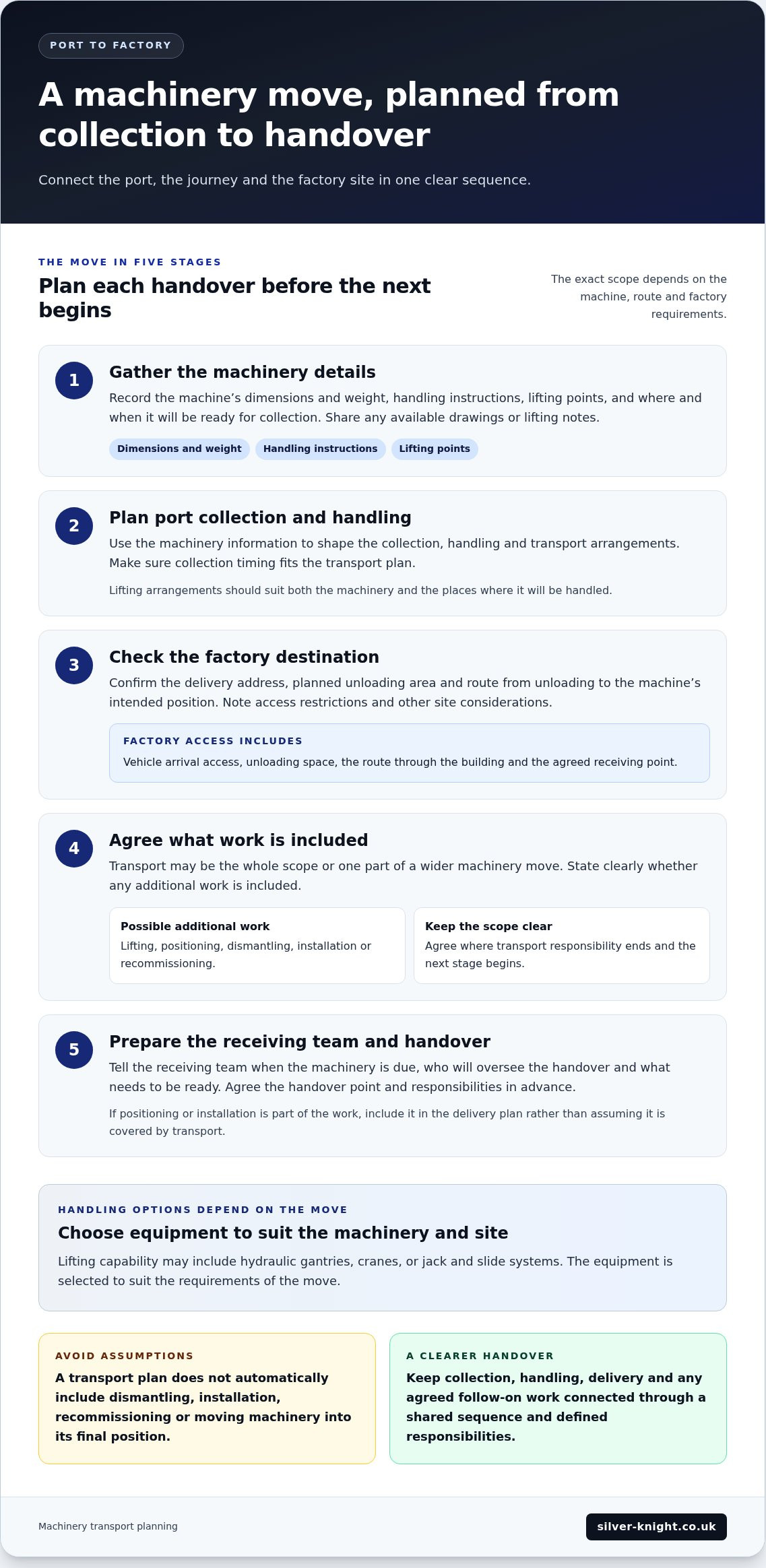
The work starts with gathering details about the machinery and planning its collection and handling. This helps establish how it will be moved from the port and what transport arrangements suit the load and journey. For businesses navigating international freight and border clearance ahead of collection, check out Customs and Trade Logistics for guidance on managing incoming shipments. The factory end also needs attention: the delivery route, unloading arrangements and the intended handover point should be understood as part of the plan.
Transport may be the full scope, or one part of a broader machinery move. Depending on the project, additional work may include lifting, moving the machine into position, dismantling it before transport, or installation and recommissioning at the factory. These are distinct tasks, so agreeing which are included helps everyone understand where the transport responsibility ends and the next stage begins.
Why machinery transport needs project coordination
Each stage affects the next. Collection timing needs to align with the transport plan, while lifting arrangements need to suit the machinery and the places where it will be handled. At the destination, access and the receiving team’s readiness matter to the handover. If these details sit in separate plans, it can be less clear who is responsible for each transition.
A coordinated approach gives the people involved a shared view of the sequence, responsibilities and agreed handover point. That can help reduce avoidable confusion without implying that every move needs the same equipment or follows a fixed timetable. The wider context is freight transport, but machinery moves can also involve specialist lifting and factory positioning beyond the road journey.
Silver Knight brings machinery moving, heavy haulage and installation together within project planning. Its lifting capability includes hydraulic gantries, cranes and jack and slide systems, selected to suit the needs of the move. This joined-up view helps define what happens from port collection through to factory delivery and, where required, positioning or installation.
Silver Knight’s machinery moving and transport services can be planned around the needs of your equipment and factory.
How port-to-factory machinery transport is planned
A well-planned move starts with the details, then links collection, handling, transport and factory delivery into a clear sequence. Silver Knight tailors machinery moving and transport planning to the machinery and the requirements of the project, rather than relying on a one-size-fits-all arrangement.
What information helps plan collection and transport
Bring together the information available about the machine and its journey. Useful details include its dimensions and weight, any handling instructions, where and when it will be ready for collection, and the factory delivery address. For heavy or out-of-gauge freight requiring specialised low-loader transport, services such as schwertransport.de illustrate how technical specifications dictate vehicle selection and routing. If there are drawings or notes about lifting points, share those too. Clear information helps shape the handling and transport plan.
Next, outline the destination requirements. Note the planned unloading area, the route from there to the machine’s intended position, and any access restrictions or operational considerations at the factory. The project team can use these details to consider how collection, lifting and delivery fit together. Silver Knight’s machinery haulage and transport services can form part of this joined-up plan.
The scope depends on the machine, route and factory requirements. A transport move may not include dismantling, installation or recommissioning, so agree which tasks are part of the project and where the handover takes place.
How factory access and delivery are coordinated
Plan the final part of the journey as carefully as collection. Consider the vehicle’s arrival access, the space and arrangements for unloading, and the path the machinery will take to its intended position. The route inside the factory matters too. A machine may be delivered to a receiving area, or the agreed work may include moving it further into the building.
Sequence delivery around the factory’s operations. The receiving team should know when the machinery is due, who will oversee the handover, and what needs to be ready before it arrives. If positioning or installation forms part of the work, include it in the plan rather than treating it as an assumed part of transport. Information on UK machinery safety requirements can help inform the factory’s own preparation.
Agreeing responsibilities and the handover point gives everyone a shared reference, while avoiding assumptions about fixed delivery times. To discuss a machinery move shaped around your project, talk to Silver Knight about your transport requirements.
Explore Silver Knight’s machinery moving services to see how transport, lifting and installation can be planned as connected parts of a move.
How to compare port-to-factory machinery transport options
Compare options against the work your move actually needs, not just the road journey. A transport-only arrangement may suit a machine that can be collected, carried and delivered with agreed unloading arrangements. A broader machinery moving scope can bring lifting, movement into position or installation into the same project plan.
| Project requirement | Transport-only coordination | Broader machinery moving scope |
|---|---|---|
| Collection and road journey | Plans the collection and haulage to the factory. | Connects haulage with other agreed moving tasks. |
| Loading or unloading | Arrangements need to be clearly defined for collection and delivery. | May include specialist lifting where the project requires it. |
| Factory destination | Sets out the agreed delivery and handover point. | May extend to moving the machinery into its intended position. |
| Installation | Does not by itself include installation. | Can include machinery installation when included in the project scope. |
Use the comparison to identify which tasks need coordinating, who is responsible for each stage, and where the handover happens. For port to factory machinery transport, a clear scope helps distinguish the vehicle journey from lifting, positioning and installation work.
What to assess in machinery handling and lifting
Think about the machine’s dimensions and weight, the available access at collection and delivery, and how it needs to be moved into place. These details help shape the lifting plan. Equipment choice depends on the load and site conditions. Silver Knight uses hydraulic gantries, cranes and jack and slide systems, with the approach planned around the project. See the range of specialist lifting equipment.
Also consider whether lifting is needed at one end or both, and whether the machine must travel beyond the factory’s receiving area. This makes the difference between a delivery that ends at an agreed handover point and a project that continues through positioning.
How to compare project scope and responsibility
Set out who is coordinating collection, haulage, unloading and any agreed positioning or installation. Check that the plan connects each stage, including what the factory team must prepare and when responsibility passes to them. The HSE guidance on workplace transport safety provides useful context for planning vehicle movement within a worksite.
Silver Knight can bring heavy haulage, machinery moving and installation into a coordinated project plan. To discuss the requirements of your move, contact Silver Knight about machinery transport.
Silver Knight’s machinery moving and installation services can connect factory delivery with the work planned at the destination.
How to prepare a factory for machinery delivery
A prepared receiving site helps the delivery team follow the agreed plan from arrival to handover. Before the machinery leaves the port, make sure the factory team understands where it is going, how it will be unloaded and what work is expected after delivery. This is especially useful when port to factory machinery transport is part of a wider move involving lifting, positioning or installation.
What to check before the machinery arrives
Walk the planned route from the delivery point to the machine’s intended position with the relevant site personnel. Check that the destination and route are understood, and identify any access or operational arrangements that need to be built into the delivery sequence. Keep the transport team informed of changes that could affect arrival or movement through the factory.
Use this practical readiness list to get the site team aligned:
- Destination: Confirm the machine’s intended location and who is responsible for receiving it.
- Route: Make sure the path from unloading point to destination is agreed and ready for the planned movement.
- Access: Share relevant site access details and any restrictions that could affect the delivery arrangements.
- Timing: Tell the people affected by the delivery when it is planned, so they can organise factory operations around the agreed sequence.
These checks should reflect the actual site and project, rather than assumed dimensions or universal rules. If the machine must be dismantled to support the move, include that work and its handover in the plan. Silver Knight provides machinery dismantling services, which can be considered where dismantling forms part of the project.
How to plan unloading and the next project stage
Unloading should match the selected transport and lifting arrangements. Agree where the machinery will be unloaded, who will coordinate the receiving area and whether the scope continues to moving it into position. If installation or recommissioning is included, make sure the receiving team understands the sequence and who is leading each handover. These activities should be planned, not assumed to be part of delivery.
A short handover record can keep responsibilities clear:
- Who is overseeing arrival and receipt?
- Where does the delivery handover take place?
- Who is responsible for unloading and any agreed positioning?
- What is the next agreed stage, such as installation or recommissioning?
Preparing these details helps the factory team and moving team work to the same plan. Discuss your factory delivery and machinery moving requirements with Silver Knight.
Explore Silver Knight’s machinery moving and installation services for support that connects transport with the work needed at your factory.
Plan your port-to-factory machinery move with Silver Knight
A port-to-factory move may involve more than transporting machinery from one location to another. Collection, heavy haulage, lifting, factory access and installation can all affect how the project is planned. Silver Knight brings machinery moving, specialist lifting and machinery installation together where the project requires them, helping define how the stages fit and where each handover takes place.
Silver Knight Haulage & Machineries Ltd is a family-run specialist, founded in 1996, with over 180 years of collective industry experience. Its work includes machinery moving, heavy haulage and factory plant relocation. This experience supports a practical, project-led approach, with the scope shaped around the machinery, the route and the factory’s requirements.
What an integrated machinery move can include
The right scope depends on what needs to happen at each stage. A project may include planning, heavy haulage and specialist lifting for collection, unloading or positioning. If the machinery needs to be moved into place, installation can also be included in the wider plan. Silver Knight uses hydraulic gantries, cranes and jack and slide systems as part of its lifting capability, with the approach tailored to the project.
For a larger site move, port collection and delivery may sit within a wider relocation plan. Silver Knight’s factory relocation services can support broader requirements, connecting machinery transport with moving and installation work as needed. Agreeing the scope helps everyone understand what is included, who is responsible at each stage and when the machinery is handed over.
What to include in an initial project enquiry
Useful details help shape a clear discussion about the move. Share what you know about:
- The machinery type, dimensions, weight and any relevant handling information.
- The port collection arrangements and the factory destination.
- Access, unloading needs and the intended route to the machine’s final position.
- The outcome you need, such as delivery, positioning, installation or recommissioning.
These details give the project team a starting point for considering transport, handling and factory requirements together. If plans are still developing, outline what is known and identify any outstanding decisions. The project scope can then be shaped around the machinery and the work required, rather than treating haulage as a separate task from delivery and installation.
Discuss your machinery transport project with Silver Knight.
Discover Silver Knight’s machinery moving services for support with planning a coordinated factory delivery.
Plan your machinery move with confidence
Successful port to factory machinery transport depends on joining up collection, handling, haulage and factory delivery. Clear information about the machinery, access and intended handover helps shape a practical plan. It also makes it easier to see whether your project needs transport alone or a wider scope that includes specialist lifting, positioning or installation.
Silver Knight is a family-run specialist founded in 1996, with over 180 years of collective industry experience. Its machinery moving and heavy haulage work is supported by hydraulic gantries, cranes and jack and slide systems, with the approach tailored to the project.
Whether you’re arranging a single machine delivery or connecting transport with factory installation, the next step is to discuss the requirements and desired outcome. Discuss your port-to-factory machinery transport project with Silver Knight and take the first step towards a well-coordinated move.
Frequently Asked Questions
How is machinery transported from a port to a factory?
Machinery is transported from a port to a factory through a plan that coordinates collection, handling, haulage, factory access and handover. The sequence depends on the machine and the destination. For example, a delivery may involve transport to an agreed receiving point, or include further movement inside the factory if that is part of the project. Port to factory machinery transport is planned around the requirements of the specific move.
What information is needed to arrange port-to-factory machinery transport?
Share the machinery details available, collection arrangements, factory destination, handling needs and the outcome you want from the move. Dimensions, weight and any relevant handling information can help shape transport and lifting plans. It’s also useful to describe the intended delivery point and whether the project may include positioning or installation. The plan can then be tailored to the machinery and the factory requirements.
Can machinery transport include unloading and positioning inside a factory?
Yes, unloading and positioning can form part of the project scope when agreed as required tasks. The plan should connect the transport arrangements with the lifting method and the machine’s intended position. Silver Knight uses cranes, hydraulic gantries and jack and slide systems as part of its specialist lifting capability. Not every delivery needs these systems, as the suitable approach depends on the machinery, access and project requirements.
How do I prepare a factory for a machinery delivery?
Before the move, coordinate the machine’s destination, the route through the factory, access arrangements, delivery timing and the receiving team’s responsibilities. Make sure relevant site personnel understand the planned sequence and handover point. Preparation depends on the machinery and the handling method, so focus on the route and arrangements for your specific delivery rather than assuming the same access requirements apply to every factory.
Is port-to-factory machinery transport the same as standard haulage?
Not necessarily. Standard haulage covers the transport journey, while a machinery move may need coordination across collection, handling, delivery and handover. Specialist lifting, factory access planning, positioning or installation may also be relevant, depending on the agreed scope. Thinking through these stages helps clarify what the project needs and where the transport task ends. Some moves require haulage alone, whilst others call for a broader plan.
Can one project include machinery transport and installation?
Yes. Silver Knight provides machinery moving and installation, and these activities can be planned alongside transport when they suit the project. For example, the agreed scope could connect collection and haulage with unloading, positioning and installation at the factory. The work depends on the machinery and destination requirements. To discuss how the stages could fit your move, contact Silver Knight about your project.
How do I choose the right lifting method for factory machinery transport?
The lifting method depends on the machinery, its handling needs, access conditions and the overall project plan. Silver Knight’s capabilities include hydraulic gantries, cranes and jack and slide systems. These are options to consider as part of a project, not equipment required for every move. Sharing information about the machinery and factory helps shape a lifting approach suited to the planned collection, unloading or positioning work.

Article by
David Ashby
I'm the Managing Director of Silver Knight Haulage & Machinery Ltd. Silver Knight Ltd is a family-run firm established in the West Midlands in 2005, with the aim of providing a cost-effective, yet professional, service to businesses for the removal, transportation, and installation of machinery, plant, and equipment here in the UK and worldwide. Between us, the Silver Knight workforce has over 50 years of experience with machinery and its operation.
Disclaimer
This article is intended for informational purposes only. Please ensure you seek expert advice or carry out your own research to confirm the information is suitable for your specific needs.