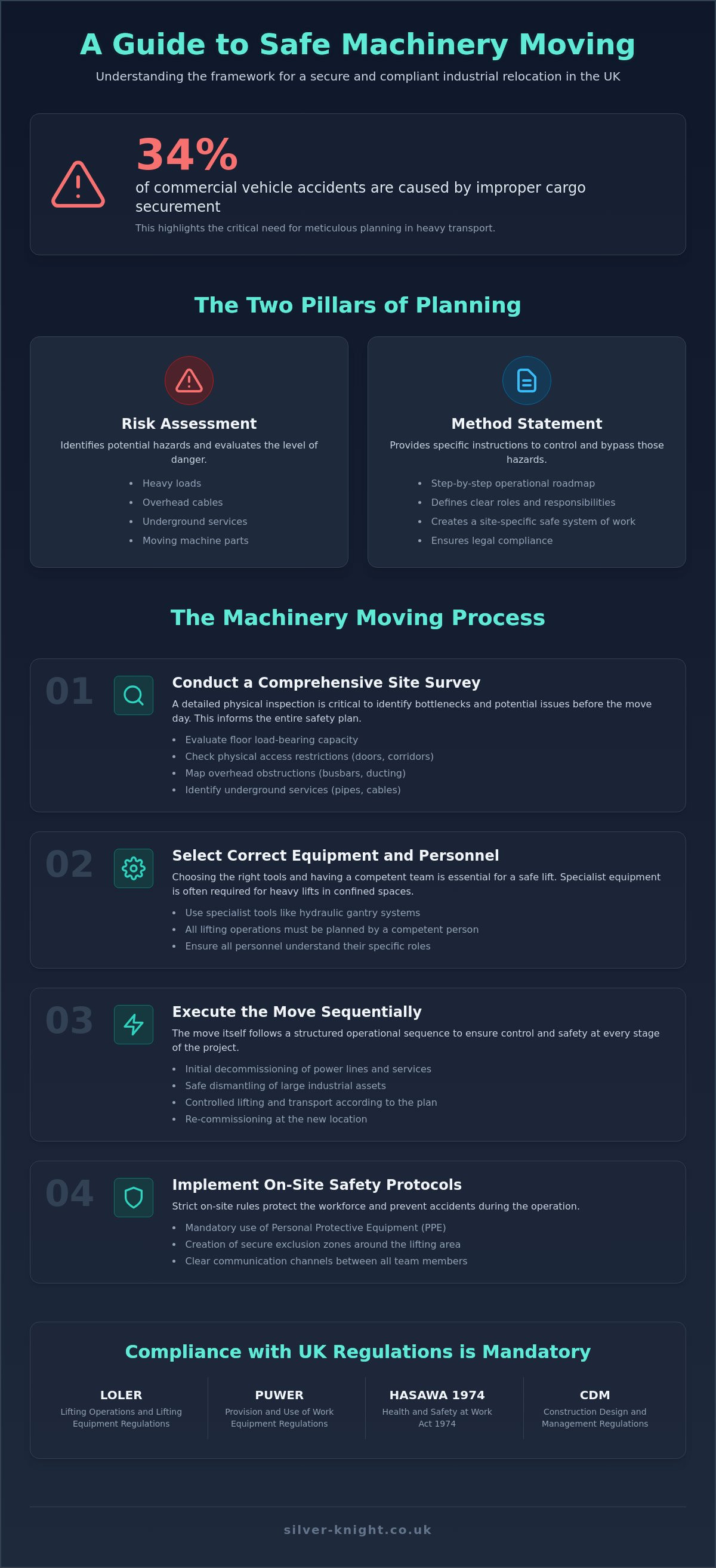
According to industry data, improper cargo securement accounts for 34% of all commercial vehicle accidents, highlighting the extreme risks involved in heavy transport. It's understandable why plant managers often feel overwhelmed by the strict demands of LOLER and PUWER regulations whilst trying to coordinate several different contractors. Creating a robust method statement for machinery moving is the only way to ensure every lift is planned to UK safety standards and executed without any incident.
We agree that the logistics of shifting heavy industrial plant are incredibly complex and carry high stakes for any business. This article promises to provide a clear, comprehensive guide to the essential safety steps, equipment requirements, and operational procedures for your next project. We will walk you through the necessary framework for a safe machinery relocation, ensuring you have the knowledge to select the right equipment whilst meeting all current UK safety standards for your site.
Key Takeaways
- Understand how a method statement for machinery moving acts as a vital safety roadmap whilst satisfying legal requirements under the Health and Safety at Work Act.
- Learn how to conduct thorough site surveys that account for floor weight capacities and physical access restrictions before any equipment arrives.
- Discover how specialist tools like hydraulic gantry systems are used to manage heavy lifts safely in confined factory spaces.
- Follow a structured operational sequence from the initial decommissioning of power lines to the safe dismantling of large industrial assets.
- Implement strict on-site safety protocols including the use of mandatory PPE and the creation of secure exclusion zones to protect your workforce.
For expert assistance with your next industrial project, consider hiring professional machinery movers to ensure a safe and compliant transition.
Why a Method Statement is Essential for Machinery Moving
A Work method statement is more than just a piece of paperwork; it's a vital operational roadmap for any heavy lift. It provides a step by step breakdown of how a task will be completed safely, ensuring every member of the team knows exactly what to do. Under the Health and Safety at Work Act 1974 and the Management of Health and Safety at Work Regulations 1999, employers have a legal duty to manage risks. A detailed method statement for machinery moving ensures you meet these obligations whilst protecting your business from liability amongst other operational risks.
Beyond legal compliance, a robust document ensures that all personnel understand their specific roles. When moving heavy industrial plant, confusion is the primary cause of site accidents. By clearly defining who is responsible for slinging, who is directing the crane, and who is managing the exclusion zone, you create a controlled environment. This clarity is essential for maintaining a safe system of work, especially when you are coordinating multiple contractors on a busy factory floor.
To better understand how these documents are structured in industrial settings, watch this helpful guide.
Legal Requirements and Compliance Standards
Moving heavy plant requires strict adherence to the Provision and Use of Work Equipment Regulations (PUWER), which ensures that all machinery is suitable and safe for its intended use. Additionally, the Lifting Operations and Lifting Equipment Regulations (LOLER) apply to every industrial lift involving cranes, jacks, or slings. These regulations require that all lifting operations are properly planned by a competent person. For larger projects, the Construction Design and Management (CDM) regulations might also apply, requiring detailed coordination between different contractors and site managers to maintain safety standards throughout the move.
The Difference Between Risk Assessments and Method Statements
People often confuse these two documents, but they serve different purposes within a RAMS package. A risk assessment identifies potential hazards, such as heavy loads, overhead cables, or moving parts, and evaluates the level of danger. In contrast, the method statement provides the specific instructions and control measures needed to bypass those hazards. It acts as a site specific safe system of work, tailored to the unique layout of your factory rather than relying on a generic template. This level of detail ensures that factory relocation service providers can work alongside your internal staff without any dangerous overlaps in responsibility.
Before you commit to a project timeline, it is essential to work with experienced industrial movers who can identify site-specific risks early in the process.
Conducting a Comprehensive Site Survey and Risk Assessment
A detailed method statement for machinery moving relies entirely on the accuracy of the initial site survey. Without a physical inspection, you risk mobilising equipment that cannot fit through the doors or encountering floors that cannot support the weight. A technical survey identifies these bottlenecks before they become expensive problems on move day. It allows the planning team to choose the right tools and personnel for the specific environment of your factory.
Professionals look for underground services, such as drainage pipes or cable ducts, which might collapse under the weight of a heavy forklift. Overhead obstructions like busbars, light fittings, and ventilation ducting are also mapped out. These details prevent costly surprises that could halt a relocation. Every measurement taken during this phase informs the final safety plan, ensuring that the move is both efficient and compliant with current regulations.
Evaluating Floor Conditions and Load Bearing Capacity
Heavy machine movers must verify that the concrete floor can support both the machine and the lifting equipment. We look for signs of structural failure like floor cracks or hidden voids that could compromise stability. During a jack and slide operation, we often use steel spreader plates to distribute the weight across a larger surface area. This prevents the point-load from exceeding the floor's capacity. Whilst the client usually provides the floor specifications, the moving team must verify these figures to ensure the environment remains safe for all personnel.
Mapping the Move Route and Identifying Hazards
Planning the transport path requires measuring every door width and ceiling height along the way. Even a few millimetres can be the difference between a smooth move and a machine getting stuck in a corridor. We also check for gradients because a steep slope can change the centre of gravity of a load, making it unstable for a forklift or Versa-Lift. Identifying live electrical lines or gas pipes along the route is another priority. By following established OSHA equipment safety standards for heavy machinery, we ensure that all parts are blocked and secured before movement begins. To ensure your project stays on schedule, you should consider booking a technical site survey as the first step in your planning process.
If you need help identifying potential bottlenecks on your factory floor, you can contact our team for expert advice.
If you want to ensure your next lift is handled by experts using the latest technology, explore our range of heavy machine moving services today.
Selecting the Correct Lifting Equipment and Specialist Personnel
The success of any industrial relocation depends on matching the right tools to the specific physical constraints of the site. A professional method statement for machinery moving acts as the final kit list, detailing exactly which vehicles and lifting aids are required. Weight is the primary factor, but the available space often dictates the choice of equipment. In modern factories where floor space is at a premium, standard cranes are often too bulky to operate. Instead, we rely on compact, high capacity machinery designed specifically for the industrial environment.
Hydraulic gantry systems are essential for lifting massive loads in areas with low headroom. These systems provide a stable, overhead lifting point where a mobile crane simply cannot reach. For moving heavy assets through narrow aisles, a Versa-Lift is often the preferred choice. These specialised forklifts feature an extending frame that increases lifting capacity whilst maintaining a small footprint. Regardless of the kit used, all operators must hold valid CPCS or NPORS qualifications to ensure they have the technical skill to manage the load safely.
Specialist Equipment for Industrial Relocation
When a machine is too heavy to be moved on wheels or rollers, we employ jack and slide systems. These use hydraulic rams to push or pull loads along a low profile track, which is ideal for precise positioning in tight spots. For delicate laboratory equipment or high precision CNC machines, specialised lifting equipment such as air skates can be used. These float the machine on a thin cushion of air, allowing for frictionless movement without risking floor damage. Safety is always the priority during these manoeuvres, particularly regarding Machine Guarding and ensuring that all moving parts are secured to prevent injury during transit. For moves between different facilities, lorry mounted cranes provide a versatile solution for loading and unloading at both ends of the journey.
Defining Roles and Responsibilities within the Team
A safe lift requires a disciplined team with clearly defined roles. The Appointed Person (AP) carries the most responsibility, as they are tasked with planning the entire lifting operation and ensuring the method statement for machinery moving is followed to the letter. On the ground, the Slinger Signaller acts as the eyes and ears of the operator, using standardised hand signals to guide the load through the factory. A dedicated Site Supervisor oversees the entire process, maintaining the safety perimeter and ensuring that no unauthorised personnel enter the work zone. This structured hierarchy prevents the miscommunications that often lead to site accidents.
To ensure your project is handled with the highest level of technical expertise, you can learn more about our industrial relocation services online.
Executing the Machine Move through Sequential Operational Steps
Once the site survey is complete and the equipment is selected, the physical move begins. This phase is where the method statement for machinery moving transforms from a planning document into a live operational programme. Every action taken on the factory floor must follow the predetermined sequence to maintain site safety and protect the equipment from damage. Execution starts with a clear briefing for all personnel, ensuring everyone understands the timeline and their specific responsibilities for the day.
The process is divided into distinct stages, moving from the initial isolation of the machine to its final precision installation. By following a structured approach, we minimise the risk of unexpected delays. This methodical execution is particularly important when working within active production environments where other factory operations must continue safely alongside the move.
Decommissioning and Dismantling Procedures
The move starts with the safe decommissioning of the asset. All power, water, and pneumatic lines must be isolated and disconnected by qualified industrial electricians or engineers. A professional machinery dismantle service involves marking every connection point with tags or digital photographs. This level of detail saves days of troubleshooting during the reassembly phase. Any internal fluids, such as hydraulic oil or coolant, are drained and disposed of according to environmental regulations to prevent leaks whilst the machine is in transit.
Lifting and Transporting the Load
After the machine is dismantled into manageable sections, the lifting team uses the slings and shackles specified in the lifting plan. Securing the load for transport is a critical safety step; according to FMCSA data, improper cargo securement accounts for 34% of all commercial vehicle accidents. We use timber blocking and heavy duty ratchet straps to secure assets to low loaders for nationwide haulage. If your equipment is destined for an overseas facility, shipping container packing services are utilised to protect the machinery from moisture and movement during sea transit.
Final Positioning and Precision Installation
The final stage is the precision installation at the new location. Once the machinery is offloaded, it is moved into its final position using skates or a Versa-Lift. Precision levelling is then carried out using industrial shims and high grade levels to ensure the machine is perfectly balanced. This is vital for the long term performance of CNC machines and other sensitive plant. Finally, the unit is bolted to the floor or set on anti-vibration mounts before being handed over for recommissioning. To get your project moving with a team you can trust, contact our specialist movers for a detailed consultation.
For comprehensive support with your safety documentation and site logistics, you can rely on the expertise of professional plant movers to manage the entire process.
Ensuring Health and Safety Compliance on the Factory Floor
Whilst the technical aspects of a lift are vital, the human element is where most risks reside. Establishing a robust method statement for machinery moving is only effective if the safety protocols are strictly enforced on the ground. This begins with the mandatory use of Personal Protective Equipment (PPE) for every person in the work area. At a minimum, this includes steel-toed safety boots, high-visibility vests, and hard hats. Depending on the specific task, workers might also require eye protection or heavy duty gloves when handling slings and chains.
Safety is a continuous process that doesn't end once the paperwork is signed. The method statement acts as a living document that guides the team through every hour of the project. It ensures that everyone, from the crane operator to the factory manager, is aligned on the safety expectations. By maintaining high standards for PPE and site discipline, you significantly reduce the likelihood of avoidable injuries during a complex industrial move.
Establishing Safety Perimeters and Exclusion Zones
One of the most effective ways to prevent accidents is to keep non-essential personnel away from the lifting area. We always recommend using solid physical barriers rather than simple plastic tape to define exclusion zones. Tape is easily ignored or stepped over, whereas a physical barrier provides a clear, unmistakable boundary. These zones must be clearly marked with signage to warn other factory staff of the ongoing lift. Managing the flow of pedestrian and forklift traffic around the active work area is a primary responsibility of the Site Supervisor. Additionally, the method statement for machinery moving must always account for emergency egress, ensuring that all fire exits and escape routes remain unobstructed throughout the duration of the move.
Toolbox Talks and Real Time Risk Management
Before any equipment is turned on, the entire team must participate in a pre-start toolbox talk. This briefing covers the specific hazards identified during the site survey, such as overhead cables or floor voids, and reviews the control measures in place. It's the final opportunity to ensure every worker understands their role and the sequential steps of the move. We operate a "Stop Work Authority" policy, which empowers any team member to halt the operation immediately if they spot a safety breach or an unexpected hazard. If site conditions change, the plan must be paused and updated to reflect the new reality. To ensure these high safety standards are consistently met, you should contact an industrial moving company with a proven track record in heavy lifting and factory relocation.
For professional assistance with your next project, you can explore the full range of machinery moving services provided by our expert team.
Planning Your Next Industrial Relocation
A successful project relies on precision and preparation. From the initial site survey to the final levelling of the machine, every detail matters for site safety. A robust method statement for machinery moving ensures that your business stays compliant whilst protecting your high value assets from damage. By combining specialist equipment like hydraulic gantries and Versa-Lifts with qualified personnel, you can eliminate the confusion often found on busy factory floors.
Our team brings over 180 years of collective industry experience to every lift, offering fully managed contract lifting services nationwide. We provide the technical expertise and specialist machinery needed to handle even the most complex industrial moves. If you are ready to start planning, request a professional method statement for your machinery move from our expert team today. We look forward to helping you achieve a seamless and safe transition for your facility.
Frequently Asked Questions
What is a method statement for machinery moving
It is a detailed document that outlines the step by step process for moving heavy equipment safely. It serves as a vital operational guide for the team, detailing the specific equipment, personnel, and safety controls required for the task. This document ensures that every member of the move team understands their role, reducing the risk of accidents and ensuring the project meets all necessary UK health and safety standards.
Who is responsible for writing the machinery moving method statement
The lead contractor or an Appointed Person is typically responsible for drafting this document. They must have the technical competence to assess the risks and plan the lift according to UK safety standards. Whilst the client provides essential site information, the specialist mover ensures the document reflects the actual operational steps on the factory floor. This ensures that the plan is both practical and legally compliant for the specific environment.
Do I need a separate risk assessment and method statement
Yes, you need both because they serve different functions within your safety planning. The risk assessment identifies potential hazards such as heavy loads or overhead cables. The method statement for machinery moving then provides the specific instructions on how to manage or bypass those hazards during the physical move. Together, they form a complete safe system of work that protects your employees and your industrial equipment during the relocation.
What are the consequences of moving machinery without a method statement
Moving heavy plant without a method statement can lead to severe legal penalties, site accidents, or equipment damage. If an incident occurs, the Health and Safety Executive will investigate whether a proper plan was in place. Lack of documentation can also void your insurance, leaving your business liable for the full cost of any damage or injury. It is a risk that can lead to significant financial and reputational loss for your company.
How often should a method statement be updated during a factory relocation
It should be updated whenever site conditions change or unexpected hazards are discovered. If the move route is blocked or a machine is found to be heavier than expected, the team must pause and revise the document. It is a live document that must always reflect the current reality of the site to remain effective. Regular reviews ensure that the safety protocols remain relevant as the project progresses through different phases.
Does a method statement need to include electrical disconnections
Yes, the document must detail the decommissioning phase, including the safe isolation of power and pneumatic lines. It should specify that these tasks are to be performed by qualified industrial electricians or engineers. Including these steps ensures that the machine is completely safe to handle before any lifting or dismantling begins on the factory floor. This prevents accidental electrocution or damage to the machine's sensitive internal components during the dismantling process.
What lifting regulations must a method statement comply with in the UK
In the UK, every industrial lift must comply with the Lifting Operations and Lifting Equipment Regulations (LOLER) and the Provision and Use of Work Equipment Regulations (PUWER). These regulations require that all lifting operations are planned by a competent person and carried out using equipment that is fit for purpose and regularly inspected. Your method statement acts as the evidence that these legal requirements are being met throughout the duration of the project.
Can I use a generic template for a heavy machinery move
No, using a generic template is dangerous because it does not account for the unique layout and hazards of your specific site. A professional method statement for machinery moving must be site specific, detailing the exact floor loadings, door widths, and overhead obstructions of your facility. Using a one size fits all approach often leads to significant oversights that cause delays, equipment damage, or serious site accidents that could have been easily avoided.

Article by
David Ashby
I'm the Managing Director of Silver Knight Haulage & Machinery Ltd. Silver Knight Ltd is a family-run firm established in the West Midlands in 2005, with the aim of providing a cost-effective, yet professional, service to businesses for the removal, transportation, and installation of machinery, plant, and equipment here in the UK and worldwide. Between us, the Silver Knight workforce has over 50 years of experience with machinery and its operation.
Disclaimer
This article is intended for informational purposes only. Please ensure you seek expert advice or carry out your own research to confirm the information is suitable for your specific needs.