What if you could lift a forty tonne production line in a space where you cannot even fully extend a tape measure? It's a common dilemma for UK manufacturers who need to relocate heavy assets but find themselves trapped by low ceilings or fragile floor loading limits. Traditional cranes often lack the clearance to operate indoors, leaving project managers worried about potential damage to expensive machinery. This is where hydraulic gantry systems become the essential tool for industrial relocation, offering a level of control and stability that conventional lifting methods simply cannot match.
We understand that the safety of your staff and the integrity of your equipment are your top priorities during a factory move. You want a process that is efficient and causes minimal disruption to your daily operations. This guide will show you how modern gantry technology provides a compact, high capacity solution for restricted spaces. You will discover how these systems ensure full compliance with current UK safety regulations, including the latest ISO and EN standards, whilst protecting your facility from unnecessary stress or structural damage.
Key Takeaways
- Discover why hydraulic gantry systems are the superior choice for moving heavy machinery in confined industrial environments where traditional cranes cannot operate.
- Understand how telescopic booms and hydraulic cylinders provide millimetre precision for the safe installation and removal of high value assets.
- Learn about the critical site surveys and floor loading calculations required to maintain full compliance with UK safety regulations during a factory move.
- Compare the stability and safety benefits of low clearance lifting solutions against conventional mobile crane methods.
- Find out how a managed contract lift service uses collective industry experience to ensure your machinery relocation is completed with minimal disruption.
For professional assistance with your next industrial move, explore our range of machinery relocation solutions.
Understanding hydraulic gantry systems and specialised lifting
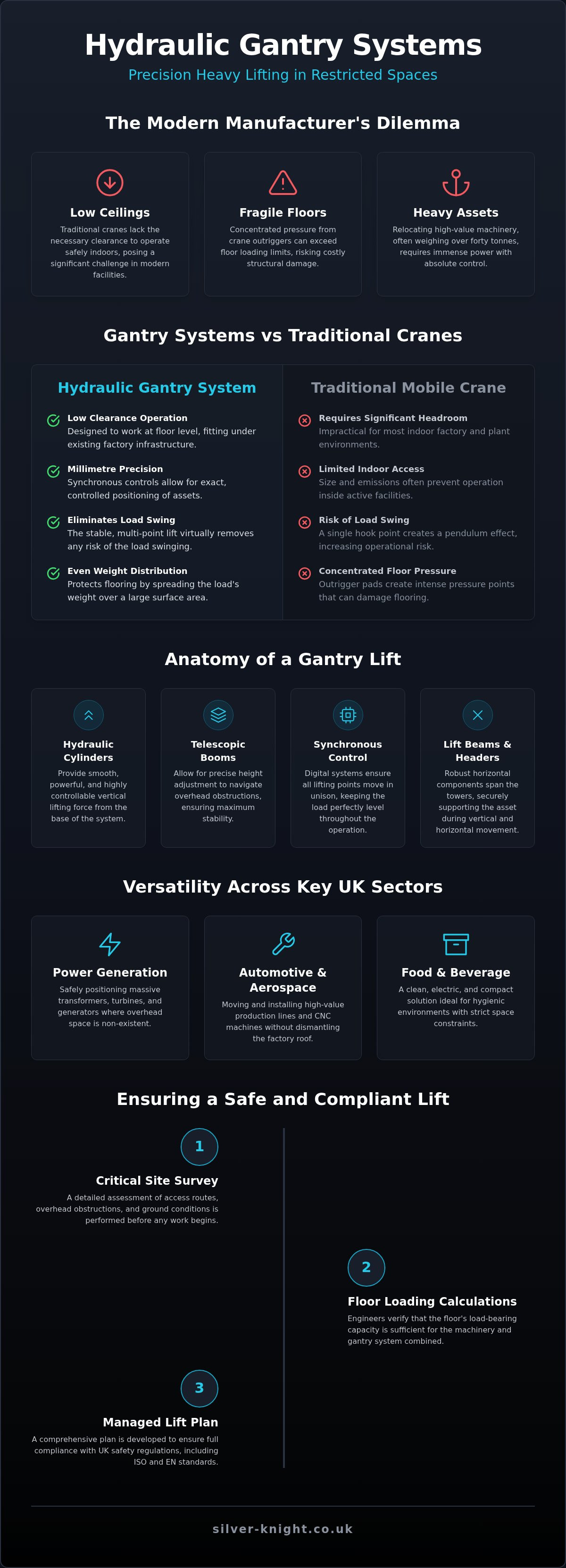
A hydraulic gantry system is a specialised lifting solution designed to move heavy loads horizontally and vertically with extreme care. Unlike a traditional Gantry crane, which might be fixed or restricted by rail systems, these modern hydraulic units are portable and highly adaptable. The process involves using telescopic booms and lift beams to position machinery with millimetre precision. This high level of control is why industry professionals prefer these systems for indoor projects where ceiling height is a major constraint. They provide a low profile solution that is ideal for moving massive transformers or CNC machines within active factory floors where every centimetre of space counts.
Why hydraulic gantries are essential for restricted access
Traditional cranes require significant headroom and clear overhead paths. These are rarely available in modern manufacturing plants or older industrial units across the UK. Hydraulic gantry systems solve this by operating at floor level whilst maintaining a very high weight capacity for heavy assets. Because the lifting force is applied directly from beneath or via a stable overhead beam supported at both ends, the risk of a load swinging is virtually eliminated. This makes the entire operation much safer for both the equipment and the onsite personnel. It's a method that allows for a managed machinery move that doesn't compromise on safety or speed.
The versatility of gantry lifting across industrial sectors
These systems are used extensively in the power generation sector. They are perfect for positioning massive transformers and turbines where overhead space is non-existent. In the automotive and aerospace industries, they allow teams to move high value production lines without dismantling the factory roof. Food and beverage manufacturers also benefit from this technology. Their facilities often have strict space constraints and hygiene requirements that make large, diesel-powered mobile cranes impractical. By using a gantry, you get a clean, electric, and compact solution for every heavy lift. This versatility is why they are becoming the go-to choice amongst UK plant managers who need to relocate equipment without stopping production in adjacent bays.
To ensure your heavy machinery is moved with the right equipment, you can view our full range of machinery moving services.
The mechanics and technical components of hydraulic lifting
Hydraulic gantry systems rely on a combination of high pressure fluid dynamics and robust structural engineering. Hydraulic cylinders provide the vertical force required to lift the load from its base with smooth, controlled movement. This power is channelled through telescopic booms that allow the height to be adjusted precisely. This flexibility is vital to clear overhead obstructions like pipework, lighting, or ventilation ducts that often clutter factory ceilings. Unlike traditional cranes that concentrate weight on small outrigger pads, these systems distribute weight evenly across the floor surface. This protects the facility from structural cracks or floor failure during the move. Precision controls allow the operator to adjust the movement of each tower independently for perfect levelling, even on uneven industrial floors.
Telescopic booms and synchronous control systems
Square telescopic booms are a hallmark of advanced hydraulic gantry systems. Their shape provides maximum stability and resistance to side loading forces, which is essential when moving tall or top-heavy machines. Synchronous technology ensures that all lift points move at the exact same speed. This prevents the load from tilting or shifting dangerously during the lift. Digital monitoring systems allow for real time tracking of weight and pressure during the entire operation. These modern safety features often align with international OSHA safety standards regarding telescopic lifting equipment, providing peace of mind for site managers.
The role of lift beams and header plates
The strength of the system also depends on the horizontal components that span the gap between the lifting towers. Header plates provide the interface between the hydraulic towers and the structural lift beams. These beams are engineered to support the weight of the load whilst spanning the required distance to clear the machinery. Proper selection of rigging equipment is critical to ensure the load is secured to the beam safely. This includes using certified slings and shackles that can handle the specific weight and dimensions of the asset. If you are planning a complex lift and need expert advice on equipment selection, please speak with our technical team today.
To plan a safe and efficient factory move, please visit our specialist machinery relocation page.
Comparing hydraulic gantries with traditional lifting methods
Mobile cranes are fantastic for large-scale outdoor construction, but they often struggle within the confines of a factory bay. The primary issue is the boom angle required to lift heavy loads, which demands significant headroom. In contrast, hydraulic gantry systems maintain a much lower centre of gravity. This stability is crucial when you're moving a forty tonne machine through a doorway with only inches to spare. For many industrial relocation projects, this method isn't just a preference; it's often the only viable way to handle heavy assets in tight spots without risking damage to the building structure.
Efficiency is another factor that sets these systems apart. Gantry components are designed to be modular. This means they can be containerised and shipped easily, which is a major advantage for international machinery transport projects. Whether you are moving a single press or an entire production line across borders, the compact nature of these systems reduces haulage costs. It also simplifies the logistics of getting the equipment onto the site, as you don't need to worry about the massive turning circles required by large mobile cranes.
Gantry systems vs mobile cranes
A major drawback of using mobile cranes indoors is the pressure they exert on the floor. Cranes rely on outriggers to stay stable, which creates massive, concentrated point loads. Many factory floors simply aren't thick enough to support this without cracking. Hydraulic gantry systems distribute the weight over a much larger area by using steel tracks. This protects your facility's foundation from structural failure. Organisations like the Specialized Carriers & Rigging Association highlight the safety benefits of using the right tool for the job. Often, hiring a specialised indoor crane is more expensive because the equipment is rarer and harder to transport than a gantry.
When to use jack and slide systems instead
Sometimes, even a gantry system isn't the right fit for the environment. If you need to move a load horizontally over a very long distance through a narrow corridor, jack and slide systems are the better choice. These are perfect for ultra-low headroom environments where you can't even fit a lift beam. By using a skidding system, the load stays just inches off the floor as it moves. At Silver Knight, we combine these different technologies to provide a comprehensive heavy moving equipment hire service tailored to your specific site requirements.
If you need a partner who prioritises safety and precision, our team provides comprehensive machinery relocation solutions tailored to your needs.
Planning and safety requirements for a successful gantry lift
Safety isn't just a checklist; it's the foundation of every industrial project. Every gantry operation must begin with a comprehensive technical site survey to identify potential hazards that could compromise the lift. This includes looking for overhead power lines, active production zones, and any structural limitations of the building itself. Unlike mobile cranes that might be set up in an open yard, hydraulic gantry systems operate deep within the factory environment. This proximity to high value assets and personnel means that the margin for error is zero. The track path must be cleared of all debris and obstructions to ensure the system remains level. Even a small piece of waste metal on the track can cause a shift in the alignment, which is why cleanliness is a critical part of the safety protocol. All lifting equipment must undergo regular testing to meet strict UK safety and quality standards, including non-destructive testing of critical components.
Ensuring compliance with LOLER and PUWER regulations
In the United Kingdom, two major sets of regulations govern the use of lifting equipment. LOLER (Lifting Operations and Lifting Equipment Regulations) requires all lifting equipment to be fit for purpose, properly installed, and clearly marked with its safe working load (SWL). It also mandates regular thorough examinations by a competent person to ensure ongoing safety. Similarly, PUWER (Provision and Use of Work Equipment Regulations) ensures that all work equipment is maintained in a safe condition and used only by trained staff who understand the specific risks. Silver Knight provides fully documented lift plans for every project, ensuring total compliance with these legal requirements. These plans include risk assessments and method statements that give site managers the confidence that every lift is being managed by professionals who understand the law.
Technical site surveys and ground pressure calculations
Floor loading calculations are essential to ensure the concrete slab can support the concentrated weight of the gantry towers and the load. Our technical surveys identify any underground voids, drainage channels, or weak points in the concrete that could collapse under pressure. If the survey reveals a risk, we use heavy duty steel plating to further distribute the weight of the hydraulic gantry systems. Ensuring the track path is perfectly level prevents the load from shifting during movement. A shift of just a few degrees can significantly alter the pressure on a single tower, potentially exceeding its safe limit. To discuss your specific site requirements and book a survey, please contact our specialist engineers today.
To find a reliable partner for your next industrial project, consider the specialists at Silver Knight.
Professional machinery relocation with Silver Knight expertise
Silver Knight Haulage & Machineries Ltd offers a fully managed machinery moving service that covers the entire United Kingdom. We don't just provide equipment; we provide a complete solution for complex industrial moves. Our team brings over 180 years of collective experience to every project, ensuring that even the most challenging lifts are handled with care. We utilise the latest hydraulic gantry systems to move your high value assets safely. From the moment we begin decommissioning your equipment to the final precision installation at your new site, we manage every detail. This end-to-end approach means you only have one point of contact, reducing the stress of coordinating multiple contractors.
Our expertise allows us to work in environments that others might find impossible. Whether it's a tight basement installation or a high-rise factory floor, we have the technical knowledge to navigate the space. We understand that your machinery is the lifeblood of your business. That's why we treat every asset with the respect it deserves, using specialised equipment to ensure it arrives in perfect condition. Our reputation is built on delivering successful moves for some of the UK's most demanding industrial sectors.
A family run business with national reach
We combine the personal touch of a family firm with the heavy lifting capabilities of a major national haulier. This unique position allows us to build trust with our clients whilst maintaining the resources needed for large scale factory moves. Our central base is perfectly situated to allow us to respond quickly to projects anywhere in the country. We pride ourselves on straightforward and helpful communication. You won't have to deal with complex jargon or automated systems; instead, you get direct access to experts who understand the practicalities of industrial relocation.
Comprehensive solutions for factory relocation
Moving an entire facility requires more than just lifting; it requires a coordinated transport strategy. We combine our advanced hydraulic gantry systems with specialised heavy haulage to provide a seamless factory relocation service. If your business is expanding abroad, our international machine movers service can transport your assets across Europe and beyond. We handle the paperwork, the logistics, and the physical move, so you can focus on your business operations. Our goal is to ensure your production line is back up and running as quickly as possible. To find out more about our specialised lifting capabilities and how we can support your next move, please contact Silver Knight Haulage & Machineries Ltd for a bespoke quote.
For expert support with your next industrial relocation project, visit the Silver Knight Haulage & Machineries Ltd homepage.
Secure your next industrial move with precision lifting
Choosing the right equipment is the most critical decision in any factory move. We've explored how hydraulic gantry systems provide a stable and precise alternative to mobile cranes, especially when you're working with low headroom or delicate floor surfaces. By prioritising thorough site surveys and strict adherence to UK safety regulations, you can eliminate the risks often associated with moving heavy assets. These systems don't just move machinery; they protect the long term value of your equipment and the integrity of your facility.
Silver Knight brings over 180 years of collective industry experience to every project we undertake. As specialists in restricted access machinery moving, we offer fully insured contract lifting services that you can trust. Our family run team is dedicated to providing a straightforward, professional experience from the first consultation to the final installation. If you're ready to plan a safe and efficient relocation, please request a quote for your machinery move from Silver Knight. We are here to ensure your next project is a complete success.
Frequently Asked Questions
What is the main difference between a hydraulic gantry and a crane?
The main difference is that a gantry uses a horizontal beam supported by legs to lift loads directly upwards, whilst a crane typically uses a boom or jib. Hydraulic gantries are ideal for indoor environments with restricted headroom where a traditional crane cannot fit. They provide superior stability for vertical lifts and can move heavy items along a track with high precision and control.
How much weight can a hydraulic gantry system move safely?
Most hydraulic gantry systems can safely move loads ranging from 10 tonnes to over 1,000 tonnes depending on the specific configuration used. The capacity depends on the number of legs and the strength of the overhead beam. It's vital to check the manufacturer's load charts and ensure the equipment is rated for the specific weight of your machinery before starting any lift.
Are gantry systems safe for use on standard industrial factory floors?
These systems are generally safe for standard industrial floors, but the concentrated pressure under the legs must be carefully managed. Engineers often use steel plates or timber mats to spread the weight across a larger surface area. This prevents the concrete from cracking or sinking during the move. A floor load assessment is usually part of the planning process for heavy machinery moving.
What are the ground requirements for a gantry lifting operation?
Ground requirements for a gantry lifting operation include a level surface that is capable of supporting the combined weight of the gantry and the load. Any slope or unevenness can compromise the stability of the system. If the ground is soft or unstable, additional reinforcement like heavy duty track mats or concrete pads might be necessary to ensure a safe and successful lift.
How long does it take to set up a hydraulic gantry on site?
Setting up a hydraulic gantry on site typically takes between four and eight hours for a standard configuration. More complex lifts involving long tracks or multi-leg setups might require a full day or more to assemble and test. The time depends on the accessibility of the site and how quickly the components can be positioned using a forklift or small crane for assembly.
Do I need a professional site survey before using a gantry system?
You definitely need a professional site survey from experienced specialists before using a gantry system for any major machinery relocation. A survey identifies potential hazards such as overhead power lines, underground voids, or tight access points that could hinder the operation. This process ensures that the chosen equipment is fit for purpose and that the move complies with all health and safety regulations in the UK.
Can hydraulic gantries be used for international machinery relocation?
Hydraulic gantry systems are frequently used for international machinery relocation because they are relatively easy to dismantle and transport in standard shipping containers. This portability makes them a cost effective choice for moving production lines between countries. They can be reassembled quickly at the destination to ensure that your equipment is installed and commissioned without unnecessary delays or complications during the move.
What safety certifications are required for gantry lifting in the UK?
In the UK, gantry lifting operations must comply with the Lifting Operations and Lifting Equipment Regulations 1998, known as LOLER. Equipment must undergo regular thorough examinations by a competent person to ensure it remains safe for use. Additionally, the Provision and Use of Work Equipment Regulations 1998, or PUWER, requires that all staff operating the machinery are properly trained and competent for the task.

Article by
David Ashby
I'm the Managing Director of Silver Knight Haulage & Machinery Ltd. Silver Knight Ltd is a family-run firm established in the West Midlands in 2005, with the aim of providing a cost-effective, yet professional, service to businesses for the removal, transportation, and installation of machinery, plant, and equipment here in the UK and worldwide. Between us, the Silver Knight workforce has over 50 years of experience with machinery and its operation.
Disclaimer
This article is intended for informational purposes only. Please ensure you seek expert advice or carry out your own research to confirm the information is suitable for your specific needs.