Could a forklift that fits on a trailer still be difficult to move safely? Yes. Restricted loading space, unclear access routes or unverified dimensions can all affect the plan. Forklift transport services involve more than choosing a vehicle: the move must account for the machine and the conditions at both sites.
If you’re unsure how loading and unloading will work, or whether a general carrier has the right machinery-moving experience, you’re not alone. Details such as whether the forklift can be driven and how much space is available for manoeuvring can affect the arrangements.
This guide explains how forklift transport is planned, what information to provide when requesting a quote and what to check before booking. You’ll learn how to assess access at both sites, discuss suitable transport and handling equipment, and compare providers. Accurate details and clear responsibilities help everyone prepare for the move.
Key Takeaways
- Forklift transport services are planned around the machine, the route and access at both sites, not just the distance travelled.
- Share the forklift’s dimensions, weight, operating status and collection and delivery details early so the provider can assess the move.
- Compare providers by their machinery-moving experience, handling equipment and ability to coordinate requirements at both sites.
- Before the move, confirm the forklift’s condition with the site team and check that loading and unloading areas are ready.
- For a more complex move, consider whether specialist machinery-moving support and lifting equipment may be needed.
Explore Silver Knight’s machinery-moving services if your forklift move needs specialist handling.
What forklift transport services include and when they are needed
Forklift transport services arrange the movement of a forklift between specified sites. A business may need them when relocating, receiving a machine at a new site or reorganising its operations. This means transporting the forklift itself, rather than hiring one or moving other machinery.
A forklift is a type of powered industrial truck. Its design and condition can affect how a move is arranged. The scope also varies: a transport-only job differs from one that requires lifting or careful positioning at the destination.
Here’s a video showing a truck-mounted forklift being loaded, as an example of one loading approach.
What is included in a forklift move
A move may involve planning, loading, transport and unloading. The exact scope depends on the forklift and site conditions. A machine that can be driven into position may need a different arrangement from one that requires lifting support to load or unload. Confirm which tasks the provider will carry out and which are for the site team to arrange.
Transport-only means arranging the journey between sites. If the forklift also needs lifting or positioning support, mention this at the start so the provider can assess the full job, not just the road journey.
When specialist machinery movers may be appropriate
Consider specialist support if the forklift is heavy, access is restricted or handling needs to be coordinated with other site activity. A narrow entrance, limited manoeuvring space or awkward loading area can affect the approach. Share machine and site details early so the provider can assess the transport and handling requirements.
Silver Knight offers forklift moving as part of its machinery-moving work. Its lifting equipment includes hydraulic gantries, cranes and jack and slide systems. The right equipment depends on the specific move, so discuss the requirements before booking.
How forklift transport is planned from collection to delivery
Planning starts with information about the forklift and both sites. Accurate details help a provider assess the move, clarify responsibilities and consider an approach suited to the job. Don’t assume a particular vehicle or handling equipment will be suitable until the details have been reviewed.
Information to gather before requesting a transport plan
Before contacting a provider, collect the machine information available and ask the site teams about access. Include:
- The forklift’s make and model, plus its weight and dimensions if known. Check that the details describe the machine as it will be moved, including any attachments.
- Collection and delivery addresses, access routes, ground surfaces and known restrictions or limits on manoeuvring space.
- Your preferred dates, site contacts and any loading or unloading arrangements already in place.
These details help the provider assess transport, handling and coordination at both sites. If information is unavailable, say so rather than guessing. The provider can explain what else is needed to assess the move.
What happens during collection and delivery
Once the details have been reviewed, confirm the proposed sequence with the provider. Establish who will prepare the forklift, make it available at collection, arrange loading and unloading, and receive it at the destination. Check what the site team needs to do before the vehicle arrives.
On the agreed day, the forklift is made available for loading, secured for transport and taken to the delivery site. Unloading and positioning support depend on the agreed scope. Confirm the precise delivery location, access arrangements and handover contact in advance, particularly if the forklift needs to be placed in a specific area.
If someone will operate the forklift as part of site preparations, consult the Health and Safety Executive’s guidance on operator training and safe use. Keep those preparations separate from the transport provider’s responsibilities unless you have confirmed otherwise.
For a move that needs a tailored assessment, share the machine and site details with Silver Knight’s team.
Find out more about Silver Knight’s machinery-moving services.
How to compare forklift transport services for your move
The right provider depends on the forklift, route and conditions at both sites. A general carrier may suit a straightforward transport-only job, while a machinery mover may be more suitable if the move involves heavy equipment, difficult access or coordinated lifting. Compare the work each provider will undertake, rather than relying on labels alone.
Use these points to guide your comparison:
| What to compare | What to check |
|---|---|
| Scope | Are planning, loading, transport and unloading included, or are some tasks yours to arrange? |
| Load assessment | Will they review the forklift’s make, model, dimensions, weight and operating status? |
| Handling capability | Can they assess whether the move needs transport only or additional lifting support? |
| Site coordination | Who will liaise with the collection and delivery contacts and confirm access arrangements? |
Ask each provider what they need to know about the forklift and both sites before proposing a plan. Confirm who is responsible for preparing the machine, making it available for collection, unloading and receiving it. If access is restricted or the destination has limited room for positioning, ask how the proposed approach addresses that. Clear answers help reveal gaps before booking.
When a move may need more than haulage
Some jobs require more than moving the forklift between sites. Difficult access or a need to position it in a specific area may call for lifting support as well as transport. Depending on the confirmed requirements, options could include a crane, hydraulic gantry or jack and slide system. The provider should assess the machine and site conditions before recommending equipment.
Silver Knight’s machinery-moving work includes cranes, hydraulic gantries and jack and slide systems. For background on these options, see its guide to specialised lifting systems. The Road Haulage Association’s guidance on loading and unloading offers useful good-practice context, though the method must suit the forklift and the job.
If your move needs specialist machinery-moving input, contact Silver Knight about your transport requirements.
Learn more about Silver Knight’s machinery-moving services.
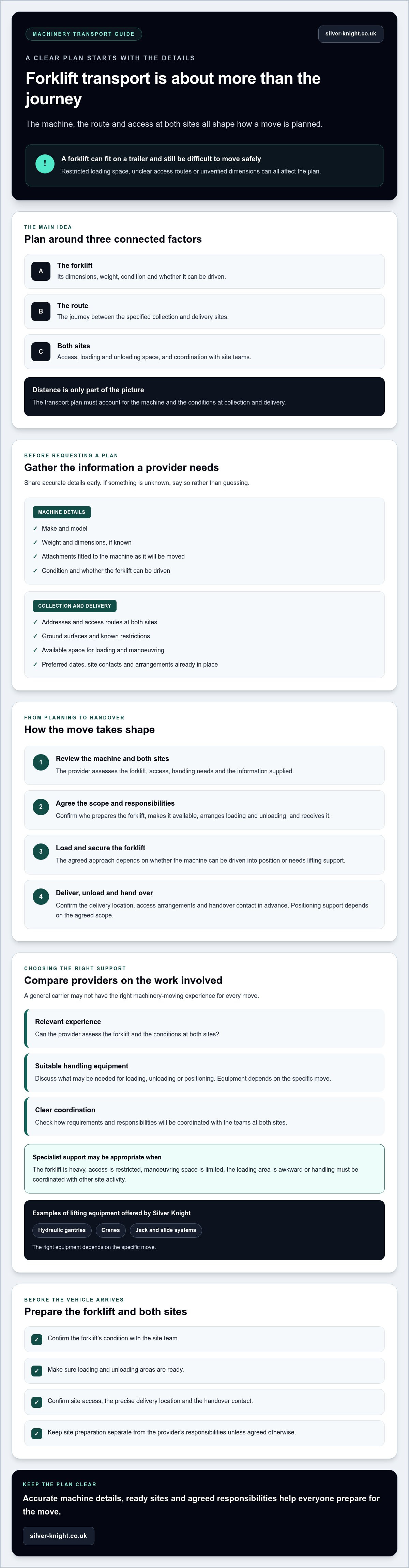
How to prepare your forklift and sites for transport
Preparation can prevent avoidable confusion on the day. Confirm the forklift’s details and condition with the site team, check access at both locations and agree who is responsible for each stage. This gives the provider a clearer basis for planning the move.
Prepare accurate machine and access details
Use reliable records rather than estimates where possible. Gather the make and model, along with available information about the machine’s weight and dimensions. Tell the provider about attachments, known damage or other details that could affect handling. Confirm with the site team whether the forklift can operate, and pass that information on before the move is planned.
Check the collection and delivery routes, including entrances, surfaces and manoeuvring space. Clear obstructions where possible and flag anything that cannot be changed. If requested, provide photographs or other site information for the provider to review. Don’t assume that access suitable for everyday site traffic will also suit the planned transport and handling.
- Verify machine identification, weight and dimensions against available records.
- Report attachments, damage and operating status.
- Check and clear access routes at both sites, and flag restrictions.
- Share requested photographs or access information with the provider.
Coordinate collection and delivery with site teams
Confirm access arrangements and any site opening details with the relevant teams. Name a contact at collection and another at delivery, so the provider knows who can answer questions and receive the forklift. Make sure the receiving area is ready and the planned delivery location is clear.
Agree responsibilities in advance. Be specific about who will prepare the machine, make it available for loading, receive it and confirm the handover. Also agree how the provider and site contacts will communicate if access changes, a delay arises or the plan needs reviewing. Share updated details promptly instead of relying on assumptions.
Use this checklist to align the site teams with the transport plan. If you’re arranging a forklift move and need to discuss the requirements, contact Silver Knight about your transport needs.
Learn about Silver Knight’s machinery-moving expertise.
Arrange forklift transport with a specialist moving team
A useful transport enquiry gives the provider enough detail to understand the forklift, the journey and what each site requires. Share what you know, flag anything that needs checking and explain whether the move may require lifting or positioning support. This lets the provider assess the job rather than assume a standard transport plan will fit.
What to include in your transport enquiry
Include the forklift’s make and model, plus reliable weight and dimension information if available. Identify attachments, known damage or operating issues that might affect handling. If a figure is uncertain, say so and ask what further details are needed.
Describe the collection and destination sites, including access routes, surfaces, restrictions and the intended delivery area. Add your preferred timing and the best contact at each site. Explain any loading or unloading arrangements already in place, and whether you think the job may need lifting, positioning or other machinery-moving support. The provider can then clarify what needs to be confirmed before agreeing a transport plan.
- Machine identification and available dimensions and weight
- Collection and delivery details, including access and site contacts
- Preferred timing and any known restrictions
- Possible requirements for lifting or positioning support
Discuss your forklift move with Silver Knight
Silver Knight provides forklift moving and heavy equipment haulage as part of its machinery-moving work. The family-run business was founded in 1996 and has over 180 years of collective industry experience, with nationwide UK operations. Its machinery-moving equipment includes low-loaders, trailers, hydraulic gantries, cranes and jack and slide systems. The suitable equipment and handling approach depend on the forklift and site conditions, so not every option will suit every move.
Clear details give the team a practical starting point for discussing your requirements. If you’re unsure about the machine information or access, explain what you know and identify what still needs checking.
Discuss your forklift transport requirements with Silver Knight’s team.
Explore Silver Knight’s machinery-moving services.
Plan your forklift move with confidence
Well-planned forklift transport services start with accurate machine details and clear arrangements at both sites. Confirm the forklift’s dimensions, weight and condition, check access, and agree who will prepare, load, receive and sign off the machine. These steps help the provider assess the move and discuss any lifting or positioning support it may need.
Silver Knight is a family-run machinery-moving specialist with over 180 years of collective industry experience and nationwide UK operations. Its equipment includes hydraulic gantries, cranes and jack and slide systems. The right approach depends on the forklift and site conditions, so share your requirements for an assessment.
Discuss your forklift transport requirements with the team to plan your move.
Frequently Asked Questions
What do forklift transport services include?
Forklift transport services arrange the movement of a forklift between specified sites. Depending on the job, the agreed work may include assessing the machine and site details, loading, transport and unloading. Confirm which tasks the provider will handle and which are your responsibility. If the forklift also needs lifting or positioning support, explain this before booking so the provider can assess the full requirement.
How do I arrange transport for a forklift?
Contact a provider with the forklift’s identification and any reliable weight and dimension details. Describe the collection and delivery sites, access conditions, preferred timing and any loading arrangements already in place. Ask what information is still needed, which parts of the move are included and who will coordinate each stage. Once you understand the proposed plan, confirm site contacts and handover arrangements with the provider.
Can a forklift be moved without being driven?
Yes, a forklift can be transported without being driven between sites. The suitable loading and unloading approach depends on the machine’s condition, whether it can operate and the access available at both locations. Tell the provider if it cannot be driven or its operating status is uncertain. They can assess the details and discuss handling arrangements for the specific move.
What information should I provide when requesting forklift transport?
Provide the make and model, plus the forklift’s weight and dimensions if you can confirm them from reliable records. Mention attachments, known damage and whether the machine can operate. Include collection and destination details, access restrictions, surfaces, preferred timing, site contacts and any loading or unloading arrangements. If you have photographs or site information, share them when requested. Be clear about details you have not yet confirmed.
How do transport providers assess forklift access at collection and delivery sites?
Providers use the site information you share to consider access at both ends of the move. This can include entrances, route restrictions, ground surfaces, manoeuvring space, loading arrangements and the intended delivery area. They may ask for further details or photographs if the information is unclear. Describe known obstacles or changes to access, and check that the receiving area will be ready for the planned handover.
Can specialist machinery movers help if a forklift is difficult to access?
A specialist machinery mover can assess whether difficult access requires more than transport alone. Depending on the forklift and site conditions, the plan may involve lifting or positioning support. Silver Knight’s machinery-moving equipment includes cranes, hydraulic gantries and jack and slide systems, but the suitable approach depends on the confirmed job. Share the access issue early so it can be considered in the assessment.
How do I choose a forklift transport company in the UK?
Choose a provider whose experience and proposed service match the forklift, route and site conditions. Ask how they assess the load, what the service includes, whether they can discuss handling needs and who coordinates collection and delivery. Check that responsibilities are clear before booking. If the move may need specialist lifting, look for relevant machinery-moving experience. Silver Knight is a family-run specialist with nationwide UK operations.
Article by
David Ashby
I'm the Managing Director of Silver Knight Haulage & Machinery Ltd. Silver Knight Ltd is a family-run firm established in the West Midlands in 2005, with the aim of providing a cost-effective, yet professional, service to businesses for the removal, transportation, and installation of machinery, plant, and equipment here in the UK and worldwide. Between us, the Silver Knight workforce has over 50 years of experience with machinery and its operation.
Disclaimer
This article is intended for informational purposes only. Please ensure you seek expert advice or carry out your own research to confirm the information is suitable for your specific needs.