What if the safest machinery move depends on details a generic document leaves out? If you’re asking what is a method statement in logistics, the key is its practical purpose: turning a planned task into a clear sequence that the team can follow. For a machinery move, that could mean explaining how site access, lifting equipment, handling and transport fit together.
It’s understandable to be unsure what belongs in the document, especially when method statements, risk assessments and RAMS are often discussed together. They’re related, but they aren’t interchangeable. A risk assessment identifies hazards, while a method statement explains how the work will be carried out and how identified risks will be controlled. A method statement isn’t a legal requirement in itself, but it’s widely used as part of safe work planning.
This guide explains what a logistics method statement should cover, how it supports safer planning and why the work sequence matters. You’ll also see how task-specific details, equipment choices and clear communication help make the document useful to the project team, particularly during complex machinery moves.
Key Takeaways
- To understand what is a method statement in logistics, focus on how it turns a task plan into clear steps for the people carrying out the work.
- Make the document project-specific by considering the scope, site conditions, people, equipment and coordination needs.
- Use the risk assessment to identify hazards, then explain in the method statement how the work sequence and control measures will address them.
- Brief the team on the agreed plan and make sure changes in site conditions or task requirements are communicated clearly.
- For machinery moves, connect load details, access, handling, lifting equipment and transport planning so the steps work together.
Planning specialist machinery work? Explore Silver Knight’s machinery moving expertise.
What a method statement means in logistics
A logistics task can involve several connected activities, and the people doing each part need a shared understanding of the intended approach. A method statement provides that practical account for a specific job. It describes how the work is planned to proceed, rather than offering a general description of how all logistics tasks should be done.
For example, a machinery move may involve preparing the load, moving it through a work area, lifting or handling it, then coordinating its transport. The proposed sequence depends on the task. Load details, access, site conditions and the equipment being used all help shape what the document needs to explain. This is why copying generic wording can leave important practical questions unanswered.
A short introduction to method statements is available in this video:
What questions does a logistics method statement answer?
The document should help the team understand what work is planned, who is involved and how the main stages fit together. It can explain how the selected equipment relates to the task, what access is available and which site conditions affect the proposed method. These details help team members see how their part connects with the wider operation.
For instance, if machinery must pass through a limited access point before lifting, the sequence should make that relationship understandable. The plan should give enough context for the people involved to follow the intended approach, without attempting to cover unrelated work.
A logistics method statement explains how a defined task is planned to be carried out, while a risk assessment identifies hazards and considers the risks associated with the work.
How a method statement relates to RAMS
RAMS commonly refers to risk assessments and method statements considered together. The risk assessment focuses on hazards and related risks. The method statement describes the planned work, including how the task is expected to progress. Each document contributes different information, even when they are presented as part of one project pack.
For logistics work, this distinction matters because identifying a hazard does not explain the practical sequence. The method statement should help show how the planned activity will address the task in its real setting. Its format and level of detail should suit the work and project context, rather than assume one generic layout fits every move.
Planning a machinery move? Explore Silver Knight’s machinery moving expertise.
What information makes a logistics method statement useful
A useful method statement gives the project team enough practical detail to understand how the planned task will work on site. It doesn’t need to be long for its own sake. Clear, project-specific information is more valuable than pages of general wording that don’t explain the actual work.
Use the points below as a planning checklist, not as a fixed or statutory template. The right level of detail depends on the task, the location and the people who need to follow the plan. Each detail should help explain how the work will be organised.
Project scope, site conditions and responsibilities
Start by describing the task and its boundaries. For a machinery move, this could include what is being moved, where the work begins and ends, and which areas or access routes are involved. Note site conditions that could affect the approach, such as restricted access, obstacles or limited working space, where these are relevant to the project.
Explain who is involved and what each role is responsible for. The team needs to know who is directing the work, who is carrying out key activities and how instructions will be passed between those involved. Site details and responsibilities can affect the order of work, so keep the plan aligned with the conditions and people expected on the job.
Equipment, sequence and communication
Describe the equipment selected for the task and its intended use. For example, a lifting operation may involve a crane or hydraulic gantry, while a jack and slide system may form part of a different moving method. Equipment should be considered in relation to the load, available space and planned handling approach. Silver Knight’s machinery moving equipment includes these specialist options.
Set out the main stages in a sensible order, from preparation through to completion. The sequence should make clear how one activity leads to the next, including any handover between handling, lifting and transport. Avoid vague instructions such as “move into position” if the team needs more detail to understand that stage.
- Scope identifies the task, the load or items involved, and the work area.
- Site conditions records access, space and other relevant constraints that shape the approach.
- People and responsibilities clarifies who is involved and how their roles connect.
- Equipment and sequence explains what will be used and how the work is intended to progress.
- Communication states how the team will receive instructions and share updates if the plan needs to change.
- Coordination considers how connected activities, such as lifting and transport, fit together.
Make sure the people carrying out the work can access and understand the instructions. If site conditions or task details change, there should be a clear way to communicate that change and align the team before continuing. The Components and Safety Aspects of Logistics Method Statements also discusses information a method statement can cover and its relationship with risk assessments.
For complex machinery moving, a well-organised plan links the site, equipment, task sequence and team communication into one practical guide. Discuss your machinery moving requirements with Silver Knight.
Planning a complex move? Explore Silver Knight’s machinery relocation expertise.
How logistics method statements address risks and changing conditions
Risk planning is most useful when it informs decisions about how a task will actually be done. For logistics work, that means connecting identified hazards with the proposed sequence, equipment and coordination. A plan can show how the team intends to manage a particular part of the operation, rather than leaving the hazard as a note with no practical link to the work.
A method statement and risk assessment have related but different roles. RAMS commonly refers to both considered together. The table shows how each contributes to planning without suggesting that they need identical contents or a fixed layout.
Risk assessment and method statement compared
Identifying a hazard does not, on its own, explain how the team will carry out the task. The method statement provides that operational context. For example, if a machinery route has a restricted area, the assessment considers the related risk, while the planned method can describe how the route and handling stages are intended to be managed.
| Document or term | Main purpose | Typical focus |
|---|---|---|
| Risk assessment | Identify hazards and consider related risks | Potential sources of harm and who may be affected |
| Method statement | Explain the planned way to carry out the task | Work sequence, equipment, access and coordination |
| RAMS | Consider the assessment and method statement together | How risk information relates to the planned work |
The documents should support each other, while remaining clear about their separate purposes. The appropriate detail depends on the task and project context. Avoid relying on a generic format that doesn’t reflect the operation being planned.
When a planned method needs reviewing
A method statement is based on information available during planning. If that information changes, the proposed sequence may need another look. Changes that could affect the approach include:
- An access route becoming restricted or differing from the information used to plan the work.
- New or corrected details about the load or work area.
- A change to the handling approach or equipment being considered.
- A revised sequence or a change in how the task connects with other work.
Consider whether a change affects the risks, equipment, controls or order of work. The response will depend on its effect on the task, so avoid assuming every change needs the same formal process. If the plan no longer reflects the conditions, communicate relevant updates to the people carrying out the work before they rely on the previous instructions.
For machinery moves, the practical relationship between load, access, handling and transport can shape how the plan responds to changing conditions. Discuss project-specific relocation requirements with Silver Knight.
Planning a logistics task? Discuss machinery handling and transport support with our team.
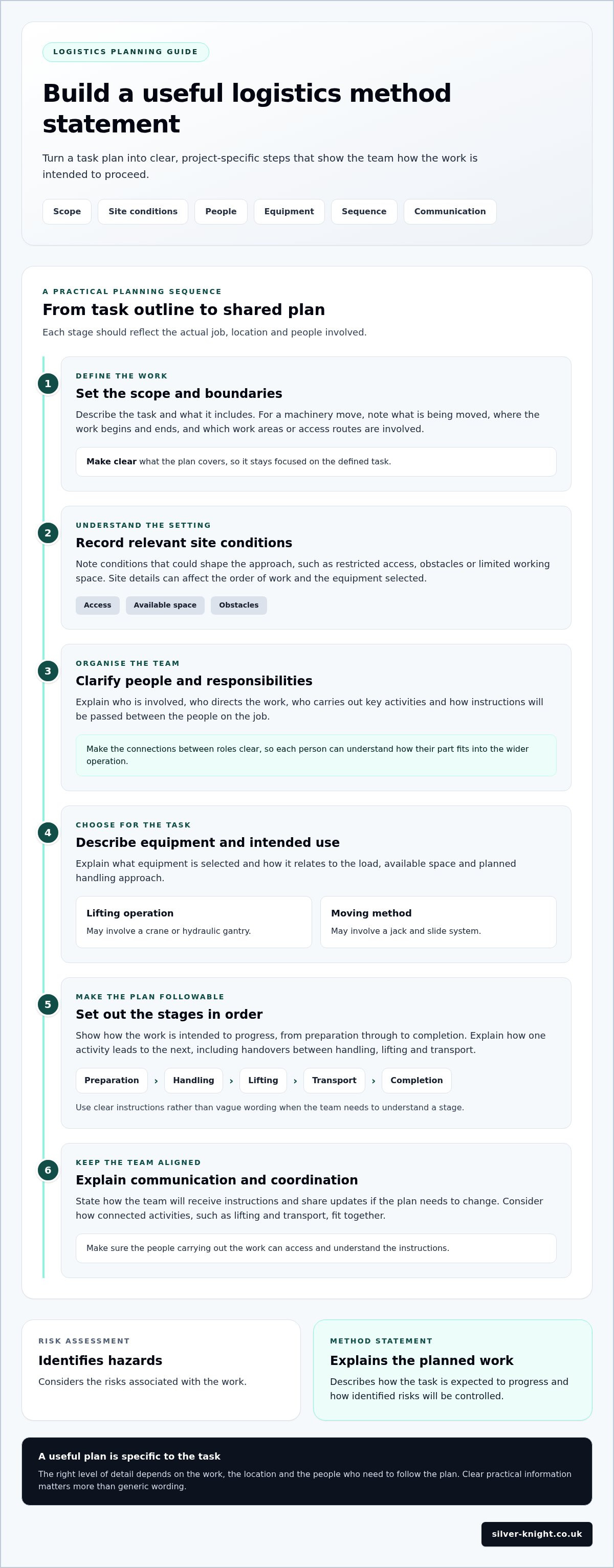
How to prepare and communicate a method statement for a logistics task
A practical method statement starts with accurate information, then turns it into instructions that the people doing the work can understand. Treat the process as a series of planning steps, rather than filling in a generic form and assuming it will suit every task. The document should match the work’s scope and the conditions where it will take place.
A practical sequence for developing the document
Work through these stages to build a task-specific plan:
- Gather the project details. Establish what the task involves, what load or items are affected, the intended outcome and the boundaries of the work. Collect relevant information about the site, access routes and any conditions that could affect how the task is carried out.
- Map the work sequence. Break the task into its main stages, from preparation to completion. Make the order clear, including where one activity depends on another. For a machinery move, consider how handling, lifting and transport connect, rather than treating each as an unrelated step.
- Identify people and equipment. Set out the roles involved and how they fit into the planned work. Record the equipment intended for the task and how it relates to the load, access and proposed sequence. Specialist machinery moving equipment, such as cranes, hydraulic gantries and jack and slide systems, can support different planned approaches.
- Check the written method against the job. Review whether the document describes the actual scope, site conditions and intended sequence. Look for gaps or unclear instructions. If the load information, access or work area differs from what the plan assumes, consider how that affects the proposed method.
This review is about making the document useful to the team, not making it longer. Extra detail helps only if it clarifies a decision, role or task stage. Keep instructions focused on what people need to understand and carry out the planned work.
Briefing the team and keeping instructions clear
Use plain language and explain any technical terms that not everyone may know. Arrange the steps in the order they are intended to happen, and make roles clear at the point they matter. For a lifting task, for example, the briefing should help the team understand how the planned lifting equipment fits into the sequence and how it connects with the next activity.
Give people a clear way to raise questions or report changed conditions. A briefing is more useful when the team can flag differences between the written plan and what they find on site. If a change could affect the sequence, equipment or roles, share the relevant update with those carrying out the work so they can work from the same instructions.
Clear communication helps turn a written plan into a shared working guide. Talk to Silver Knight about planning specialist machinery moving and handling.
Planning a machinery move? Discuss your machinery logistics project with our team.
Method statements in machinery moving and logistics projects
Machinery moves show why a method statement needs to reflect the actual task. The plan must connect information about the load with the route, handling approach, lifting equipment and onward transport. If one part changes, it may affect how the other stages fit together. A clear document helps the people involved understand the intended sequence and how their work connects.
Why specialist machinery moves need task-specific planning
Load dimensions and weight information help shape the proposed handling and lifting method. Site access matters too. Doorways, turning space, floor layout and the route to the work area can all affect how machinery is positioned or moved. The destination also informs planning, particularly if the equipment needs to be placed or installed in a particular area.
Equipment choice should follow from the task and its conditions, not appear as a generic list. A crane, hydraulic gantry or jack and slide system may form part of a proposed method, depending on the move. The plan should make clear what role the selected equipment has in the sequence and how its use relates to access, handling and transport coordination.
Silver Knight carries out machinery moving and haulage work, where coordinating these practical details is central to planning. For example, machinery moving and haulage services connect handling decisions with the wider movement of heavy equipment. This context helps show why a task-specific method is more useful than a template that does not reflect the load or site.
What a method statement cannot do on its own
A written plan supports preparation and communication, but it cannot carry out the work. Nor can it account for every site condition without accurate, relevant information about the task. It needs to be considered alongside the conditions on site and the judgement of the people carrying out the work.
Clear coordination matters as well. People need to understand their roles, the planned order of work and how their activities link with others. If the real conditions differ from those described, the team may need to reconsider the approach and communicate any relevant changes before continuing. A document is a guide, not a substitute for active communication or task-specific planning.
In practical terms, what is a method statement in logistics for a machinery move? It is a working explanation of how the project team intends to manage the task, based on the load, site, equipment and sequence. Its value comes from being accurate and usable, not simply from being detailed.
If you’re planning a machinery move, speak with Silver Knight about the handling and transport requirements.
Put a clear plan into action
The next step is to make the method statement part of the project’s working conversation. Use it to align the people involved before work begins, then keep communication open if the task or site conditions change. A plan is most useful when it reflects the operation in front of the team, rather than sitting unchanged as paperwork.
Understanding what is a method statement in logistics can help you ask better planning questions and spot where the sequence needs more clarity. For machinery work, Silver Knight brings over 180 years of collective industry experience to machinery moving, installation and factory relocation projects, with equipment including hydraulic gantries, cranes and jack and slide systems.
Start planning your next move with a team experienced in specialist machinery work. Discuss your machinery logistics project with Silver Knight, and take the next step with confidence.
Frequently Asked Questions
What is a method statement in logistics?
A method statement in logistics describes how a defined task is intended to be carried out. For example, a plan for moving a machine between work areas could explain how the team will prepare it, move it through the site and coordinate its next stage. The detail should match the operation, so readers can see what applies to their task rather than rely on wording copied from an unrelated job.
Is a method statement the same as a risk assessment?
No. A risk assessment identifies hazards and considers the risks linked to the work, while a method statement describes the planned way of doing it. For example, noting that a route has restricted space identifies a concern, but doesn’t explain how the task will use that route. RAMS refers to the two documents considered together. They remain distinct, even when presented in one pack.
Who writes a logistics method statement?
The person or team planning the work generally develops the method statement, using information about the task and site. A machinery move may require input from people who understand the load, handling approach, access and transport arrangements. This helps avoid assumptions that don’t fit the job. The key is that the document reflects the planned operation and can be understood by the people expected to carry it out.
When should a method statement be prepared?
Prepare it early enough for the relevant people to consider the plan and understand their roles before work starts. The time needed depends on the task and how much information must be gathered. For instance, a move involving several connected activities may need coordination between handling and transport planning. If key details change later, review whether the written method still matches the work and share relevant updates.
What should a logistics method statement include?
Include the details needed to understand the planned task, such as its scope, relevant site conditions, roles, equipment, sequence and communication arrangements. For a machinery operation, load information and how the move connects with transport may also matter. Use clear wording and enough context for the intended readers to follow the plan. A checklist can help organise these points, but it shouldn’t replace project-specific detail.
Does every logistics job need a method statement?
Not necessarily. Whether one is needed, and how much detail it should contain, depends on the task and project requirements. A routine activity may call for a different level of planning from a complex machinery relocation involving several stages. If a method statement is used, make it useful to the people involved by focusing on the actual work, rather than adding general paperwork that doesn’t guide the task.
How does a method statement help with machinery moving?
It helps the project team understand how the planned move is organised, including the relationship between handling, lifting and transport. For instance, the sequence may need to account for when machinery is made ready for movement and how the next transport stage fits in. The document supports shared understanding, but it can’t guarantee the operation will go to plan. Its usefulness depends on accurate details and clear communication.

Article by
David Ashby
I'm the Managing Director of Silver Knight Haulage & Machinery Ltd. Silver Knight Ltd is a family-run firm established in the West Midlands in 2005, with the aim of providing a cost-effective, yet professional, service to businesses for the removal, transportation, and installation of machinery, plant, and equipment here in the UK and worldwide. Between us, the Silver Knight workforce has over 50 years of experience with machinery and its operation.
Disclaimer
This article is intended for informational purposes only. Please ensure you seek expert advice or carry out your own research to confirm the information is suitable for your specific needs.