Could equipment that can roll onto a ship still be the wrong choice for your move? RoRo shipping for heavy equipment can suit some machinery, but the vessel is only one part of the decision. The machine’s condition, dimensions and ability to move under its own power all affect whether this approach is practical.
It’s understandable to focus on how the equipment will get on and off the ship. Yet choosing between RoRo, a container, a flat rack or breakbulk also means considering protection, handling and the route from your site to the port, then onwards to the destination. A good fit for the sea leg may create challenges elsewhere in the transport chain.
This guide explains what RoRo means for heavy machinery, when it may be suitable and which practical factors can shape your choice of route and shipping method. You’ll also learn what information to gather about the equipment and its journey, so machinery handling, heavy haulage and international transport can be planned as one coordinated move.
Key Takeaways
- RoRo shipping for heavy equipment depends on more than whether a machine has wheels. Consider the cargo, handling method and acceptance for the specific shipment.
- Gather accurate details about the machine’s dimensions, weight, condition and centre of gravity to help shape a workable loading plan.
- Compare RoRo, container, flat-rack and breakbulk options by how the equipment will be loaded, protected and handled.
- Plan the whole journey from collection and port access to delivery-site access, not just the international shipping leg.
- Bring machinery moving, heavy haulage and international transport into one project plan to help coordinate equipment handling across the route.
Explore how Silver Knight’s machinery moving and international transport services can support planning across the full journey.
What RoRo Shipping Means for Heavy Equipment
Roll-on/roll-off shipping, usually shortened to RoRo, is a sea-freight method where cargo is moved on to and off a vessel using a suitable rolling or handling method. In plain English, RoRo means machinery is loaded onto a ship and unloaded at the other end without treating it as conventional containerised cargo. The precise method depends on the machine and the arrangements for that shipment.
How roll-on/roll-off shipping works
Some equipment may move under its own power, while other cargo may need to be towed, pushed or moved using suitable handling equipment. The loading method is not the same for every machine. Dimensions, weight, condition and access all inform the plan, as does the equipment available for handling at the relevant points.
RoRo vessels and port terminals have shipment-specific acceptance requirements. These can depend on the cargo, the proposed handling method and the route. Check current vessel and terminal acceptance for the particular shipment rather than assuming that a machine can be carried simply because it can be moved on wheels. The What is RoRo Shipping? overview offers useful background on the method and vessel types.
Why heavy equipment needs a project-specific assessment
Before comparing shipping options, build a clear picture of the equipment. Record its overall dimensions and weight, describe its condition, and note how it can be moved and handled. Include any features that could affect lifting, rolling or access. Industrial machinery and plant can vary widely, so a plan should be based on the actual item rather than a broad category label.
Then consider the whole route. The sea leg has to connect with collection from the site, movement to the port, unloading and onward delivery. The machine’s size, weight and condition may influence the land transport and handling arrangements at both ends. Delivery-site access matters too, since the equipment needs to reach its final position, not just the port gate.
For example, a machine that can be moved onto a vessel may still need a separate plan for getting it out of a factory, transporting it to the port and positioning it at its destination. Coordinating those stages helps reveal whether the proposed shipping method fits the wider move. Silver Knight’s machinery handling equipment, including hydraulic gantries, cranes and jack and slide systems, can be considered as part of that handling plan.
RoRo shipping for heavy equipment is therefore one part of a transport decision, not a complete move by itself. Assess the cargo, handling arrangements, current route acceptance and land transport together before settling on the method.
For help coordinating machinery handling with the wider transport plan, explore Silver Knight’s machinery moving and international transport services.
Assessing Heavy Equipment Suitability for RoRo
Cargo suitability depends on the equipment details and the specific shipment. A machine’s shape or ability to move may make RoRo worth considering, but neither tells you on its own whether a particular vessel and terminal will accept it. Start with accurate information about the machine, then consider how it will be loaded, carried and moved at each end of the journey.
Which equipment details affect the loading plan
Record the machine’s overall length, width and height, along with its weight. Include projections, attachments and any parts that can be removed, as these can affect the space it occupies and how it is handled. Describe its condition and whether it can move under its own power. These details help shape a practical loading plan, but the actual arrangement must be assessed against the shipment’s cargo information.
Condition matters. A working machine may be able to move during loading, while a non-running item could need a different method to get on and off the vessel. Awkward shapes or fixed projections can also affect how it is approached and handled. Don’t assume that a machine that has wheels can simply be driven aboard. Its movement, handling needs and the equipment available for the job all form part of the assessment.
Access, support and cargo preparation
Consider how the machine can be reached and moved at the collection point, port and destination. Access routes, space to manoeuvre and the conditions for unloading can affect the plan. The equipment may also need suitable support or preparation for its intended handling. Requirements vary by shipment, so follow the instructions that apply to the cargo and route rather than treating one preparation method as a universal rule.
Separate your initial planning from formal acceptance. Dimensions, weight, condition, centre of gravity and access information help identify questions and compare possible loading approaches. They don’t replace the carrier’s or terminal’s requirements. Vessel limits, terminal processes and cargo acceptance are specific to the shipment and need current verification before the transport plan is settled.
Think through the land journey as well. A loading approach that works at the port must fit the collection arrangements and delivery site. If a machine needs to be dismantled, repositioned or handled with specialist equipment, account for that before fixing the sea-freight plan. This joined-up assessment can help show whether RoRo is suitable or whether another shipping method and handling plan is a better fit.
With the equipment details and route in hand, discuss your machinery transport project as a coordinated move, from handling and haulage to international transport.
For support planning machinery handling alongside an overseas shipment, explore Silver Knight’s international machinery transport services.
RoRo Compared with Container, Flat-Rack and Breakbulk Shipping
No single sea-freight method suits every machine. Compare how the cargo will be presented, loaded and protected, then consider whether that approach works for collection, port handling and delivery. The table gives a starting point. Actual acceptance and handling arrangements remain specific to the cargo, route, vessel and terminal.
| Method | Cargo format and loading | Protection and planning points |
|---|---|---|
| RoRo | Machinery is moved onto and off the vessel using a suitable rolling or handling method. | Protection depends on the cargo and shipment arrangements. Consider the machine’s condition, movement and handling needs. |
| Container | Cargo is placed inside a container for transport. | The enclosed format provides a barrier around the cargo, while dimensions, weight and loading access affect whether the machinery can be packed suitably. |
| Flat-rack | Cargo is secured on a platform with end structures, rather than enclosed within a standard container. | The machine is more exposed than enclosed container cargo, so consider protection, securing and how it will be handled. |
| Breakbulk | Machinery travels as individual cargo rather than inside a container. | Handling and protection arrangements are planned for the particular item and shipment. |
When RoRo may fit the machinery
RoRo is worth assessing when the machine can be moved onto and off the vessel by a suitable method. That may involve the equipment’s own movement or other handling arrangements. Its dimensions, condition and configuration still matter, as does current acceptance for the specific vessel and terminal. Heavy or oversized machinery is not automatically suitable just because it can be moved on wheels.
When another shipping format may be considered
A container may be considered where the machinery can be loaded inside and the enclosed format suits the cargo. A flat-rack may be considered when cargo needs a platform format rather than a closed container. Breakbulk can be assessed for machinery handled as an individual cargo item. Each option calls for its own loading, protection and handling plan. There is no universal winner on cost, speed or safety without evidence for the particular shipment.
Compare the practical work at both ends of the sea journey too. A method that suits vessel loading still needs to fit the route from the collection site to the port and onward to the delivery location. International machinery transport planning can bring the overseas leg into the wider machinery move.
Use the comparison to shortlist possible formats, then match the options against the equipment details, route and land transport arrangements. RoRo shipping for heavy equipment is one choice to assess, not a default for every machine.
Silver Knight brings machinery moving and international transport together as part of a tailored project.
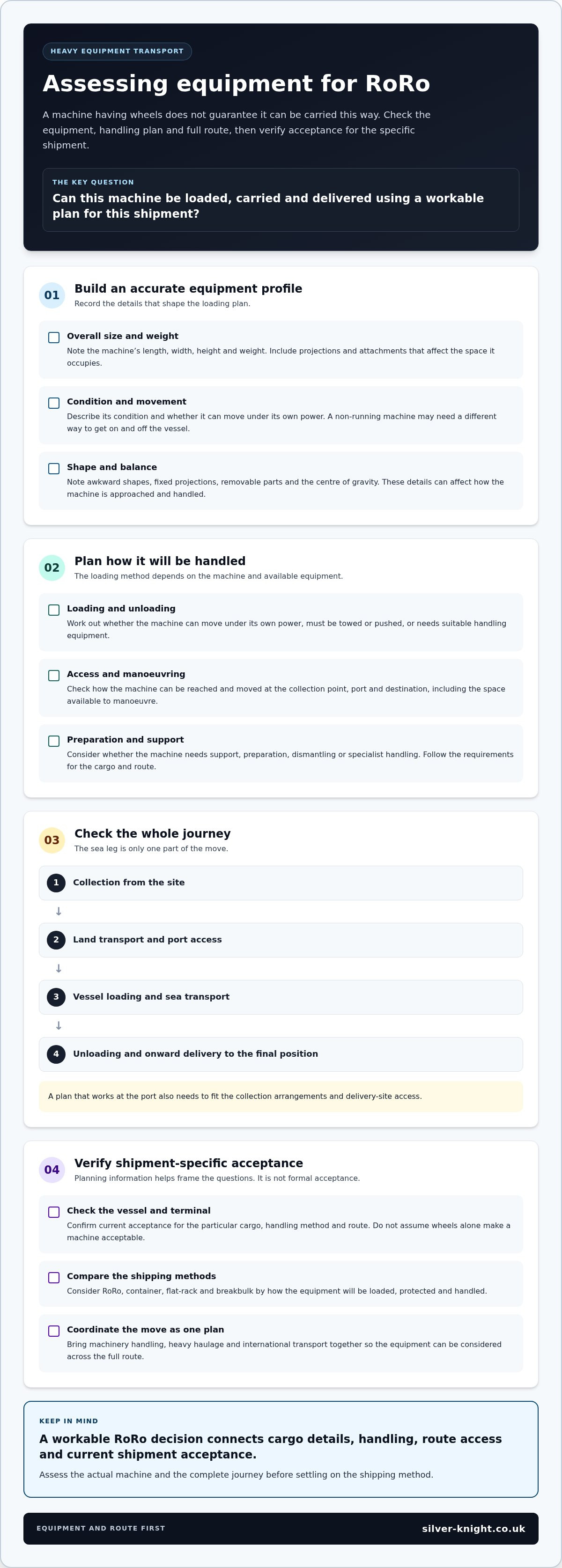
A Practical Checklist for Planning Heavy Equipment RoRo
A well-prepared move starts with clear information about the machine and a view of the whole journey. Before arranging a RoRo move, gather the equipment details, route, handling needs, delivery access and responsibilities for each transport stage.
- Set out the origin and destination. Record the collection address, intended port, destination port and final delivery address. Include any site access details that could affect collection or delivery, such as restricted space for manoeuvring or limited access for handling equipment.
- Describe the machine accurately. Record its length, width, height and weight, and note any projections, attachments or loose components. Use consistent measurements and descriptions throughout the planning documents so the cargo information is clear to everyone involved.
- Explain its condition and movement. State whether the machine is operational and how it can be moved. Note any handling support available at the collection and delivery sites, along with preparation or support needs relevant to the planned movement.
- Map the handling stages. Consider how the machinery will be collected, transferred to the port, loaded for the sea leg, unloaded and delivered. Identify where specialist machinery handling or heavy haulage may form part of the land movement.
- Assess the shipping plan. Use the cargo details and proposed route to establish whether RoRo is suitable for the specific shipment. Vessel and terminal acceptance, along with their current requirements, must fit the equipment and proposed handling arrangement.
- Assign coordination and handover. Identify who is responsible for each stage, from collection to final delivery, and how cargo details will be passed between those coordinating the move. Agree which version of the equipment description and measurements will be used in planning documents.
- Review the full route together. Check that the road movement, port handling, sea leg and final delivery work as one plan. If the route or site arrangements change, make sure the updated information reaches everyone coordinating the relevant stages.
Road transport needs to fit the machinery and the wider route, not sit apart from the shipping plan. Silver Knight’s machinery haulage and transport services can be considered alongside international shipping and specialist handling as part of a coordinated move.
Use this checklist to organise the information before confirming the shipping approach. For help planning the machinery move and its transport stages, discuss your equipment transport project.
Plan machinery handling and international transport together with Silver Knight’s machinery moving services.
Coordinating RoRo Shipping with a Specialist Machinery Move
RoRo shipping is one part of a machinery relocation, not the whole project. Collection, preparation, handling, road transport, port transfer and delivery all need to connect with the sea-freight plan. Silver Knight provides machinery moving, heavy haulage and international machinery transport, bringing these parts into a project plan shaped around the cargo and its route. Vessel and terminal acceptance remain specific to the shipment.
How specialist machinery handling supports the move
Getting a machine ready for transport can involve more than moving it from one vehicle to another. Its position at the site, the available access and the handling needed at collection and delivery all help shape the approach. Silver Knight uses hydraulic gantries, cranes and jack and slide systems for machinery handling. The equipment and method are selected to suit the machine and site requirements, rather than assuming every move follows the same process.
Consider the full sequence. The machinery may need to be moved out of a working area, prepared for transport, transferred to road haulage and delivered for positioning at its destination. If the site presents a complex lifting or positioning task, that should be considered alongside the shipping arrangement, not left until the sea leg has been planned. Silver Knight’s heavy equipment and machinery moving capabilities are relevant when planning the handling requirements for a project.
What to include when discussing a project
Useful early information helps build a practical picture of the move. Share the cargo’s dimensions and weight, its condition, origin and destination, and how it can be moved. Describe access at the collection point and delivery site, any handling needs, and what the final delivery location is like. Note any attachments or parts that affect the cargo description, and flag site conditions that could shape the handling plan.
It also helps to identify who is coordinating each stage and how information will pass between those involved. Clear handovers can keep the equipment description, handling plan and route details aligned from collection through to delivery. This matters if a change to the machine, site access or transport arrangement affects another stage of the move.
Silver Knight coordinates machinery moving, heavy haulage and international transport as parts of a tailored project. The sea-freight method and its acceptance depend on the shipment, while the wider plan accounts for moving the equipment before and after shipping. No vessel operation or RoRo acceptance guarantee is implied.
To discuss the machinery, route, handling needs and delivery arrangements, share your machinery transport project requirements with Silver Knight.
Silver Knight supports machinery moves through machinery moving and international transport.
Turn Your Shipping Plan into a Joined-Up Move
The next step is to bring the equipment information and route assumptions into a practical project discussion. This helps align the shipping choice with what needs to happen at the collection site, port and final destination. RoRo shipping for heavy equipment should be considered as part of that wider plan, with the route and handling arrangements shaped around the machinery.
Silver Knight is a family-run machinery-moving specialist founded in 1996, with over 180 years of collective industry experience. That experience supports planning moves where machinery handling and international transport need to work together.
Share the machine’s details, origin, destination and any site access considerations to start a focused conversation about your requirements. Discuss your heavy equipment transport requirements with Silver Knight and take the next step towards a well-planned move.
Frequently Asked Questions
Can non-running heavy equipment be shipped by RoRo?
Yes, non-running equipment may be considered for RoRo if a suitable method is available to load and unload it and the shipment is accepted. Its condition affects how it can be moved, so share whether it starts, steers or can roll, along with any known faults. For example, machinery that cannot move under its own power may need separate handling arrangements. The carrier and terminal requirements for the specific shipment still apply.
Can tracked machinery travel on a RoRo vessel?
Tracked machinery may be considered, but having tracks does not by itself establish whether it can travel on a particular RoRo shipment. The machine’s condition, dimensions, weight and handling plan all matter, as do the vessel and terminal’s requirements. Describe the tracks and how the equipment can be moved when planning the route. That information helps establish an appropriate loading approach and whether another shipping format should also be considered.
How should loose attachments be prepared for RoRo transport?
List every loose attachment and explain whether it can be secured to the machine or needs to travel separately. Include its dimensions and weight in the cargo information where relevant, and make sure the equipment description accounts for it. For instance, a detached component should not be overlooked when planning the handling or collection. Follow the instructions for the specific shipment, as packing, securing and acceptance requirements can vary.
What happens if heavy equipment exceeds a vessel’s acceptance limits?
If the equipment falls outside the vessel’s acceptance requirements, that RoRo option may not be workable as described. The next step is to review the cargo details and route, then consider whether a different vessel, shipping method or handling plan fits the project. Do not assume that removing a component will resolve the issue, as the revised cargo still needs to meet the relevant shipment requirements.
Can heavy equipment be transported to a port by low-loader?
Yes, a low-loader can be used for heavy equipment road transport to a port when the machine and journey suit that arrangement. The planning needs to account for the equipment’s dimensions, weight, loading method and access at both ends of the road leg. Silver Knight provides heavy haulage, including low-loader transport. The road movement should be planned alongside port transfer and the international shipping arrangements.
Is RoRo suitable for moving several machines as part of a factory relocation?
It can be considered for a factory relocation, but each machine needs to be assessed as part of the overall move. A group may include equipment with different sizes, conditions and handling needs, so one loading approach may not suit every item. A clear inventory helps coordinate collection, shipping and delivery, and shows where alternative methods or handling plans may be needed within the same project.
Does every RoRo shipment use the same loading and securing method?
No, loading and securing arrangements can differ according to the cargo and the specific shipment. A machine that moves under its own power may need a different approach from one that requires handling support. The vessel, terminal and carrier instructions also shape the arrangements. Provide accurate details about the equipment and follow the requirements issued for that shipment, rather than applying a method used for another machine.

Article by
David Ashby
I'm the Managing Director of Silver Knight Haulage & Machinery Ltd. Silver Knight Ltd is a family-run firm established in the West Midlands in 2005, with the aim of providing a cost-effective, yet professional, service to businesses for the removal, transportation, and installation of machinery, plant, and equipment here in the UK and worldwide. Between us, the Silver Knight workforce has over 50 years of experience with machinery and its operation.
Disclaimer
This article is intended for informational purposes only. Please ensure you seek expert advice or carry out your own research to confirm the information is suitable for your specific needs.