Choosing a reliable heavy haulage partner in the UK means looking beyond a phone number: the move must account for load security, site access, lifting needs, coverage and timing. Contact details are a useful starting point, but the right questions are how the load will be secured and delivered, and whether lifting and installation are part of the plan. Heavy haulage is only one part of a successful site delivery.
It’s understandable to focus first on finding someone to transport the machinery. But delivery can become more complex when access is tight or equipment needs lifting into position. Consider the full move, from collection through to installation.
This guide explains how trailer choice and load security, route and site access, lifting arrangements, nationwide coverage and scheduling shape a heavy haulage move. You’ll learn what information informs the plan, how to coordinate the different stages, and why heavy lifting and installation matter alongside transport. By the end, you’ll have a clearer idea of what your site delivery requires and what to discuss when arranging it.
Use these takeaways to shape your project discussion with Silver Knight’s heavy haulage team.
Key Takeaways
- Match the trailer and load-securing plan to the machinery, its dimensions and the delivery route.
- Plan site access and timed delivery slots around the space, route and unloading arrangements available.
- Include lifting and installation in the move plan when machinery needs more than transport to the site.
- Coordinate nationwide coverage and scheduling around the collection point, destination and site requirements.
- Understand which accreditations and licences apply, and what they tell you about an operator’s work.
For equipment details relevant to this topic, see Silver Knight’s haulage information.
Trailer fleet and load-security specification
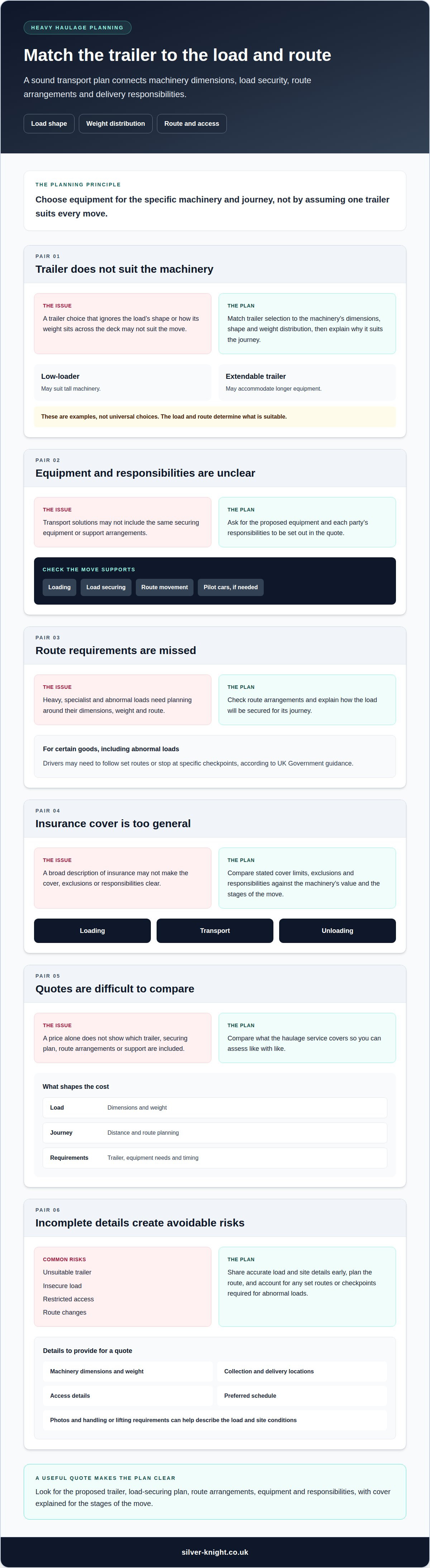
Trailer selection and load security should reflect the machinery’s dimensions, weight distribution and route. Compare the transport plan, equipment and responsibilities alongside the haulage service, rather than focusing on price alone.
Specialist trailer options
A specialist trailer must suit the load’s shape and how its weight sits across the deck. For example, a low-loader may suit tall machinery, while an extendable trailer may accommodate longer equipment. These are examples, not universal choices. The transport plan should explain why the selected trailer suits the load and journey.
Fleet equipment and pilot cars
The equipment used should support loading, securing and moving machinery along the planned route. Depending on the move, arrangements may include suitable securing equipment and pilot cars. Ask for the proposed equipment and each party’s responsibilities to be set out in the quote. This makes it easier to compare service levels instead of assuming every transport solution includes the same arrangements.
Heavy and abnormal load transport
Heavy, specialist and abnormal loads need planning around their dimensions, weight and route. According to UK Government, drivers carrying certain goods, including abnormal loads, may need to follow set routes or stop at specific checkpoints. The transport plan should account for these requirements and explain how the load will be secured for its journey.
When comparing UK heavy haulage quotes, assess the trailer, load-securing plan, route arrangements and any pilot car support. A useful quote explains what the haulage service covers, so you can compare like with like.
Insurance cover should reflect the machinery’s value and the stages of the move, including loading, transport and unloading. Compare stated cover limits, exclusions and responsibilities rather than relying on a general description of insurance.
Heavy haulage costs depend on the load’s dimensions and weight, journey distance, trailer and equipment needs, route planning and timing. For projects involving diverse cargo sizes, assessing dedicated haulage vs shared freight helps determine whether an exclusive vehicle is required or if consolidation makes sense. These requirements shape the price, which is provided following a quote request.
For a quote, provide the machinery’s dimensions and weight, collection and delivery locations, access details and preferred schedule. Photos and information about handling or lifting requirements can help describe the load and site conditions clearly.
Common risks include an unsuitable trailer, insecure loads, restricted access and route changes. To reduce avoidable delays, share accurate load and site details early, plan the route and account for any set routes or checkpoints required for abnormal loads.
Plan site delivery around access, timing and handling, with heavy haulage support as part of the wider project.
Delivery access and timed site slots
Delivery planning connects the vehicle’s route with the receiving site’s access arrangements. A booked slot only works when the load, unloading area and site team are ready at the same time.
Route planning starts with the collection and delivery points, the vehicle and the load’s dimensions. It accounts for bridges, roadworks, restricted roads and possible diversions, then considers whether the final approach suits the vehicle. Set routes or checkpoints may also shape an abnormal load’s journey. Reaching the postcode is not enough if the vehicle cannot reach the unloading area.
Site access details should cover gate locations, turning space, ground conditions, overhead obstructions and the unloading position. A narrow entrance, parked cars or stored materials can affect vehicle positioning or block the planned approach. Timed slots also depend on receiving hours, staff availability and space to unload. Aligning these details helps prevent a vehicle arriving before the site is ready.
Operational delivery involves coordinating the driver, site contact and unloading team around the agreed arrival window. A delivery record can note arrival, unloading and handover, with proof of delivery confirming that the load reached its destination. Online proof-of-delivery updates can make these stages easier to follow when included in the logistics process. The record should confirm the delivery and handover, not merely show that a vehicle reached the site.
Tracking and proof of delivery serve different purposes. Tracking shows the journey’s progress, while proof of delivery records the completed handover. An operational update is most useful when it informs a practical decision, such as preparing the unloading area or bringing the receiving team to the gate. Agreeing how updates are shared helps distinguish estimated arrival from confirmed delivery.
Same-day and express delivery depend on whether the load is ready, a suitable vehicle can be arranged, the route is workable and the site can receive it. An urgent arrival still needs to fit the site’s access and handling arrangements. If a fixed slot matters, build the schedule around preparation and unloading time, not just driving time. This helps assess an urgent haulage plan against the actual delivery requirements.
To manage bridges, roadworks and restrictions, heavy haulage companies plan routes around vehicle and load dimensions, known access limits and the site approach. They allow for route changes and coordinate arrival with the receiving team, so a diversion does not leave the site unprepared for unloading.
For machinery that needs precise placement after delivery, machinery moving and installation can be planned alongside the lift.
Heavy lifting and installation
Choosing a reliable heavy haulage partner in the UK means considering what happens after machinery reaches the site. Delivery may involve lifting, internal movement and installation, especially when equipment must pass through a restricted entrance or reach a specific production area.
Map the move from vehicle to final position. The sequence may include unloading outside, moving machinery across the site, lifting it into place and positioning it for installation. Each transition affects the next. A machine unloaded at a loading bay, for example, may still need a separate plan to reach an internal floor or production line.
Equipment choice depends on the load, working space and required movement. Hydraulic gantries can lift machinery where a crane cannot be positioned. Jack and slide systems can help move heavy equipment horizontally through limited spaces. Cranes may suit lifts where access and working space allow. The method should fit the move, not just the vehicle that delivered the load.
Contract lifting brings lifting activity into the project plan, while machinery installation covers positioning and fitting at the destination. These tasks need coordination with the site’s production layout and the people responsible for receiving the equipment. A clear sequence identifies where machinery will be unloaded, how it will move through the building and where installation begins.
Before the move, equipment drawings, photographs and site plans can help the project team understand the route inside the premises. Doorways, floor changes, fixed machinery and overhead structures can affect the work sequence. A route that suits the delivery vehicle may not work for machinery once unloaded, so transport and internal movement need to be planned together.
Site readiness matters too. Prepare the installation area for the machinery’s arrival, with its intended position and access route clear. If production equipment must pass through a distribution area, account for nearby operations and the space needed for handling. This helps align the lifting sequence with the site’s working arrangements.
For projects involving the UK and Europe, transport planning may connect with lifting and installation at the destination. International freight can require coordination between the transport leg, site access and the team handling the machinery’s final position. Keeping these stages in one project plan helps clarify when responsibility passes from delivery to lifting and installation.
A reliable heavy haulage partner in the UK can help coordinate the move as one project, from transport to the machinery’s intended position. A practical scope should describe the equipment, collection and installation locations, access constraints, lifting method and final position. This gives the project team a shared sequence, whether moving one machine or coordinating several vehicles during a factory relocation.
For help planning machinery transport across the UK, discuss your delivery requirements.
Nationwide coverage and flexible scheduling
A nationwide move requires coordination between collection, transit and the receiving site. Map the full journey, such as machinery travelling from one part of the country to a site elsewhere in the UK. The schedule should account for collection readiness, the delivery window and any work required after arrival. One agreed plan helps each stage fit the next.
Coverage is more than the locations named in a service area. Consider how the operator organises the journey between collection and destination, including vehicle allocation and coordination. Depots may affect where vehicles start or finish a route, but what matters is how that arrangement supports your collection date and destination. Ask how the proposed plan covers both ends of the move.
Flexible scheduling starts with the site’s operating hours and the machinery’s readiness. A factory shutdown, production change or restricted receiving window can shape the delivery date. Share these constraints early, then build the collection and arrival plan around them. If the destination team needs time to prepare an unloading area, include that before fixing the arrival slot.
For a multi-site project, sequence each delivery by destination and readiness. Machinery going to two factory buildings, for example, may need separate arrival windows if the sites share access or handling resources. The schedule should show which load goes to each location and what needs to be ready before dispatch. This reduces the risk of a vehicle arriving before the receiving team.
Efficiency depends on coordination, not simply a shorter journey. Collection timing, planned stops, site access and unloading arrangements all affect how the move fits the wider operation. A clear commitment records the agreed locations, dates, responsibilities and update process. If circumstances change, this record helps transport and receiving teams respond using the same information.
Build practical flexibility into the schedule by identifying which dates or delivery windows can change. Keep fixed production milestones separate from preferred collection times, so changes can be considered without losing sight of the main deadline. A change to collection may affect vehicle planning, transit and site preparation, so promptly share updates with everyone involved.
Before confirming a nationwide move, bring together the collection and delivery addresses, site operating hours, access arrangements, load readiness and any related lifting or installation work. The operator can then organise transport around the actual requirements, not just an estimated journey. For ongoing projects, keep one up-to-date record of agreed dates and changes, giving each site a consistent schedule to follow.
What accreditations and licences should a UK heavy haulage operator hold?
Accreditations and licences serve different purposes in a UK haulage project. A licence relates to authority for a particular activity, while an accreditation signals that an operator follows a recognised standard. Neither alone shows whether the operator can manage your specific load, route and delivery requirements.
The Fleet Operator Recognition Scheme, known as FORS, offers accreditation at different levels. FORS Gold is described as the highest accreditation a haulage company can achieve. Treat it as one useful indicator, then consider how the proposed transport plan addresses your machinery, site access and handling needs. Accreditation does not replace a project-specific plan.
Licensing requirements depend on the work being carried out and the vehicles involved. For a heavy or abnormal load, the operator’s arrangements must account for applicable permissions and route requirements. Ask for the plan to identify who is responsible for each relevant approval and how that responsibility connects with the collection and delivery schedule.
Check that the paperwork relates to the company and activity involved. For example, accreditation held by a separate business does not automatically show that the operator arranging your move works under it. The same principle applies when different teams handle transport, lifting and installation. Clear responsibilities help prevent gaps between paperwork and delivery work.
Accreditation should sit alongside practical evidence of how the move will be managed. Look for a written scope naming the load, journey, equipment and handling stages. The operator should explain how its proposed approach suits your site, rather than relying on a badge to answer operational questions. For a factory machine, that means considering both its journey to the building and its position after arrival.
- FORS status: Note the accreditation level and the organisation it applies to.
- Licences and permissions: Identify which apply to the vehicle, load and planned route.
- Project responsibilities: Record who arranges approvals, transport and site handover.
Use these points to compare operators consistently. If one proposal names a FORS level but gives little detail about approvals or responsibilities, while another explains those project arrangements, the difference matters. A sound assessment combines relevant credentials with a clear, workable plan for your load and destination.
Before proceeding, ask for the proposed scope to set out the operator’s role, relevant accreditations and responsibility for any required permissions. Keep the answer with the project record, so the site and transport teams work from the same information.
Silver Knight Haulage & Machineries
Silver Knight Haulage & Machineries can coordinate machinery transport with the work required at its destination. If your project involves moving equipment into a factory, positioning it for use or relocating a plant, discussing machinery moving, installation and relocation together can help clarify the overall scope.
This is a natural next step when your delivery needs more than a vehicle and a drop-off. Share the collection and delivery locations, site access details, machinery information and installation requirements. These details help shape a practical plan, from transport through to the work at the destination.
For machinery moving or factory and plant relocation, contact Silver Knight Haulage & Machineries to discuss your requirements.
Set your site delivery in motion
Choosing a reliable heavy haulage partner in the UK is an opportunity to plan for the result your site needs, not just the journey. Before work begins, bring the key decisions together: what must move, where it needs to go and what must happen after it arrives. A shared scope gives everyone a clear starting point and connects transport with the next stage of work.
Silver Knight Haulage & Machineries Ltd provides machinery moving, machinery installation and factory relocation. These services support projects where equipment must be moved and positioned, or a factory move needs a coordinated plan. The next step is to discuss your requirements and the outcome you need for your site.
Contact Silver Knight Haulage & Machineries Ltd to discuss your project and take the next step towards a well-planned delivery.
Frequently Asked Questions
What makes a UK heavy haulage company reliable?
A reliable operator provides a clear plan that fits the machinery, delivery site and work required. For example, machinery entering a production building may need transport coordinated with internal movement and installation. Look for specific responsibilities, clear communication arrangements and a written scope. These details show how the operator will manage your project, rather than relying on a broad service description alone.
Which UK heavy haulage companies have the strongest safety records and reviews?
The information here does not provide a comparable basis for ranking UK operators by safety records or reviews. Assess evidence in context: check whether a review describes a similar machinery move, whether the operator’s response addresses the work, and whether safety information relates to the company carrying out your project. A detailed account of handling a particular machine is more useful than a general comment about punctuality alone.
What UK regulations apply to abnormal loads and heavy haulage?
Requirements depend on the load and its route. According to UK Government, drivers carrying certain goods, including abnormal loads, may need to follow set routes or stop at specific checkpoints. HGVs must be Euro 6 compliant to avoid a surcharge for entering London’s Low Emission Zone. A move plan should account for route instructions and any relevant vehicle requirements, rather than treating every journey as ordinary freight transport.
Who is responsible for abnormal-load permits, police notifications and route surveys?
The parties arranging the move should agree responsibilities and record them in the project scope. Set out who handles route planning, required notifications or permissions, and communication with the receiving site. A written allocation can clarify, for example, whether the transport organiser or another project party manages a particular task. This prevents assumptions from leaving an important action without an owner.
What vehicles and equipment are needed to transport oversized or heavy loads?
The load’s weight, dimensions, shape and handling needs determine the vehicle and equipment. A low-loader may suit some machinery, while cranes, hydraulic gantries or jack and slide systems can support lifting or movement at a site. These tools serve different purposes, so match each to the work involved. Access constraints and the machinery’s final position also affect the equipment choice.

Article by
David Ashby
I'm the Managing Director of Silver Knight Haulage & Machinery Ltd. Silver Knight Ltd is a family-run firm established in the West Midlands in 2005, with the aim of providing a cost-effective, yet professional, service to businesses for the removal, transportation, and installation of machinery, plant, and equipment here in the UK and worldwide. Between us, the Silver Knight workforce has over 50 years of experience with machinery and its operation.
Disclaimer
This article is intended for informational purposes only. Please ensure you seek expert advice or carry out your own research to confirm the information is suitable for your specific needs.