A machine isn’t ready to run simply because it has reached its new site. Machinery recommissioning services in the UK prepare relocated equipment for a controlled return to operation through inspection, reassembly and testing. This process helps identify issues that need attention before production restarts.
Relocation may mean machinery needs refurbishment, careful alignment or staged clearance before it can return to use. A clear plan for the steps between arrival and startup is especially useful when several machines or areas are involved.
This guide explains how equipment is prepared and tested after a move, which compliance and clearance considerations can shape the work, and how phased recommissioning can organise a plant startup. It also covers factors that affect project scope and when specialist machinery moving and installation support can help.
Use Silver Knight Haulage & Machineries’ project information as a starting point when planning your plant move.
Key Takeaways
- Map waste handling and site safety requirements early so they are built into the relocation and startup plan by Silver Knight Haulage & Machineries Ltd.
- Use clear records and part identification to make reassembly at the new site more orderly during your machinery recommissioning services UK project.
- Plan testing in stages with Silver Knight Haulage & Machineries Ltd, so any faults or adjustments can be addressed before production resumes.
- Assess whether refurbishment is needed alongside recommissioning with Silver Knight Haulage & Machineries Ltd, rather than treating startup checks as the whole job.
- Set the project scope around the machinery, site conditions and sequence of work to shape the likely timescale and cost for your industrial operations.
For a clear view of the steps involved, explore the project process.
Environmental and health and safety compliance
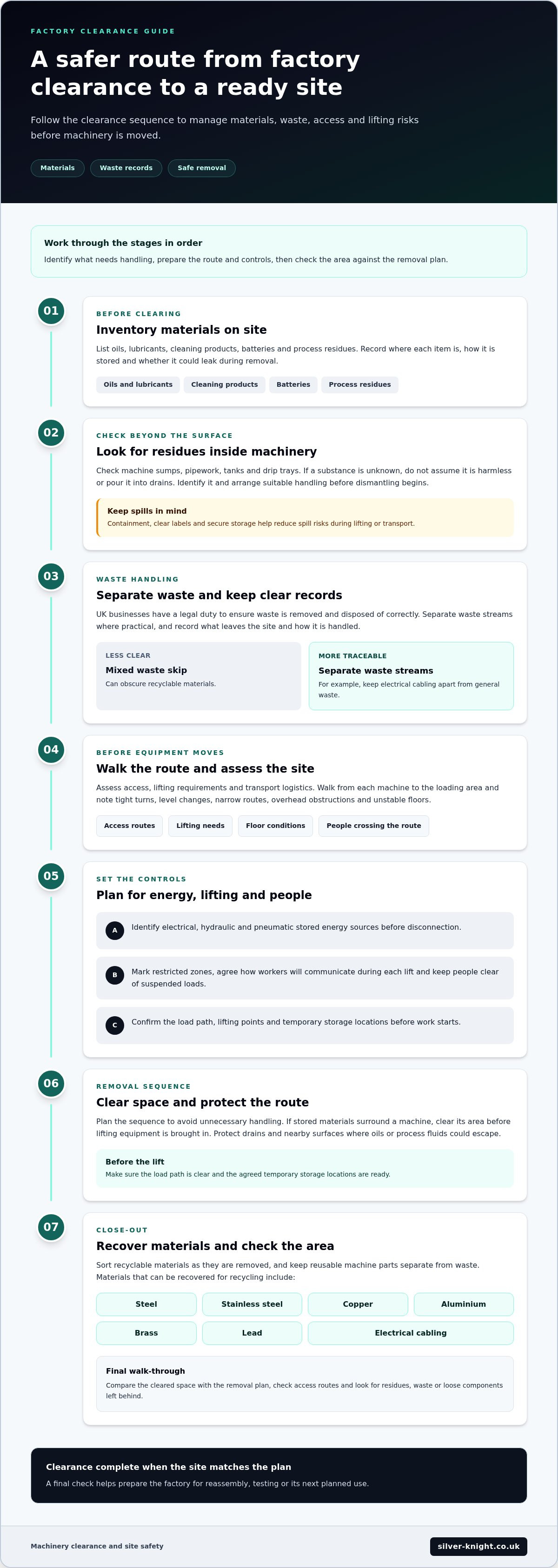
Before clearing a factory, identify materials that could affect people, equipment or the environment. Inventory oils, lubricants, cleaning products, batteries and process residues. Record where each item is found, how it is stored and whether it could leak during removal. This gives the decommissioning plan practical detail before machinery or containers are moved.
UK businesses have a legal duty to ensure waste is removed and disposed of correctly. Separate waste streams where practical, and keep clear records of what leaves the site and how it is handled. A mixed waste skip can obscure recyclable materials. Separating electrical cabling from general waste, for example, can support recycling and make clearance easier to track.
Industrial equipment may contain residues even after production stops. Check machine sumps, pipework, tanks and drip trays rather than relying on an external inspection alone. If a substance is unknown, do not assume it is harmless or pour it into drains. Identify the material and arrange suitable handling before dismantling begins. Containment, clear labels and secure storage reduce the risk of spills during lifting or transport.
Plan health and safety controls around the site and each removal task. Before machinery removal begins, assess access, lifting requirements and transport logistics. This helps identify narrow routes, overhead obstructions, unstable floors and areas where people could cross a lifting path. Mark restricted zones and agree how workers will communicate during each lift.
- Walk the route from the machine to the loading area and note tight turns or level changes.
- Identify stored energy sources, including electrical, hydraulic and pneumatic systems, before disconnection.
- Keep people clear of suspended loads and establish a controlled area for dismantling.
- Protect drains and nearby surfaces where oils or process fluids could escape.
Plan the removal sequence to avoid unnecessary handling. If stored materials surround a machine, clear its area before lifting equipment is brought in. Confirm the load path, lifting points and temporary storage locations before work starts. These details help prevent collisions, dropped components and delays caused by blocked access.
Build recycling into the clearance plan where appropriate. Factory decommissioning projects can recover steel, stainless steel, copper, aluminium, brass, lead and electrical cabling for recycling. Sort materials as they are removed, and keep reusable machine parts separate from waste. This gives the site team a clearer picture of what is leaving, what is retained and what needs further handling.
Close each work area only after residues, waste and loose components have been dealt with. A final walk-through can compare the cleared space with the removal plan, check access routes and identify anything left behind. Recording these steps helps prepare the factory for reassembly, testing or its next planned use.
Preparing machinery for reassembly at a new site
On-site recommissioning is part of machinery relocation, while nationwide coverage depends on the provider’s operating area. For a quote, share the machine type, make and model, condition, site details, access constraints, transport plan and preferred programme.
Preparation connects removal at the original factory with safe reassembly at the destination. A clear sequence helps coordinate transport, site access, project management and any work required before installation.
On-Site Assessment and Project Planning
An on-site assessment considers access routes, lifting requirements, floor conditions and each machine’s position. Map the route from delivery point to final position, noting doors, turns, overhead obstructions and nearby production areas. The project plan should also set out the removal sequence, transport arrangements, work areas and handover points. This helps identify practical constraints before equipment arrives.
Cost and Timescale Factors
Cost and duration depend on the number and type of machines, dismantling requirements, transport distance, site access and installation sequence. Restricted routes or work across several production areas require more coordination than a straightforward transfer. Include the desired restart date and any fixed shutdown windows in your quote request, so the scope and schedule reflect the project.
Planned shutdowns can create a defined window for removal and installation. If the factory remains active, divide the work into zones and agree routes that keep people clear of moving loads. Some projects schedule work at weekends or outside normal hours to reduce production disruption. The sequence should specify which equipment can move first and which areas must remain available.
Where the machine and project allow, off-site assembly and testing can prepare components before delivery. Agree which parts can be assembled away from the factory, how they will be protected during transport and which checks remain for the destination. Keep parts identifiable: photographs and sequential numbering help match components during reassembly. Include drawings, manuals and records of previous modifications with the equipment information.
Site access and services affect where machinery can be positioned and how installation proceeds. Confirm delivery access, unloading space, internal routes, available information about floor capacity and power connections. Note restricted areas and nearby contractors. These details help coordinate lifting plans, delivery timing and installation tasks, rather than reveal clashes after transport arrives.
For a quote, include the machine’s dimensions and weight if known, its current condition, collection and delivery locations, and the work required at each site. Add photographs, layout plans, access notes, shutdown dates and the intended production sequence. This gives the project team a clearer basis for planning removal, transport, reassembly and testing as one connected job.
For a coordinated move and startup, see machinery relocation support.
Machinery recommissioning and testing
After installation, recommissioning checks that machinery is correctly assembled and ready for controlled operation. The sequence depends on the machine, its condition and the work completed during relocation. Start with a visual inspection, then move through mechanical, electrical and functional checks. Record each stage, including adjustments and faults that need attention.
Begin with the machine stationary. Check that guards, covers, fasteners, connections and removed components are back in place. Compare the assembly with available drawings, photographs and equipment records. A conveyor belt, for example, should be correctly aligned before it runs; a press needs its guarding and controls checked before powered tests.
Electrical checks should follow the machine’s design and the work done during disconnection. Inspect cables and connections for visible damage, then confirm that control panels and emergency stops respond as intended. Test individual functions before running a complete operating cycle. Record and resolve any fault before proceeding to the next test.
Use a staged approach to powered testing:
- Run relevant functions without production materials, observing movement, noise and vibration.
- Test controls and safety features in the sequence set for the machine.
- Introduce materials gradually, where the equipment’s process allows it.
- Record settings, results and any changes made during each stage.
A machine may behave differently under production conditions than it does without a load. Watch for misalignment, overheating, unusual vibration or inconsistent output as the load changes. If the machine is part of a line, test its interaction with adjoining equipment. For example, check that a feeder and packaging machine maintain a steady handover before increasing production activity.
Agree who can authorise each step, from initial power-up to production use. Give operators clear instructions on the controls and any changed settings. Keep test records with the machine’s handover documents, including outstanding adjustments and completed checks. This gives the maintenance team a practical reference when the industrial site resumes normal operation.
Testing may reveal damaged parts or residue that needs attention before the machine is used. Isolate the affected equipment, record the issue and arrange the required repair or cleaning. Keep waste, used materials and replaced components separate for suitable disposal. A successful power-up does not prove every function has been tested. Complete the checklist against the machine’s intended tasks and operating sequence.
For context on planning an equipment move, see machinery relocation support.
Machinery refurbishment and recommissioning
Recommissioning prepares relocated machinery for operation. Repair addresses a fault, while refurbishment renews worn or damaged parts. Replacement means removing the existing machine and installing another, rather than preparing the same equipment for use.
First separate work needed for safe operation from upgrades that can wait. A machine may need cleaning, replacement components or adjustment after relocation, but that does not automatically mean it needs full refurbishment. Assess its condition, intended output and maintenance history before agreeing the work.
Focus inspection on parts affected by dismantling, handling and transport. Check the frame, guards, fixings, controls, cables, hoses and moving assemblies. A bent guard or damaged cable, for example, needs attention before operation. Record visible wear and faults, then decide whether each item needs repair, refurbishment or replacement.
Refurbishment may suit a machine whose key assemblies remain useful but need work before production resumes. The scope could include cleaning, replacing worn components, restoring protective covers or adjusting moving parts. Tasks depend on the equipment and its condition. Tie the work list to observed needs rather than adding upgrades unrelated to the planned use.
Relocation is also an opportunity to plan how equipment will be protected and handled. Before dismantling, label removable parts and protect exposed surfaces from knocks, dust and moisture during transport or storage. At the new site, compare delivered components with the dismantling record before reassembly. This helps identify damage or missing parts early.
Use a clear decision process:
- Repair a specific fault when the remaining machine is suitable for its intended task.
- Refurbish when several worn parts need attention to prepare the equipment for continued use.
- Recommission after relocation to restore and test the machine’s operation.
- Replace when the existing machine no longer suits the required production or site needs.
These activities can overlap. A repaired or refurbished machine still needs recommissioning after installation because the move and reconnection are part of its return to service. Record completed work, replaced parts, settings and outstanding issues. Operators can then understand what has changed, and maintenance teams have a useful baseline for future checks.
Make the final decision based on the machine’s role at the new site. A unit intended for occasional use may need a different refurbishment scope from one feeding a production line. Define the required output, known faults and planned operating conditions before work begins. This keeps the approach focused on safely restoring useful operation.
For a practical starting point, discuss your machinery project.
What factors affect the cost and timescale of recommissioning machinery?
Cost and duration depend on the machine, its condition, the site and the work required. A single machine arriving assembled has a different scope from a production line that needs dismantling, transport, installation and testing. Key factors include the number, size and complexity of machines, access at both sites and the sequence required to restart production.
Condition is another key factor. Existing wear, handling damage or missing components can add repair or refurbishment work before testing is complete. A machine with damaged guards, for example, needs attention before operation. Clear records, photographs and maintenance information help define the scope early and reduce uncertainty about parts and tasks.
Site conditions shape the work plan. Restricted doorways, limited lifting access, uneven routes or a busy industrial site can change how equipment is moved and positioned. The order also matters when several machines share a production line. Upstream equipment may need to be installed and tested before downstream machinery can be checked under working conditions.
Other practical factors include:
- Preparation, including dismantling, labelling and protecting parts for transport.
- Installation needs, such as positioning, assembly and reconnection at the destination.
- Testing scope, from individual functions to operation as part of a line.
- Work sequencing, including phased access where areas must remain in use.
- Materials and records, such as drawings, machine details and known faults.
The timescale follows the work sequence and the resources needed at each stage. A delivery delay or a fault found during testing can affect later tasks. Phased work may let one area restart while another remains under installation, but it requires careful coordination of access and handovers. Agree the restart order and any fixed production dates during planning.
The price depends on the project and is provided after a quote request. Relevant factors include machine quantity and condition, access, transport, dismantling, installation and testing requirements. Provide machine details, site locations, photographs, layout information, known faults and the preferred programme. This helps define a quote around the actual project rather than a broad estimate.
To plan the next steps for your machinery move and startup, contact Silver Knight.
See how machinery moving support can fit into your relocation plans.
Silver Knight Haulage & Machineries for Machinery Moving
Silver Knight Haulage & Machineries supports machinery moves and installation as part of factory or plant relocation. Bring the team in when equipment needs to be moved from its existing position, transported to a new site and installed as part of the wider startup plan.
Coordinating these stages connects the physical move with the preparation needed before production resumes. Share the machinery involved, site locations and planned sequence to explain the project clearly.
To discuss your machinery relocation, contact Silver Knight Haulage & Machineries.
Use Silver Knight Haulage & Machineries’ project information to consider the next step for your plant move.
Plan the next stage of your plant startup
Set out what the machinery must do at the new site before agreeing the work sequence. Clear production requirements help guide decisions about installation, testing and further preparation. Share the intended machine positions, restart order and site details with the team coordinating the move.
For machinery recommissioning services in the UK, consider the move and installation stages alongside the wider factory relocation. Silver Knight Haulage & Machineries offers machinery moving, machinery installation and factory relocation, connecting these parts of a plant project.
If you’re planning a machinery move or plant startup, contact Silver Knight Haulage & Machineries to discuss your project. A considered plan is a practical first step towards getting your equipment ready for its new role.
Use these answers to shape your project plan, and explore Silver Knight Haulage & Machineries’ project information as you consider the machinery work involved.
Frequently Asked Questions
Planning an Installation, Relocation or Decommissioning Project?
Define the project boundary first: which machines will move, remain in place or be removed? Set out the required production restart sequence and identify areas that must stay accessible. A packaging line, for example, may need machinery installed in a set order to avoid interrupting material flow. Share site layouts, machine details, access constraints and planned shutdown dates when arranging the work.
What do machinery recommissioning services in the UK include?
Machinery recommissioning services in the UK prepare equipment for use after installation or relocation. The scope can include reassembly, reconnecting services, checking machine functions, addressing issues found during startup and recording completed work. It may also involve coordinating refurbishment or repairs. For a production line, this can mean checking how machines hand work to one another, rather than testing each unit in isolation.
Which UK companies provide industrial machinery recommissioning services?
Silver Knight Haulage & Machineries Ltd provides machinery recommissioning alongside machinery moving, installation, factory relocation and plant relocation. The company serves businesses across the UK. This suits projects where heavy equipment must be moved and installed as part of a wider factory change. Share the machinery details and project scope to plan the move and restart stages that need coordination.
What are the steps involved in recommissioning industrial machinery?
A typical sequence starts with reviewing the machine’s records and confirming its intended position. Assemble and reconnect the equipment, then inspect components affected by the move. Test controls and individual functions before running the machine through its working cycle. For linked equipment, check communication and material flow between units. Record faults, adjustments and outcomes, then pass operating information to those responsible for production and maintenance.
What UK health and safety regulations apply when recommissioning machinery?
The relevant health and safety requirements depend on the machine, the work and the site. Consider risks involving machinery guarding, electrical isolation, lifting operations, stored energy and access around moving equipment. A press, for example, presents different hazards from a conveyor. Identify applicable requirements during the risk assessment and ensure the work plan addresses hazards created by installation, testing and return to production.
What inspections, testing and certifications are required before machinery returns to service?
Inspection and testing should match the machine’s design, the work completed and the risks identified. Check that removed parts, guards and controls are correctly reinstated, then test relevant functions and safety features. Keep written results, adjustments and outstanding actions with the equipment records. Certification or formal examination depends on the equipment and requirements that apply to its use; there is no single universal document for every machine.
What are the risks of recommissioning old or obsolete machinery?
Older equipment may have worn components, incomplete records or controls that no longer suit the planned process. Obsolete parts can make repairs harder, while modifications may affect how the machine behaves. A replacement control panel, for example, may not match the original wiring records. Inspect the machine’s condition and configuration carefully, document changes and resolve faults before production testing.
How can businesses assess whether machinery is suitable for recommissioning?
Assess the machine against its intended workload, condition and available support. Review maintenance records, inspect key assemblies, identify known faults and establish whether replacement parts or technical information are accessible. Compare expected output with the new site’s needs. A machine that cannot meet the required process, or has defects that cannot be addressed, may not be a practical candidate for recommissioning.

Article by
David Ashby
I'm the Managing Director of Silver Knight Haulage & Machinery Ltd. Silver Knight Ltd is a family-run firm established in the West Midlands in 2005, with the aim of providing a cost-effective, yet professional, service to businesses for the removal, transportation, and installation of machinery, plant, and equipment here in the UK and worldwide. Between us, the Silver Knight workforce has over 50 years of experience with machinery and its operation.
Disclaimer
This article is intended for informational purposes only. Please ensure you seek expert advice or carry out your own research to confirm the information is suitable for your specific needs.