The lift is only one part of industrial machinery removals. A move may involve dismantling equipment, lifting and transporting it, rebuilding it at the new site, then reconnecting it. Planning each stage around the machinery and site helps limit disruption to production.
It’s natural to focus on how quickly machinery can be moved, but the lifting method matters too. Restricted access, awkward positioning and machine size all affect how the work is done. Specialist equipment, such as hydraulic gantries or jack and slide systems, can help move machinery in challenging spaces.
This guide explains what machinery moving involves, from preparation and dismantling to installation and reconnection. It also covers planning around operations, choosing lifting equipment and reducing avoidable downtime.
Use these takeaways to shape your move, and find further guidance from Silver Knight Haulage & Machineries Ltd.
Key Takeaways
- Plan the move as a sequence of tasks, from site preparation through to reconnection, so each stage is ready when needed.
- Account for access, machine dimensions and positioning when planning how equipment will be lifted and transported.
- Organise dismantling and rebuilding so components can be identified, handled carefully and reassembled in the right order.
- Coordinate the move with production plans to reduce avoidable disruption and make the restart more straightforward.
- Match the lifting method to the site and machinery, especially where access is restricted or positioning requires precision.
Whether you’re moving one machine or relocating a whole factory, machinery moving support can help plan the work around the equipment and site.
What are Machinery Movers?
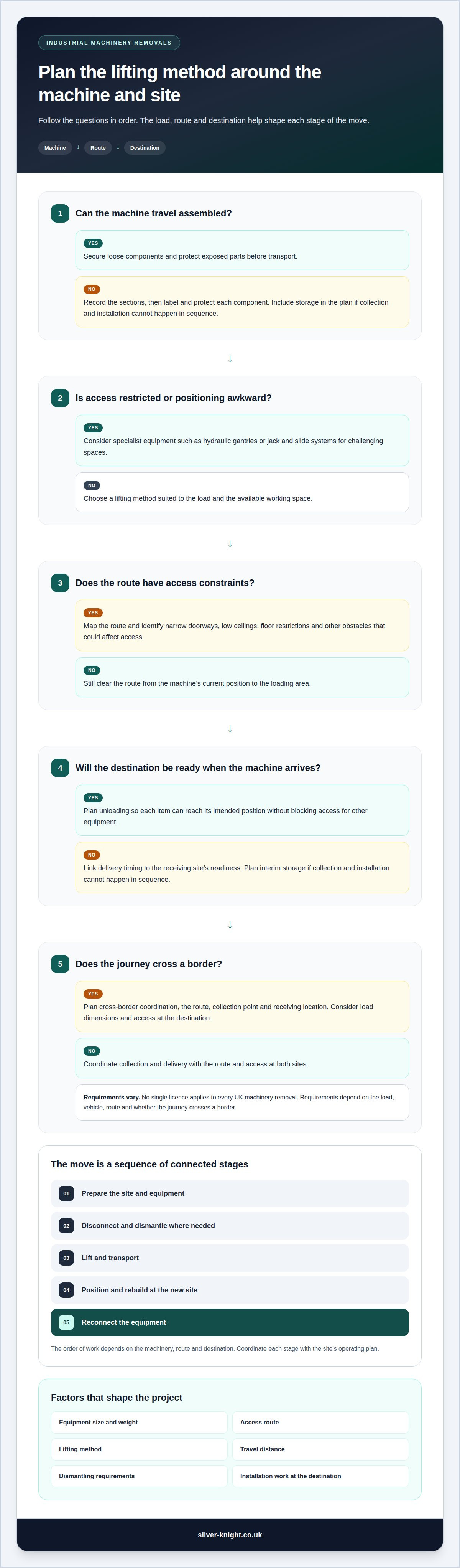
Machinery movers plan and carry out the physical work needed to move industrial equipment between locations. A project may involve shifting one machine within a factory, transporting heavy equipment to another site or coordinating a complete factory relocation. Work can include preparing access, disconnecting and dismantling equipment, lifting and transporting it, then positioning it for installation. The sequence depends on the machinery, route and destination.
The cost depends on the project and is provided after a quote request. Key factors include the equipment’s size and weight, access route, lifting method, travel distance, dismantling requirements and installation work at the destination.
Factory relocation planning starts with a clear record of what is moving and where each item needs to go. A machine list can record each item’s location, dimensions, lifting points and destination position. The project plan connects these details with production needs, site access and the order of work. For example, a production line may need to be dismantled in a specific sequence so its parts arrive in the right order for rebuilding.
Useful planning steps include:
- Map the route from each machine’s current position to the loading point and destination.
- Identify narrow doorways, low ceilings, floor restrictions or obstacles that affect access.
- Schedule disconnection, lifting, transport and installation around the factory’s operating plan.
- Record the intended position and orientation of each machine before it is moved.
These steps help project managers coordinate the people, equipment and transport involved, and identify where a delay could affect later tasks. Industrial machinery removals and relocations may involve separate teams for preparation, lifting, haulage and installation, so responsibilities need to be clear throughout.
The term “machinery movers” can also appear in business classifications. According to Companies House, INDUSTRIAL MACHINERY REMOVALS LTD is classified under SIC code 49420 for removal services. This classification identifies the company’s recorded activity, while the practical scope of a machinery move is shaped by the equipment and work required.
Industrial machinery relocation and installation are connected but distinct stages. Relocation gets the equipment to its new position; installation prepares it to be used there. A tailored plan accounts for the machine’s layout and the destination space. The lifting equipment must suit the load and route, and the final position must allow the planned connections and operation. The choice of equipment for machinery moves forms part of that planning.
Planning the route, lifting method and destination access together helps coordinate every stage of a machinery move. Machinery moving support can be part of that plan.
What does machinery moving involve?
A machinery move brings preparation, lifting, transport and delivery together in one planned operation. The load, route and destination shape how each stage is organised.
Lifting and Transporting Equipment
Before lifting, establish the machine’s weight, centre of gravity and suitable lifting points. Clear the route from its current position to the loading area, including doorways and changes in floor level. Choose a lifting method suited to both the load and the available working space. Secure loose components and protect exposed parts before transport.
Safe handling depends on a controlled sequence. Prepare the equipment, attach suitable lifting gear, then raise and position the load carefully. Secure the machine against movement during transport, using an arrangement suited to its shape. Plan unloading so each item can reach its intended position without blocking access for other equipment.
Specialist Transport for Unusual Equipment
Unusual industrial equipment may have an uneven shape, delicate controls or parts that cannot travel assembled. Record its dimensions and identify vulnerable sections before choosing a transport method. For example, a tall frame may need a different loading position from a compact unit.
Plan the vehicle, loading arrangement and destination access together. Check that the equipment can pass through the site entrance and reach its final position. If it must travel in sections, label and protect each component so it can be identified on arrival. Include storage in the plan if collection and installation cannot happen in sequence.
UK and European Transport
For a UK move, coordinate collection and delivery with the route and access at both sites. Provide clear addresses, loading arrangements and the intended unloading point. Longer journeys need the same coordination, with delivery timing linked to the receiving site’s readiness.
Licences and Regulations
No single licence applies to every machinery removal in the UK. Requirements depend on factors such as the load, vehicle, route and whether the journey crosses a border.
To move heavy machinery safely, plan how it will be prepared, lifted, secured and unloaded. Identify lifting points, clear the route, protect vulnerable parts and match handling equipment to the load. The transport plan should account for any applicable permissions or operating requirements for the specific journey.
Machinery dismantling, rebuilding and reconnection
A machinery move may involve disconnecting equipment, separating components, packing them for transport and rebuilding them at the destination. Plan the sequence to protect precision parts and leave each machine ready for reconnection.
Uninstalling and Collecting Machinery
Before collection, identify every connection, attachment and component that needs to be removed. Record cable positions, pipe connections and the order of detachable parts, using labels that match a simple equipment plan. For a single machine, this record helps keep its components separate from surrounding production equipment. Clear the work area and prepare the collection route before dismantling begins.
Keep loose fittings with the machine they belong to and protect exposed controls during handling. The collection plan should show where the equipment will be lifted and how it will leave the building. For a large unit near a production line, this may mean clearing nearby obstructions first, then moving the machine to an accessible loading point.
Dismantling and Rebuilding Machinery
Dismantle the machine according to its layout, rather than relying on memory during reassembly. Separate sections in a planned order, label them clearly and pack delicate components to limit movement in transit. High-value CNC machines and generators need careful handling to reduce the risk of damage. The condition and arrangement of each component affect how the machine can be rebuilt.
At the destination, use the labels and equipment plan to rebuild the machine in sequence. Check that the base and surrounding space suit its intended position before joining sections. Precision matters: a misaligned connection or misplaced component can prevent the machine from operating as intended. Reconnect services according to the machine’s recorded arrangement.
Plant dismantling may involve several machines. Map each unit and its connections before work starts. Separate shared services from machine-specific connections, and mark components so they stay with the right equipment. This helps prevent parts from one production line being mixed with another during packing or rebuilding.
Preventing damage means matching protection to each component. Cover exposed surfaces, secure moving parts and keep small fittings contained. Cranes may be used to lift equipment into or out of a building, but the lifting plan must account for the machine’s shape and position. Clear the route from the lifting point to the collection area before the lift begins.
Reconnection links rebuilding with returning equipment to use. Compare the completed arrangement with the recorded plan, then check each connection and attachment in order. A careful handover records any remaining work and gives operators a clear view of the machine’s rebuilt state. Consistent records support precision and help maintain dependable production.
Minimising operational downtime
Reduce downtime by planning the machinery move around production priorities. Map which equipment must stop, what work can continue and what needs to happen before restart.
Planning Around Operational Downtime
Start with the production sequence, not just the equipment list. Identify machines that share materials, services or a production line, then plan their move to avoid blocking other work. For example, moving a standalone unit before a connected line may allow more manufacturing activity to continue during relocation.
Set out the tasks needed before work begins, including access preparation, machine isolation, collection and destination readiness. Assign responsibility for each task and coordinate the sequence with site teams. A clear plan helps prevent movers waiting for an area to be cleared or equipment to be made ready.
Build the restart into the schedule. The destination needs suitable access, a prepared position and the connections required for the machine’s intended use. If equipment must be stored before installation, plan that handover too. These details help prevent completed transport from turning into an extended stoppage.
Keep a practical record of progress, including which machines have moved and which tasks remain. Production teams can use it to coordinate staffing, materials and temporary changes to output. For an extensive industrial machinery removal, divide the work into manageable phases and align each with the factory’s operating plan.
Crane, Forklift and Rigging Operations
Choose lifting equipment for the load, route and working space. Cranes, forklifts and hydraulic skates can be used to move industrial machinery safely. A crane may suit a lift over an obstruction, while a forklift can handle a load along a clear floor route. Rigging connects the lifting arrangement to the machine.
Before the move, confirm the lifting points, route and intended set-down position. Keep the travel path clear and coordinate the lifting sequence with the site team. Precise positioning matters when equipment must pass through a restricted opening or sit beside an existing production line.
Forklift hire with an operator involves two linked arrangements: suitable equipment and a designated person to operate it. The move plan should state who is responsible for each and when the forklift is needed. This avoids a gap between equipment availability and the work planned around it.
Keep lifting and transport tasks in sequence. For example, prepare the receiving area before a crane lift, then ensure the forklift route is open for onward movement. Clear communication between the people directing the lift, handling the load and managing production helps prevent avoidable pauses. This makes industrial machinery removals easier to fit around manufacturing activity.
Specialist lifting equipment
The right lifting method depends on the machine, its position and the route out. In confined spaces, specialist equipment can help control a load where a standard forklift cannot manoeuvre. Plan the lift around the actual load and site, rather than choosing equipment out of habit.
Hydraulic gantries can lift heavy machinery where overhead access or crane positioning is restricted. Jack and slide systems raise a machine in a controlled way, then move it horizontally along a prepared route. These methods can suit factory layouts where limited headroom, tight access or nearby production equipment complicates the move.
Equipment selection starts with the machine’s weight, shape, lifting points and centre of gravity. The route matters just as much. A doorway, change in floor level or obstruction can affect how the load must be raised and moved. Record these details during the site survey, then match the lifting plan to the available space.
Different stages may call for different equipment. A gantry can lift a machine clear of its base, while a jack and slide system can move it through a restricted area. Cranes may suit lifting from above when access and positioning allow. Combining methods requires a clear sequence to keep the load controlled as it transfers between equipment.
Careful handling is especially important for high-value CNC machines and generators, which can be damaged during a move. Protect exposed components, keep the route clear and control each change in position. Include protection for delicate or protruding parts in the lifting and transport plan from the outset.
Before the lift, confirm where the machine will be raised, moved and set down. Check for obstacles along the route and prepare the destination position. This helps the lifting team avoid unnecessary repositioning, which can add handling steps and complicate a move within a live factory.
Equipment is only one part of specialist moving services. The lifting plan must connect with collection, transport and installation, so each handover has a defined place. Review the available machinery moving equipment alongside the site layout and load details. That keeps the method tailored to the task, even under a competitive production schedule.
For a machine move with restricted access or demanding lifting requirements, discuss your machinery move with the team.
For machinery moving and relocation planning, explore Silver Knight Haulage & Machineries.
Silver Knight Haulage & Machineries Machinery Moving
Silver Knight Haulage & Machineries moves machinery for businesses relocating equipment within a site or to another location. The company also provides machinery installation, factory relocation and plant relocation, connecting the move with the work needed at the destination.
Turn to the team when a move involves several stages, such as preparing machinery, relocating it and positioning it for installation. Share the equipment details, site access and intended destination to help define the work involved.
To discuss a machinery move, contact Silver Knight Haulage & Machineries or visit its website.
Prepare your next move
A useful next step is to turn your relocation needs into a clear project brief. Note which machines are moving, where they are going and what production depends on them. Include access limits at both sites and any work needed before equipment can return to use. These details provide a practical starting point for planning.
For industrial machinery removals, identify who will coordinate decisions on site and who can provide information about each machine. Gather relevant drawings and equipment records, along with your preferred schedule where available. A shared view of priorities helps shape a plan around your operation, rather than treating the move as a standalone transport task.
Silver Knight Haulage & Machineries Ltd can discuss your requirements and the next steps for your project. Contact Silver Knight Haulage & Machineries Ltd to start the conversation and move towards a well-prepared relocation.
Frequently Asked Questions
What Types of Machinery Can Be Moved?
Industrial movers can handle a wide range of factory equipment, including production-line conveyors, presses, pumps and packaging machinery. The right approach depends on each item’s size, shape, condition and position in the building. For example, a conveyor may need to be separated into sections to pass through a doorway, while a standalone pump may move intact. Share an equipment list with descriptions and photographs to help define the work.
What does industrial machinery removal involve?
Industrial machinery removal covers preparing equipment to leave its current position and arranging its collection. The work may include disconnecting services, removing attachments, protecting components and transferring the machine to a vehicle or temporary storage. The scope depends on whether equipment is moving intact or in sections. Start by identifying which machines are moving, which will remain and whether shared services need attention.
Which UK companies specialise in industrial machinery removals?
Silver Knight Haulage & Machineries Ltd specialises in machinery moving, machinery installation and factory plant relocation for businesses across the United Kingdom. Its wider services include heavy equipment haulage and international machinery transport. For a project involving several machines, decide whether the work requires transport alone or also repositioning and installation. Matching the scope to the job helps define the support needed from the outset.
What is the step-by-step process for planning a factory machinery move?
Start by listing the machines, their current positions and their destination points. Gather equipment records and identify production dependencies, access restrictions and work needed before collection. Set the order of moves, assign site contacts and coordinate delivery with the receiving area’s readiness. Record progress and outstanding tasks as equipment arrives. This sequence helps teams spot gaps, such as a machine reaching the site before its intended space is available.
What insurance and liability cover should machinery removal contractors provide?
Cover should reflect the work, the equipment being handled and the risks involved in lifting, transport and delivery. Review written policy details for insured activities, limits, exclusions, damage to goods and liability for injury or property damage. Read the contract to understand when responsibility for machinery transfers between parties. Compare these documents with the equipment’s value and condition, rather than relying on a general statement that a contractor is insured.
What are the risks of moving industrial machinery and how can they be reduced?
Risks include equipment damage, harm to people, blocked access and disruption to nearby operations. A machine with exposed controls, for example, may be vulnerable during handling unless those parts are protected. Reduce avoidable problems by recording equipment condition, clearing the route, agreeing who controls site access and keeping uninvolved staff away from active work areas. A designated site contact can coordinate updates and flag changes before they affect the move.
How do industrial machinery removal services compare with machinery relocation services?
How should businesses prepare machinery and premises for removal?
Prepare by confirming which equipment is moving, clearing the route and making the collection and receiving areas accessible. Gather available operating records and mark any parts that must stay with a particular machine. Tell staff which areas will be affected and keep stored materials clear of lifting and travel paths. Before work begins, ensure the destination has enough space and its intended position is ready for delivery.

Article by
David Ashby
I'm the Managing Director of Silver Knight Haulage & Machinery Ltd. Silver Knight Ltd is a family-run firm established in the West Midlands in 2005, with the aim of providing a cost-effective, yet professional, service to businesses for the removal, transportation, and installation of machinery, plant, and equipment here in the UK and worldwide. Between us, the Silver Knight workforce has over 50 years of experience with machinery and its operation.
Disclaimer
This article is intended for informational purposes only. Please ensure you seek expert advice or carry out your own research to confirm the information is suitable for your specific needs.