A heavy machinery export is shaped long before the equipment reaches a port. If the machine’s dimensions, weight, collection access and route aren’t considered together, the transport plan can quickly run into complications. That’s why heavy machinery export logistics is about coordinating the full move, not simply booking international shipping.
Choosing a transport method or working out how UK collection connects with the next stage can feel complex. This guide explains the main stages of an export plan, the details that influence transport choices and the handovers to organise along the way.
You’ll also see how specialist haulage and lifting can support machinery before international transport, and how a technical site survey can help shape the plan. Silver Knight provides machinery moving, heavy haulage and international machinery transport. Read on to understand what to plan, what can affect the route and how Silver Knight can support your export.
Key Takeaways
- Plan heavy machinery export logistics as one coordinated move, linking machinery handling, UK transport and international shipping.
- Record the machine’s dimensions, weight, mobility and collection access to help shape transport and route decisions.
- Compare transport methods by considering the machinery, handling needs and route, rather than choosing by distance alone.
- Plan physical machinery preparation separately from paperwork and route-specific administrative checks to keep handovers clear.
- A technical site survey and specialist moving, lifting and haulage support can help build a practical export plan with Silver Knight.
Planning an export move? Speak with Silver Knight about machinery transport.
What heavy machinery export logistics involves
Heavy machinery export logistics is the coordinated planning of machinery handling, UK transport and international movement, from the collection point through to the next stage of the journey. It connects the needs of the machine with the practical steps required to move it safely and efficiently.
A vessel booking or trailer is only one part of the plan. The machine must be assessed, prepared for handling and moved from its current position to the point where international transport begins. Each change in equipment, location or responsibility is a handover to plan. A delay or mismatch at one stage can affect the stages that follow.
For examples of heavy equipment, explore this overview of types of heavy equipment. The video below also shows specialist machinery transport in action.
Thinking in stages helps clarify what information is needed before the move begins. An excavator, a production line and a large press may each need different handling arrangements. The international machinery transport plan must suit the specific equipment and route, rather than assuming one approach works for every load.
Which machinery details shape an export plan
How UK collection connects to an overseas move
Collection involves more than getting the machine onto a vehicle. Specialist lifting or moving equipment may be needed to bring it safely out of position and prepare it for onward transport. The collection team, haulage arrangements and international shipping stage need clear handover points. Record where responsibility passes and what information travels with the load. Clear planning helps everyone involved understand the machinery’s status and what happens next.
That joined-up view is the core of a well-planned export. Matching machinery details to handling needs and mapping handovers between UK collection and international movement can help businesses spot practical constraints early and make informed transport decisions.
Planning an export move? Discuss machinery transport with Silver Knight.
How to plan heavy machinery export logistics from the outset
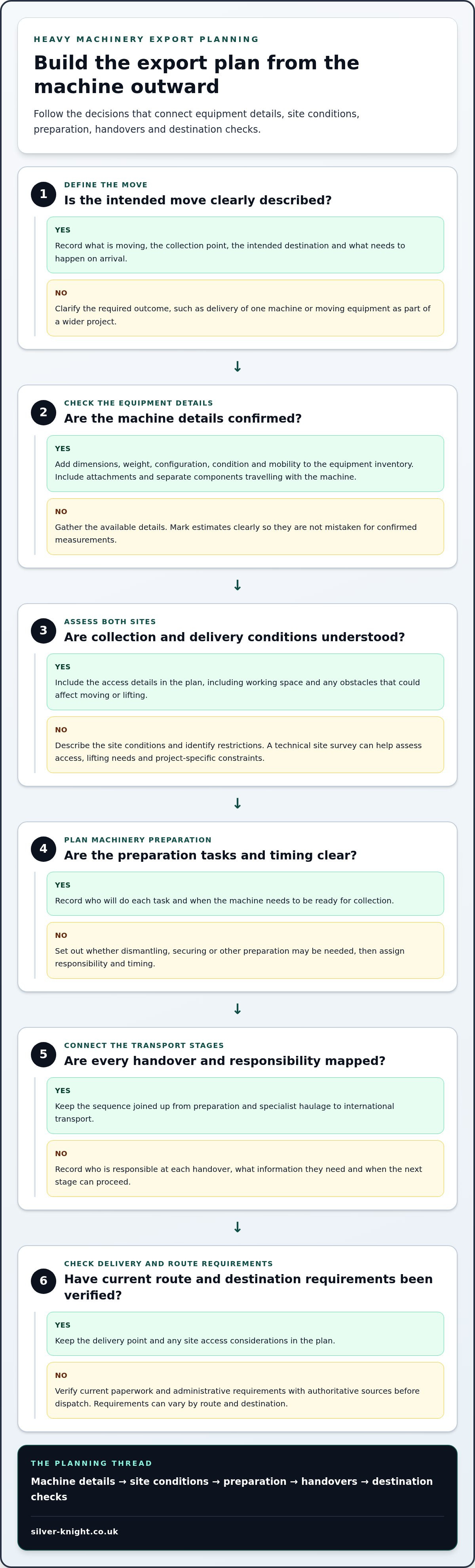
A useful plan starts with the machinery and the outcome, not with a transport booking. Sharing accurate equipment details early gives the export plan a firmer basis for assessing handling, collection and onward transport. Work through the stages in order, and keep the information together so everyone involved is working from the same brief.
- Define the move. Record what is being moved, where it is collected from, its intended destination and what needs to happen when it arrives. The required outcome might be delivery of one machine or the relocation of equipment as part of a wider project.
- Build an equipment inventory. List each machine and note its available dimensions, weight, configuration, condition and mobility. Include attachments or separate components that are also travelling. Mark estimates clearly so they are not mistaken for confirmed measurements.
- Describe both sites. Capture collection and delivery access details, including restricted entrances, working space and obstacles that could affect moving or lifting. A technical site survey can help assess these conditions and identify project-specific machinery-moving needs.
- Set out preparation needs. Note whether the machinery may need dismantling, securing or other preparation before it can be moved. Identify who will carry out each task and when it must be ready for collection.
- Map the transport and handovers. Set out the sequence from preparation and specialist haulage to international transport. Record who is responsible at each handover, what information they need and when the next stage can proceed. Silver Knight’s international machinery transport connects the UK moving plan with overseas movement.
- Plan for delivery and verify requirements. Confirm the intended delivery point and any site access considerations. Paperwork and administrative requirements can vary with the route and destination, so verify current details with authoritative sources before dispatch rather than relying on an old checklist.
Build a practical machinery and site brief
Gather the best available information before transport is arranged. Note whether figures are measured or estimated, describe the machine’s current condition and record how it can be moved. Site details matter too: a narrow entrance or limited space around the equipment may affect the moving approach. A survey can turn these observations into a clearer assessment of the work.
Coordinate the move before dispatch
Give each stage a named responsible party, a clear handover point and the information needed to continue. This helps keep machinery preparation, specialist haulage and international transport aligned. If you’re preparing a move, talk with Silver Knight about coordinating the machinery transport plan.
Planning a machinery export? Discuss your transport plan with Silver Knight.
How to compare heavy machinery transport methods
The right transport method depends on both the cargo and the route. Consider whether the machine can move under its own power, its dimensions and shape, how it must be handled, and the journey between collection and delivery. A method that suits one machine may not suit another, even if both are being exported to a similar destination.
The options below are starting points for comparison, not automatic choices. International vessel transport and UK road haulage are different parts of the journey, and a project may need more than one method.
| Transport option | Machinery and handling considerations | Route context |
|---|---|---|
| Ro-Ro | Can be considered for wheeled or self-propelled machinery that can be driven or moved on and off the vessel. Mobility, loading access and safe securing still need to be planned. | A vessel option for suitable machinery on routes where this service is available. |
| Container or flat rack | May suit machinery that fits the selected unit or can be secured on a flat rack. Overall dimensions, shape, protection and loading arrangements influence suitability. | Consider alongside the route and the handling available at each transfer point. |
| Breakbulk | Can be considered for large or irregular machinery that is handled as individual cargo rather than placed in a standard container. Lifting and securing plans are central. | Depends on vessel and route arrangements for the particular shipment. |
| Road haulage | May move machinery between the collection site and the next transport stage, or along a land route. Load dimensions, weight, access and handling requirements affect the plan. | UK road haulage is an inland stage, not a vessel option. The onward route may involve a different method. |
When machinery characteristics influence the shipping choice
Wheeled or self-propelled equipment may make rolling on and off a vessel a consideration, while an oversized or irregular machine may need a different loading and lifting approach. Mobility alone doesn’t settle the choice: dimensions, configuration and access at both ends matter too. For road movements, the US cargo securement regulations are a reference for that jurisdiction, not UK requirements. Verify applicable requirements for the actual route.
Why specialist haulage and lifting may be part of the plan
The machine may need careful handling before it reaches the international transport stage. Restricted site access or a difficult collection position can shape how it is moved and loaded. Silver Knight uses cranes, hydraulic gantries and jack and slide systems for specialist moves. Its heavy equipment moving and haulage capability can support the UK leg of a coordinated export plan.
Compare methods against the machine and the whole route, including collection, loading and each handover. This helps reveal where specialist lifting or a change of transport mode may be needed, without assuming one option fits every export.
Planning machinery preparation and export handovers? Discuss your machinery move with Silver Knight.
How to prepare machinery and manage export handovers
Good preparation gives everyone involved a clearer picture of the machinery and what needs to happen next. Keep the physical work separate from paperwork and route checks. The first covers the machine’s condition and handling needs. The second covers shipment details, responsibilities and current requirements for the route.
Agree the scope before work begins. Record what is being prepared, which tasks are included and who is responsible for them. This helps prevent assumptions, such as expecting a machine to be dismantled or packed when that work has not been agreed. It also gives the collection and onward transport teams a shared reference.
Prepare equipment for handling and transport
Make a clear record of the machine’s visible condition before it is moved, noting existing damage or missing components. Keep relevant photographs and a written description with the project information. Then agree how the machine will be made ready for handling, including any securing or protection needed for its configuration and planned transport method.
Preparation varies. A machine may travel intact, or the project may call for partial dismantling to support handling or transport. Export packing or container packing may also suit some loads, but neither is a universal requirement. Silver Knight’s machinery dismantling service can support projects where taking equipment apart forms part of the agreed scope. Identify and record any removed components so they can be tracked through handovers.
Keep paperwork and handovers organised
Keep one current record of the shipment details, machinery inventory, agreed preparation work and the people responsible at each handover. Update it if the scope or transport plan changes, and make sure the next party has the information needed to receive the equipment. This practical record supports coordination, but it does not replace route-specific paperwork or official guidance.
For a move involving packing, dismantling and several transport stages, timing matters. The machinery must be ready for the agreed collection and handover, while each party needs consistent information about its condition and preparation. Keep the project record accessible and use it to support clear communication from collection onwards.
For support coordinating machinery preparation and transport, speak with Silver Knight about your export move.
Planning an export move? Talk to Silver Knight about machinery transport.
How Silver Knight supports heavy machinery export logistics
Heavy machinery export logistics calls for more than an international transport booking. The machine must be assessed, moved from its current position and connected to the next stage of its journey. Silver Knight is a family-run machinery-moving specialist with over 180 years of collective industry experience, supporting machinery moves, installation and factory and plant relocation.
Technical site surveys help shape a plan around the equipment and site conditions. Access, the machine’s position and the handling needed can all affect how a move is carried out. Silver Knight uses specialist equipment including cranes, hydraulic gantries and jack and slide systems to support machinery moves where these methods suit the project.
Connect specialist machinery moving with international transport
The UK collection stage can involve preparing and moving machinery before it is ready for international transport. Heavy haulage and specialist handling connect those stages, with clear handovers keeping the machinery’s progress and responsibilities organised. The right approach depends on the equipment and the requirements of the move.
Silver Knight operates across the UK and provides global relocation services to Europe, the US, India and Asia. Its international machinery transport supports moves that link UK machinery handling with overseas movement. This joined-up view helps businesses plan the full journey, rather than treating collection and international transport as separate bookings.
For the UK stage, machinery haulage and relocation transport can form part of the wider plan, connecting the collection site with the onward transport arrangement. Site access, machinery configuration and the agreed handling approach help shape how that stage is organised. A survey gives the project team a practical basis for discussing these details and planning the move around the site.
Make the next step straightforward
To start planning, bring together the machinery details available to you, the collection and delivery requirements, and any known site or access constraints. Include the intended destination and the outcome you need, such as moving a single machine or relocating equipment as part of a wider project. These details help frame a plan around the specific move.
Every project has its own combination of machinery, access and transport needs. Silver Knight can discuss the requirements with you and shape the planning around the equipment and route. You don’t need to have every detail resolved before starting the conversation.
Discuss your machinery, route and project requirements with Silver Knight to take the next step towards a coordinated export move.
Planning your next move? Explore machinery moving support.
Make your next export move a planned one
The next step is to turn what you know about the machinery and its journey into a practical project brief. Start with the collection and delivery requirements, the equipment details available and any site constraints that could affect access or handling. Note what still needs to be decided. This gives the planning conversation a clear focus without requiring every detail to be settled in advance.
A well-organised brief helps connect heavy machinery export logistics to the real needs of your move. It gives the team a starting point for discussing the machinery, route, handling and handovers as parts of one plan, with the approach shaped around your project.
Silver Knight supports machinery moves across the UK and global relocations, drawing on technical site surveys and specialist lifting equipment to plan around project-specific needs. The team brings over 180 years of collective industry experience to this work.
Discuss your machinery export logistics with Silver Knight and take the next step towards a move planned around your requirements.
Frequently Asked Questions
What information is needed to plan a heavy machinery export?
Start with an equipment list, the collection and delivery details, and the intended use of the machinery after arrival. Add manufacturer and model information, serial numbers where available, photographs, and a note of any attachments or separate parts. Explain whether the equipment is operational and flag known damage or missing components. These details help the planning team understand what is moving and what the project needs to achieve.
Can heavy machinery be exported if it cannot drive onto a vessel?
Yes. Machinery that cannot drive onto a vessel may still be moved using a handling and loading method suited to the equipment and shipment. Depending on its dimensions, weight and configuration, options may include lifting it onto a suitable vessel arrangement or using breakbulk handling. The machine’s lifting points, collection access and loading arrangements all matter. The transport plan needs to account for how it will be loaded and secured.
How is the transport method chosen for oversized machinery?
The method is selected by looking at the machine’s full dimensions, weight, shape and handling needs alongside the route. For example, a machine that can be dismantled into manageable sections presents different planning questions from a single oversized unit. Collection access and the equipment available for loading also affect the choice. A technical site survey can help identify constraints that measurements alone may not show.
What documents are needed to export heavy machinery from the UK?
There is no single document list that applies to every machinery export. The paperwork depends on the route, destination and shipment arrangements. Keep accurate shipment and equipment details, including a clear description and inventory, and check current documentation requirements with official sources for the specific route. Avoid relying on paperwork from an earlier export, as its relevance may differ for another destination or transport plan.
How long does international machinery transport take?
There isn’t one reliable timeframe for every international machinery move. The overall duration can depend on the destination, transport method, collection arrangements, preparation work and the number of handovers involved. Vessel schedules and route conditions also affect the journey. For planning, separate the time needed to prepare and collect the machinery from the international transport stage, then build the project timeline around the specific route and arrangements.
Is machinery dismantling always needed before export?
No. Some machinery can be transported in its current configuration, while other equipment may need partial dismantling to suit access, handling or the planned transport method. The decision depends on the machine and the move, not on a universal export rule. If parts are removed, label and record them, and keep track of any components travelling separately. This makes it easier to account for the equipment at each handover.
Can one specialist coordinate machinery haulage and international transport?
Yes. Silver Knight provides both heavy haulage and international machinery transport, helping connect the UK moving stage with the overseas journey. The project plan can set out who is responsible for each part and where handovers take place. That gives everyone involved a shared view of the move, while allowing the arrangements to reflect the machinery, route and delivery requirements.

Article by
David Ashby
I'm the Managing Director of Silver Knight Haulage & Machinery Ltd. Silver Knight Ltd is a family-run firm established in the West Midlands in 2005, with the aim of providing a cost-effective, yet professional, service to businesses for the removal, transportation, and installation of machinery, plant, and equipment here in the UK and worldwide. Between us, the Silver Knight workforce has over 50 years of experience with machinery and its operation.
Disclaimer
This article is intended for informational purposes only. Please ensure you seek expert advice or carry out your own research to confirm the information is suitable for your specific needs.