What if a factory move is on schedule, but employees still don’t know where they’ll work, how their routines may change or what will happen to their roles? A relocation affects more than production lines. Without thoughtful factory relocation project management, unanswered questions about timing, machinery and workplace arrangements can add avoidable pressure while teams are trying to keep work moving.
It’s understandable to focus on moving equipment safely and limiting disruption to production. But employees also need clear information about what is changing, when it will happen and how the move could affect their day-to-day work. If communication comes too late, uncertainty can make an already demanding transition harder to manage.
This article explains the main ways a factory move can affect employees, from changes to working arrangements and routines to concerns about machinery and safety. You’ll learn how to plan communication and support around the relocation timeline, and why coordinating people, equipment and operations can help make the transition more considered. We’ll also look at how practical preparation, including site surveys and project-based planning, can help teams understand what to expect.
Key Takeaways
- Map how the move may change employees’ routines, work location and day-to-day expectations before setting the transition plan.
- Use clear stages to organise updates, so employees know what to expect as the site is assessed, prepared, moved and brought back into operation.
- Compare phased and consolidated moves against your operational needs, weighing continuity against the demands of a longer transition or concentrated move period.
- Give employees plain-language updates at key points and name a reliable contact for questions.
- Good factory relocation project management brings machinery, transport, site readiness and workforce information into one coordinated plan.
Discuss your relocation project
How a factory move can affect employees and everyday work
A factory move can alter more than the building employees report to. It may change their routines, how they receive updates, where they carry out tasks and what is expected of them while work shifts between sites. The extent of these effects depends on the scope of the move, changes to the new workplace and the plan for the transition. A move involving a small number of machines may affect teams differently from one that changes entire work areas.
Practical disruption and uncertainty are related, but they aren’t the same. A temporary change to access or workspace is a practical effect. Not knowing when it will happen, who will explain it or what to do meanwhile creates uncertainty. Workforce planning belongs in factory relocation project management because employees need a clear picture of how the move may affect their working day, not just where the machinery is going.
Which parts of working life may change during a factory move
During preparation and moving activity, teams may need to use different routes, follow revised access arrangements or work around areas that are being cleared. A machine being disconnected, transported or installed can affect where and how employees complete related tasks. For example, a team may need to use another work area while equipment is moved, or coordinate its work around access needed for machinery and transport.
It helps to separate temporary arrangements from lasting changes. Temporary arrangements might include a changed route or work area during the move. Permanent changes, such as a different layout or revised working routine, are decisions for the business to communicate clearly. A factory relocation project can include technical site surveys and coordinated machinery moving, helping inform plans for the new site and the sequence of work.
Why uncertainty can matter as much as physical disruption
Even when disruption is limited, unclear timings or responsibilities can make it harder for employees to plan their work. If people don’t know which areas will be affected, when access may change or who is coordinating updates, they may be left relying on incomplete information. This can also make it harder for managers to answer questions consistently.
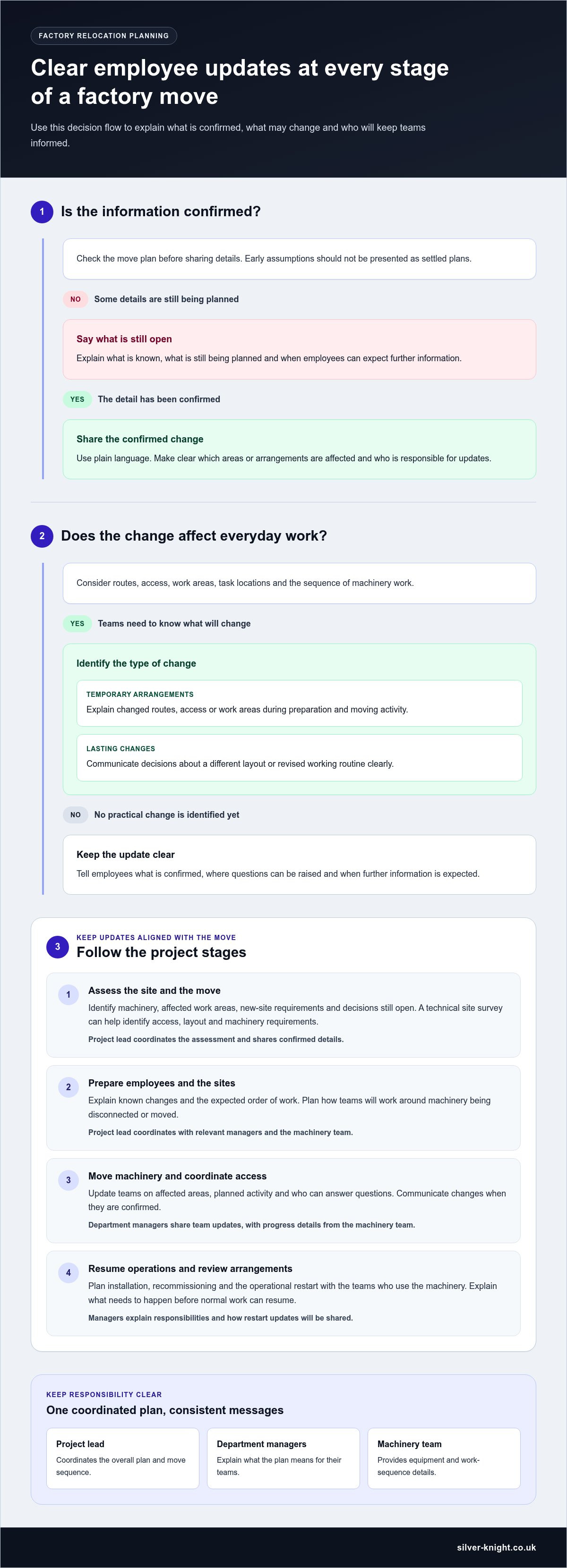
Timely, consistent updates help employees understand what’s confirmed, what is still being planned and when they can expect further information. Explain changes in plain language, identify who is responsible for sharing updates and make it easy for staff to raise practical questions. The broader Relocation service concept includes moving workplaces and coordinating people-related processes, as well as the physical move. For a factory, keeping employee information alongside machinery and site planning gives teams a clearer basis for preparing.
How relocation project stages shape the employee experience
Employees need different information as a factory move progresses. A useful sequence is to assess, prepare, move, then resume operations. At each stage, assign someone to coordinate updates: the project lead can share the move plan, while department managers explain what it means for their teams. The machinery relocation team can provide details about equipment and the work sequence, giving managers a sound basis for updates.
Assess the site and the move
Start by establishing which machinery and work areas are involved, what needs to happen at the new site and which decisions are still open. A technical site survey can help identify access, layout and machinery requirements that may affect the moving sequence. Employees may need to know the likely scope, which work areas could be affected and when key decisions will be made. The project lead should coordinate the assessment and share confirmed details, rather than present early assumptions as settled plans.
Prepare employees and the sites
Once the approach is clearer, managers can explain known changes, the expected order of work and where employees can find updates. Preparation may include agreeing how teams will work around machinery being disconnected or moved, and identifying which tasks depend on equipment being installed at the new site. The project lead coordinates the plan with relevant managers and the machinery team. Factory relocation planning brings site requirements and machinery work into a coordinated project, helping inform practical preparation.
Move machinery and coordinate access
During the move, access and work sequencing may change as machinery is taken out, transported and positioned. Employees need updates on which areas are affected, what activity is planned next and who can answer questions about their team’s arrangements. The project lead coordinates the overall sequence, with department managers sharing relevant updates and the machinery team providing information about progress. Keep messages aligned with the plan, and communicate changes when they are confirmed.
Resume operations and review arrangements
Moving equipment into position is not the only milestone. Installation, recommissioning and the operational restart need to be planned with the teams who use the machinery. Managers should explain what needs to happen before normal work can resume, which responsibilities may change during the restart and how updates will be shared. The project lead coordinates the move milestones; operational managers guide their teams through the return to work. Avoid treating a planned date as a guaranteed restart point.
Clear ownership at every project stage gives employees a more predictable source of information, even when the details of a move change. Factory relocation project management is strongest when workforce updates follow the same sequence as site preparation and machinery activity. For a move that needs joined-up planning, discuss your factory relocation with Silver Knight.
Talk through your relocation plans
Phased or consolidated factory moves and their workforce trade-offs
A factory can move in stages, with defined areas or equipment groups transferred one after another, or through a more consolidated move, with most relocation activity grouped into a shorter period. Neither approach is automatically better for employees. The right choice depends on the machinery, site conditions, operational priorities and project constraints, as well as how teams can be scheduled around the work.
| Approach | Possible workforce benefit | Trade-off to plan for |
|---|---|---|
| Phased move | Teams may be able to keep some areas or activities running while other equipment is moved. | Repeated stages mean more coordination, updates and a potentially longer period of change. |
| Consolidated move | A concentrated sequence can make the overall transition more contained and easier to communicate as one main period. | More activity is grouped together, which may create greater immediate disruption to access, schedules or work areas. |
When a phased approach may suit operational priorities
A phased plan can suit a site where equipment can be grouped into manageable stages, or where some work needs to continue while other areas are cleared. For example, the project team might plan one area’s machinery move before preparing the next. This can help managers explain which teams are affected at each point and organise work around the sequence.
But staging the move doesn’t guarantee uninterrupted production. Each phase brings its own preparations, access arrangements and handovers. Employees may need regular updates as the sequence develops, particularly if a later stage depends on earlier equipment or space being ready. Managers should make clear which information applies to the current stage and what remains subject to planning.
When a consolidated move may make more sense
A consolidated approach may fit when the machinery, site conditions and operational plan allow relocation activity to be grouped together. It can create a more contained transition, with fewer separate move stages to coordinate. That may make it simpler to communicate the broad sequence, but it can also concentrate changes to work areas and access into a shorter period. Teams may need clear arrangements for their schedules and responsibilities during that time.
Compare the options against actual work patterns, machinery dependencies and site readiness, rather than choosing based on the label alone. Consider which teams need access to equipment, whether activities can be separated and how long employees may need to work around transition arrangements. A technical survey and coordinated factory relocation planning can help shape a practical sequence for the specific site.
Good factory relocation project management makes these workforce trade-offs visible early, so the move plan and employee updates can be considered together. To discuss how different approaches could fit your site and operational priorities, talk through your factory move.
Discuss employee considerations for your move
Practical ways to support employees before and during a factory move
Employee communication works best when it follows the relocation plan. A clear sequence helps managers share useful information early, update it as decisions are made and explain what employees should expect as machinery moves. Factory relocation project management should include this communication work alongside planning for equipment, transport and site readiness.
Build a clear employee communication plan
Start with an initial announcement explaining why the move is being planned, its current scope and what is still undecided. Name a reliable contact point, such as a project lead or designated manager, and explain how staff can raise questions. Be direct about what’s known and avoid presenting proposed timings as final.
As planning progresses, use a simple update sequence:
- At the announcement, explain the reason for the move, the areas it may involve and when employees can expect another update.
- As plans develop, share confirmed changes to work areas, access or routines, and identify decisions that are still open.
- Before machinery moves, explain which teams or areas may be affected and where staff can get practical guidance.
- During the move, provide updates when the sequence or arrangements change, then explain the next steps towards resuming work.
Keep messages consistent across teams. Managers can adapt the detail for their departments, but should work from the same confirmed information. Make space for questions about everyday issues such as routes through the site, access to equipment and temporary changes to work areas. Employee feedback may reveal practical concerns that planners have missed, helping the team adjust arrangements before they affect the move.
Coordinate practical support with the relocation plan
Map employee-facing changes against machinery movement and key operational milestones. If a machine needs to be dismantled before it can be moved, for example, teams may need to prepare the area, adjust task sequencing or plan around equipment being unavailable. Explain these dependencies in plain terms, and share updates when the sequence is confirmed.
Machinery dismantling can form part of a factory relocation, so its timing needs to fit with transport, installation and work at the destination. Coordinate managers’ updates with the people overseeing machinery activity. This gives employees a clearer view of what is happening and helps them plan around changes without implying a fixed completion date or guaranteed restart.
Timely, consistent updates give employees a clearer basis for planning, even while some details are still taking shape. Keep a record of questions raised, who is responsible for answering them and what information can be shared next. To discuss how employee communication can fit your machinery move, talk through your relocation plans.
Discuss your factory relocation project
How factory relocation project management can bring people and machinery together
A factory move involves connected tasks, not separate equipment and workforce plans. Machinery needs to be assessed, prepared and transported, while the destination site must be ready for installation and teams need to understand how the work may affect them. A joined-up project view helps managers see where these activities depend on each other, assign clear responsibilities and share relevant updates at the right points.
What a coordinated relocation plan should bring together
Start with the findings from technical site surveys, then connect them to machinery requirements, transport arrangements and preparation at both sites. For instance, access or layout considerations may affect how equipment is moved and where it can be installed. Those decisions can also shape work sequencing and the information employees need about affected areas or equipment availability.
Clear ownership helps link technical activity with employee communication. The people coordinating machinery and transport can provide updates on the move sequence, while managers explain what those milestones mean for their teams. Silver Knight brings technical site surveys, specialist labour and equipment to project-specific machinery relocation. Its team has over 180 years of collective experience across the industry. A factory relocation project can bring these elements into one coordinated plan, with the scope shaped around the site and machinery involved.
Turning project planning into practical next steps
Before planning begins, set out the operational priorities and identify which teams, work areas and equipment may be affected. Then gather the key questions that need answers, such as what must be moved first, what site preparation is needed and which work depends on machinery being installed. These points help define the project scope and give managers a practical basis for employee updates.
- Define priorities: Identify the work that needs to continue and any important operational dependencies.
- Map affected teams: Note which employees may need information about changes to access, work areas or equipment.
- Set responsibilities: Agree who coordinates machinery activity, site preparation and workforce updates.
Silver Knight can use a project discussion to understand the relocation scope and site considerations, then plan the machinery work around those needs. The result is a practical basis for coordinating equipment and employee information, without assuming every move follows the same sequence or outcome.
To discuss your site, machinery and workforce considerations, talk to Silver Knight about your factory relocation.
Explore factory relocation support
Make the next move a considered one
A useful next step is to agree what a successful transition means for your business and its people. That could include keeping key work moving where possible, giving teams enough notice to plan around changes, or making sure responsibilities are clear as the new site comes into use. These priorities can guide decisions throughout the move, rather than leaving employee needs until machinery plans are already fixed.
Factory relocation project management can give those priorities a place in the project plan, alongside the technical work. Start by identifying the decisions that need to be made, the people who need to contribute and the questions that still need answers. A focused conversation can help turn those points into practical next steps shaped around your site and move scope.
Start a conversation about your factory move with Silver Knight. With a clear plan and the right people involved, your team can approach the transition with greater confidence.
Frequently Asked Questions
What is the impact of a factory move on employees?
A factory move can affect where employees work, how they access equipment and how tasks are organised during the transition. For example, a maintenance team may need to support machinery at a different site or adjust its work around equipment being moved. The impact depends on which teams and operations are involved. A move does not automatically mean that employees’ roles will change permanently.
How can a factory move affect employee morale?
A move may leave employees feeling unsettled if they’re unsure what it means for their work, routines or future at the business. Experiences differ, so managers should avoid assuming everyone has the same concerns. Make time to listen, respond honestly and explain what is still being decided. Following up on questions, even when the answer is that a decision is pending, can show employees that their concerns are being taken seriously.
How do you communicate a factory relocation to employees?
Use a mix of team briefings and written updates so employees can hear the explanation and refer back to key details. Give managers a shared set of confirmed points, then allow them to explain relevant impacts to their teams. For staff working different shifts, plan how each group will receive the same core information. Keep a record of common questions and responses, so updates remain consistent as the project develops.
Can a factory relocate without stopping production?
Some operations may continue during parts of a move, but uninterrupted production cannot be assumed. It depends on how machinery and processes connect, what work can be carried out separately and whether the new site is ready for the equipment. A team might keep one production area operating while another is prepared, for example. Map dependencies between equipment and tasks before deciding which activities can continue during relocation.
What should employees be told before a factory move?
Before the move, employees should receive confirmed information about which operations and work areas are affected, what arrangements are changing and where to raise questions. Explain any known changes to access, shift patterns or task locations, while clearly labelling details that are still under review. If employees need to prepare, such as by clearing a work area or following a revised handover process, share those instructions with enough context to make them clear.
How can project management reduce disruption during a factory move?
Factory relocation project management can reduce avoidable clashes by coordinating equipment dependencies, transport, site preparation and operational priorities. For instance, confirming where a machine will be positioned before its arrival helps teams plan the space and related work. A project manager can track decisions, responsibilities and changes to the sequence, then make sure affected teams receive relevant updates. This supports informed planning, though it cannot remove every source of disruption.
Who should be involved in planning the employee side of a factory relocation?
Include the project lead, operations and maintenance managers, team leaders and the people responsible for employee communication. Employees who use or maintain the machinery can also flag practical details that may be missed in high-level planning, such as shared access or task dependencies. The machinery relocation team should contribute information about equipment requirements and move sequencing. Agreeing who owns each decision and update helps prevent gaps between technical plans and workforce needs.

Article by
David Ashby
I'm the Managing Director of Silver Knight Haulage & Machinery Ltd. Silver Knight Ltd is a family-run firm established in the West Midlands in 2005, with the aim of providing a cost-effective, yet professional, service to businesses for the removal, transportation, and installation of machinery, plant, and equipment here in the UK and worldwide. Between us, the Silver Knight workforce has over 50 years of experience with machinery and its operation.
Disclaimer
This article is intended for informational purposes only. Please ensure you seek expert advice or carry out your own research to confirm the information is suitable for your specific needs.